EV Insurance in Texas: Complete Cost Guide
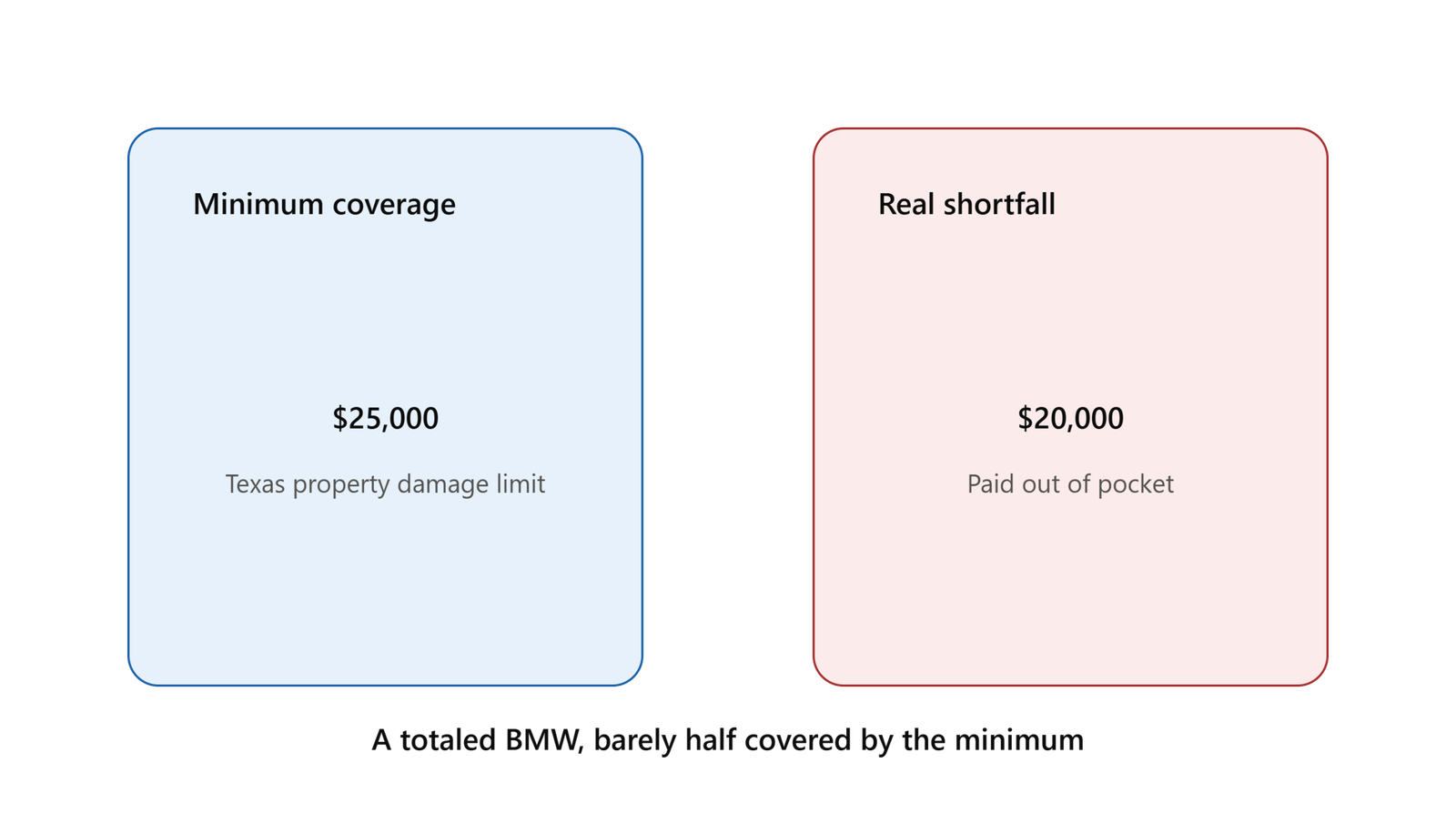
A real story making the rounds on Texas insurance forums captures exactly what’s at stake for EV owners specifically: a driver’s $25,000 property damage minimum barely covered half the cost of a totaled BMW, leaving them with a $20,000 personal liability bill out of pocket. That same math applies, often worse, to a totaled Tesla or Rivian. This guide covers Texas’s actual requirements, the real EV cost numbers, and why the state’s minimum coverage is a genuinely risky choice for EV owners specifically.
Key takeaways:
- Texas requires 30/60/25 liability coverage, and multiple direct sources confirm this hasn’t changed for 2026, though a state bill (HB4178) proposing an increase to 50/100/40 has been introduced, worth monitoring given the pattern of other states raising minimums covered throughout this site.
- EV insurance in Texas runs about 15% to 30% more than a comparable gas car, with Dallas-Fort Worth liability-only commonly $60 to $135 a month and full coverage $180 to $400 a month for a clean-record driver on a mainstream EV.
- Texas is a no-fault state requiring personal injury protection (PIP) alongside liability coverage, a distinction from at-fault states like California covered in our dedicated guide.
- An estimated 14% of Texas drivers are uninsured, making uninsured motorist coverage a meaningful consideration even though Texas insurers are only required to offer it, not mandate it.
Texas’s actual minimum requirements
Texas requires drivers to carry liability coverage of 30/60/25: $30,000 for bodily injury per person, $60,000 total per accident if multiple people are injured, and $25,000 for property damage. This is often written as 30/60/25 and represents what your policy must pay for damage you cause to others, not protection for your own vehicle.
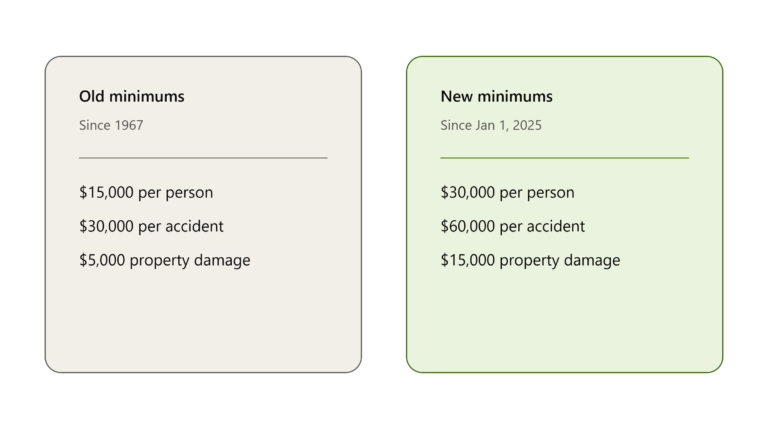
A note on a pending legislative change worth tracking: Texas House Bill 4178 has been introduced to raise these minimums to $50,000 per person, $100,000 per accident, and $40,000 for property damage, effective January 1, 2026. However, multiple direct consumer-facing sources confirm the 30/60/25 minimums remain unchanged and in effect as of this writing, with some sources explicitly stating no changes are scheduled for Texas in 2026. This mirrors the pattern covered in our California guide, where a similar increase (Senate Bill 1107) did take effect, and California’s experience suggests Texas may eventually follow a similar path. Given the direct conflict between the pending bill and confirmed current requirements, EV owners in Texas should confirm their policy’s actual current minimum directly with their insurer or the Texas Department of Insurance rather than relying on either the bill’s proposed numbers or older reporting.
Why the current minimum is a genuine risk for EV owners specifically
The real story referenced at the top of this guide illustrates this precisely: a Texas driver’s $25,000 property damage limit barely covered half the cost of a totaled BMW, leaving them personally liable for the remaining $20,000. This dynamic applies with even more force to EVs specifically, given the elevated repair and replacement costs documented throughout this site. A Tesla Model Y, Rivian R1S, or Lucid Air, all covered in our dedicated model guides, can easily exceed $50,000 to $80,000 in value, meaning a $25,000 property damage minimum covers well under half the cost if you’re at fault in an accident involving one of these vehicles.
A separate documented case makes the human cost clear: a driver who caused a three-car collision injuring four people had a policy that maxed out at $60,000, while total hospital bills exceeded $90,000, resulting in the driver being personally sued for the remaining balance. This is the exact scenario our dedicated umbrella insurance guide addresses directly, and it’s worth taking seriously given how much more expensive EV-involved accidents specifically tend to run.
Texas is a no-fault state, a key structural difference
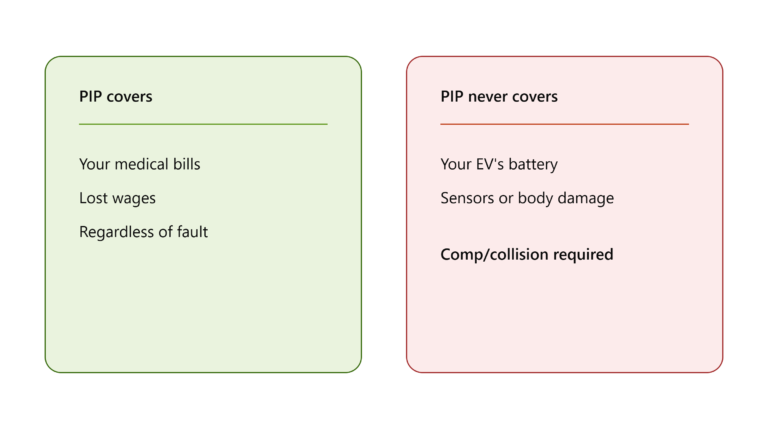
Unlike California, covered in our dedicated guide, Texas is a no-fault state, meaning your own insurer pays for your injuries and damages regardless of who caused the accident, and Texas law requires you to carry personal injury protection (PIP) specifically to cover your own medical costs, doctor visits, and prescriptions following an accident. This is a structurally different system than the at-fault states covered elsewhere in our broader state guides, and it directly shapes how a Texas EV owner’s claim actually gets resolved after an accident, your own PIP coverage responds to your injuries first, separate from the liability question of who was at fault.
The real EV cost numbers for Texas
Pulling together the available 2026 data specifically for Texas:
- Electric vehicle insurance in Texas costs about 15% to 30% more than a comparable gas car, mostly reflected in the full-coverage portion of the premium, driven by the same battery, repair, value, and sensor-recalibration factors covered throughout our broader EV cost guides.
- In Dallas-Fort Worth specifically, liability-only on a mainstream EV commonly runs $60 to $135 a month, while full coverage runs $180 to $400 a month for a clean-record driver, with premium models like the Tesla Model S, Rivian trucks, and luxury EVs running higher still, consistent with the pricing tiers documented throughout our dedicated model guides.
- EV rates vary more between carriers in Texas than for almost any other vehicle class, echoing the wide insurer-to-insurer spreads documented throughout our broader model and companies research, meaning comparison shopping matters especially here.
Uninsured motorist coverage, worth real consideration
An estimated 14% of Texas drivers are uninsured, according to one detailed source, meaning roughly 1 in 7 vehicles on Texas roads carries no insurance at all. Texas insurers are required to offer uninsured/underinsured motorist coverage, though drivers can reject it in writing, similar to the PIP offer-and-reject structure covered in some other state guides. Given how expensive an EV specifically is to repair or replace, as covered throughout this site, and given that an uninsured driver hitting your EV leaves you entirely dependent on your own coverage for resolution, declining this coverage is a genuinely risky cost-saving move for an EV owner specifically.
SR-22 and financial responsibility, if relevant to your situation
Texas requires proof of financial responsibility at all times while operating a vehicle, and drivers with certain violations (DUI, driving without insurance, at-fault accidents without coverage) may be required to file an SR-22 for two years upon reinstatement. This isn’t EV-specific, but it’s worth knowing since it affects which insurers will write your policy and at what cost, layered on top of the standard EV-specific rating factors covered throughout this site. Penalties for driving without any insurance in Texas start at $175 to $350 for a first offense, escalating to $1,000 and potential license or registration suspension for subsequent offenses.
Tesla Insurance availability in Texas
Worth noting specifically for Tesla owners: Texas is one of the 13 states where Tesla Insurance is currently available, alongside Arizona, California, Colorado, Florida, Illinois, Maryland, Minnesota, Nevada, Ohio, Oregon, Utah, and Virginia. Unlike California, covered in our dedicated guide, Texas doesn’t restrict telematics-based pricing the way California does, meaning Tesla Insurance in Texas operates with its full real-time Safety Score model, worth weighing against the customer-service considerations covered in our dedicated Tesla Insurance review before choosing it over a traditional carrier.
Practical steps for Texas EV owners
- Confirm your actual current minimum liability requirement directly with your insurer, given the conflicting information between the pending HB4178 bill and confirmed current 30/60/25 minimums documented above.
- Seriously consider coverage well above the state minimum, given the real, documented cases of Texas drivers facing five-figure personal liability after minimum coverage fell short, a risk that compounds specifically with an EV’s elevated repair and replacement costs.
- Don’t decline uninsured motorist coverage without careful thought, given Texas’s estimated 14% uninsured driver rate and the elevated financial stakes of an EV-involved accident.
- Compare quotes across multiple carriers specifically for your EV, given how much more Texas EV rates vary between insurers than for other vehicle types.
- If you’re a Tesla owner, confirm whether Tesla Insurance’s full Safety Score model available in Texas fits your driving profile better than a traditional carrier, following the broader comparison guidance covered in our dedicated Tesla Insurance research.
The bottom line
Texas requires 30/60/25 liability coverage for now, though a pending bill could raise that to 50/100/40, worth monitoring given the pattern of other states, California among them, recently increasing their own minimums. Real, documented cases of Texas drivers facing tens of thousands of dollars in personal liability after minimum coverage fell short make a strong case for EV owners specifically to carry coverage well above the state floor, given how much more expensive EV repair and replacement costs run throughout this site’s broader research. With EV rates varying unusually widely between Texas carriers and an estimated 14% of drivers uninsured, comparison shopping and seriously considering uninsured motorist coverage are two of the most valuable, low-effort steps a Texas EV owner can take.
This article is for informational purposes only and does not constitute financial or insurance advice. Insurance requirements, rates, and pending legislation change frequently. Always confirm current requirements directly with the Texas Department of Insurance and get a personalized quote from your insurer.