Electric Car Insurance in California: Rates and Requirements
California just went through the biggest change to its auto insurance requirements in over 50 years, and it directly affects every EV owner in the state, not just new drivers. Layer that on top of California’s unique restrictions on how insurers can price EVs specifically, no credit-based scoring, no telematics pricing for Tesla Insurance, and you get a genuinely distinct insurance landscape compared to most other states covered throughout this site. This guide covers exactly what’s required and what you’ll actually pay.
Key takeaways:
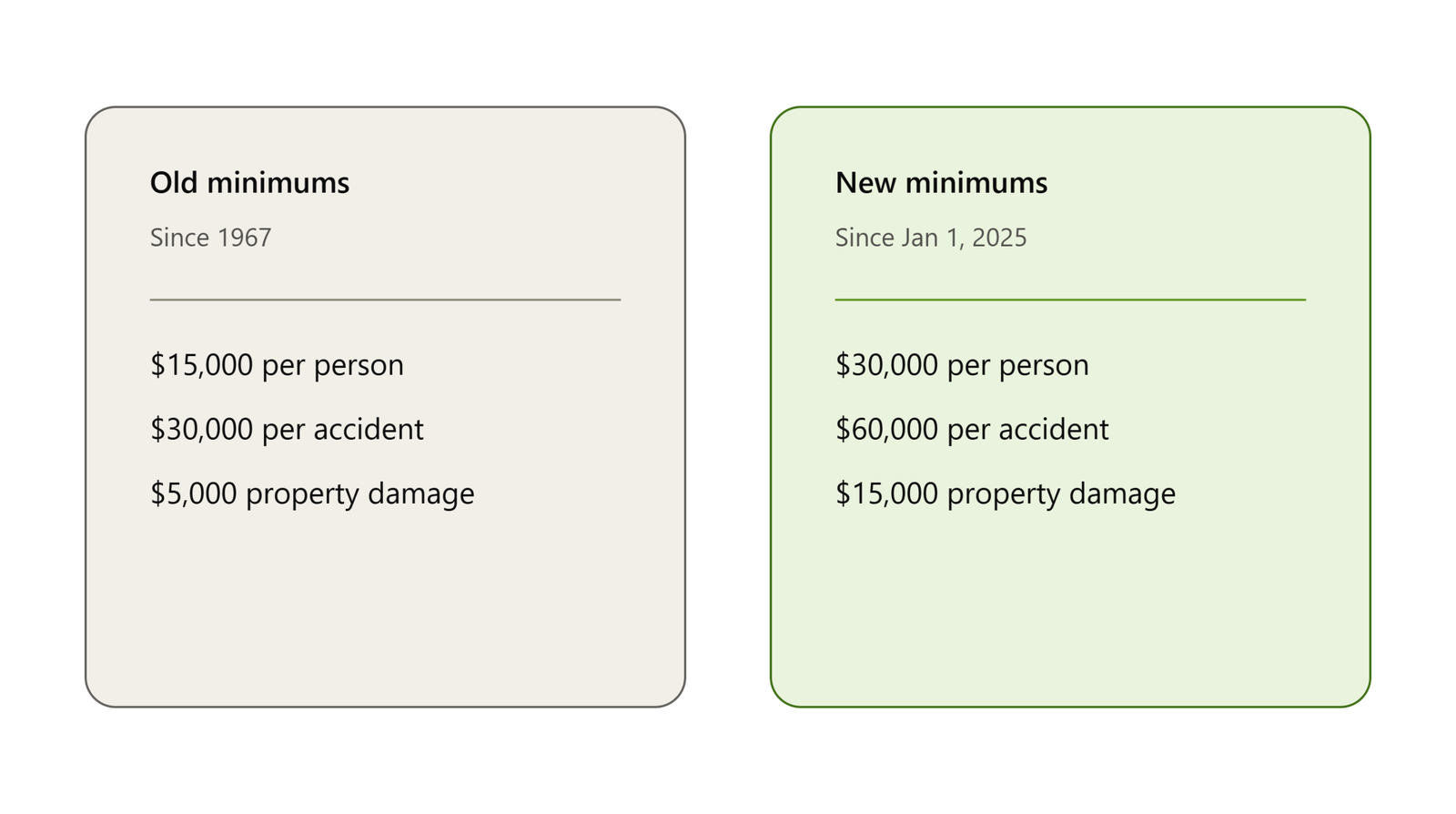
- California’s minimum liability requirements jumped to 30/60/15 as of January 1, 2025, up from 15/30/5, a standard that had been in place since 1967, doubling bodily injury protection and tripling property damage coverage.
- California prohibits insurers from using credit-based insurance scoring at all, one of only a handful of states with this protection, and it separately bars telematics-based pricing, meaning Tesla Insurance uses standard rating factors instead of its usual Safety Score model here.
- An estimated 16% to 17% of California drivers are uninsured, one of the highest rates in the country, making uninsured motorist coverage a genuinely important add-on even though it isn’t legally required.
- Even at the new higher minimums, California’s required coverage is widely considered too low for a serious accident, especially given the elevated repair costs of an EV specifically.
The big legal change: new minimum liability limits
This is the most important recent development for any California driver, EV owner or not, but it’s worth understanding in full given how directly it affects your actual policy cost. Senate Bill 1107, the Protect California Drivers Act, took effect January 1, 2025, and for the first time since 1967, raised the state’s minimum liability limits. The new minimums are 30/60/15: $30,000 for injury or death to one person, $60,000 total per accident, and $15,000 for property damage, up from the previous 15/30/5 standard that had been in place for nearly six decades.
This is a genuinely large jump, doubling the bodily injury protection and tripling the property damage coverage compared to the old standard. For EV owners specifically, the property damage increase matters more than it would for a typical gas car driver: as covered throughout our broader EV insurance guides, EV repair costs run meaningfully higher than gas car repairs, and the old $5,000 property damage minimum was wildly inadequate for covering damage to almost any EV on the road today, let alone another driver’s EV. The new $15,000 minimum is still arguably too low, covered further below, but it’s a meaningful improvement specifically relevant to the EV-on-EV accident scenario covered in our dedicated umbrella insurance guide.
A further increase is already scheduled: on January 1, 2035, minimums will rise again to $50,000 per person, $100,000 per accident, and $25,000 for property damage, with the 2025 limits remaining in effect for the full decade in between.
Why even the new minimums fall short for EV owners specifically
Multiple sources are direct about this: California’s required minimum coverage is widely considered insufficient for a serious accident, even at the new, higher 30/60/15 limits. Medical costs in California frequently exceed $15,000 for even moderate injuries, and vehicle damage can easily surpass $5,000, figures that apply to any vehicle. For an EV specifically, given the elevated repair and total-loss patterns documented throughout our broader battery and coverage guides, the $15,000 property damage minimum can be exhausted by a single moderate accident involving another EV, let alone a genuine total loss.
The consistent recommendation across insurance professionals: consider at least 100/300/100 coverage, plus uninsured motorist coverage, to protect your assets, since the additional cost is modest compared to the risk of personal liability in an at-fault accident, advice that applies with extra force given the elevated property-damage stakes of an EV-involved accident covered throughout this site.
California’s unique restrictions on how insurers price EVs
This is genuinely distinct from most other states covered throughout this site, and it directly shapes how EV insurance works in California specifically.
No credit-based insurance scoring, ever. California is one of only a handful of states, alongside Massachusetts and Hawaii among others covered in our broader guide on bad-credit EV insurance, that prohibits insurers from using credit-based scoring in auto insurance pricing entirely. If you have less-than-perfect credit, this is a genuine, direct financial advantage of being insured in California specifically, one worth knowing if you have any flexibility about where you’re insured.
No telematics-based pricing, which changes how Tesla Insurance works here specifically. As covered in our dedicated Tesla Insurance review, California regulations prohibit telematics-based pricing, meaning Tesla Insurance in California uses standard rating factors instead of its usual real-time Safety Score model available in other eligible states. If you’re a Tesla owner specifically drawn to the Safety Score concept for genuinely safe driving, that particular advantage isn’t available to you in California, worth knowing before you assume Tesla Insurance works the same way here as it does elsewhere.
California is an at-fault state, with a notably high uninsured driver rate
California operates as an at-fault (tort) state, meaning the driver who causes an accident is responsible for the resulting injuries and property damage, rather than each driver’s own insurance covering their own losses regardless of fault, as in no-fault states. This makes your liability coverage, and the other driver’s, central to how any accident actually gets resolved financially.
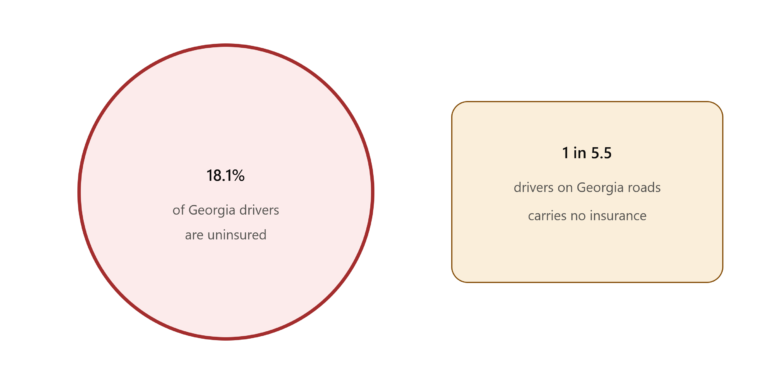
Worth taking seriously: California’s uninsured driver rate is estimated at 16% to 17%, meaning roughly 1 in 6 drivers on the road has no insurance at all. Uninsured motorist coverage, while not legally required in California, is specifically recommended as one of the most cost-effective decisions a California driver can make, since if an uninsured driver hits you, your own UM coverage is the only protection you have for your medical bills and lost wages, a genuinely important consideration given how much more expensive an EV-involved accident’s costs can run, as covered throughout this site.
The real cost numbers for California specifically
Following the broader EV cost patterns covered throughout this site, California generally sits toward the higher end of state-level EV insurance costs, consistent with its dense urban population centers, high litigation environment, and elevated vehicle theft rates in certain areas, factors covered in more detail in our broader state-by-state EV insurance guide. GEICO is specifically identified as offering some of the lowest minimum coverage rates in California broadly, at an average of $751, a useful anchor point though your specific EV model, as covered throughout our dedicated model guides, will move your actual quote substantially from this general baseline.
SR-22 requirements, worth knowing if relevant to your situation
If you’ve had a DUI, multiple violations, or certain other driving infractions, California may require you to file an SR-22, a certificate of financial responsibility your insurer files with the California DMV, not insurance itself, but proof that you carry it. This isn’t EV-specific, but it’s worth knowing since it can affect which insurers are willing to write you a policy and at what cost, on top of the standard rating factors covered throughout this site.
Practical steps for California EV owners
- Confirm your policy reflects the new 30/60/15 minimums, or exceeds them. If your policy hasn’t been updated since before January 1, 2025, confirm with your insurer that you’re compliant with the current legal requirement.
- Seriously consider coverage above the state minimum, given how easily an EV-involved accident can exceed the $15,000 property damage floor. As covered above, 100/300/100 is a commonly recommended target, worth weighing against the modest additional cost.
- Add uninsured motorist coverage, given California’s notably high 16% to 17% uninsured driver rate, one of the more important optional coverages for any California driver specifically.
- If you’re a Tesla owner drawn specifically to the Safety Score model, confirm you understand California’s telematics restriction before assuming Tesla Insurance works identically to how it’s described in national marketing.
- Shop your policy every 6 to 12 months regardless of satisfaction with your current provider, since California rates shift with market conditions, and regular shopping can save drivers $400 or more annually.
The bottom line
California EV owners are navigating a genuinely distinct insurance landscape: newly doubled and tripled minimum liability requirements as of 2025, a legal prohibition on credit-based pricing that benefits drivers with less-than-perfect credit, and a telematics restriction that specifically changes how Tesla Insurance operates within the state. Even with the new higher minimums, California’s required coverage remains arguably insufficient for the real cost of an EV-involved accident, making a genuine case for coverage well above the legal floor, paired with uninsured motorist protection given the state’s notably high uninsured driver rate. Whatever EV model you drive, covered in detail across our dedicated model guides, layer that vehicle-specific cost picture on top of California’s unique state-level rules covered in this guide for the most accurate sense of what you’ll actually pay.
This article is for informational purposes only and does not constitute financial or insurance advice. Insurance requirements, rates, and regulations change frequently. Always confirm current requirements directly with the California DMV and get a personalized quote from your insurer.