Electric Car Insurance in Arizona: Heat and Battery Factors
Phoenix regularly hits 110°F or higher for weeks at a time, and that sustained heat does something most EV shoppers never think about: it actively degrades your battery pack faster than almost anywhere else in the country. When that already-stressed battery gets damaged in an accident, even a minor one, the insurance math can turn your car into a total loss faster than you’d expect. This guide covers exactly how Arizona’s climate interacts with EV insurance, and what it means for your coverage decisions.
Key takeaways:
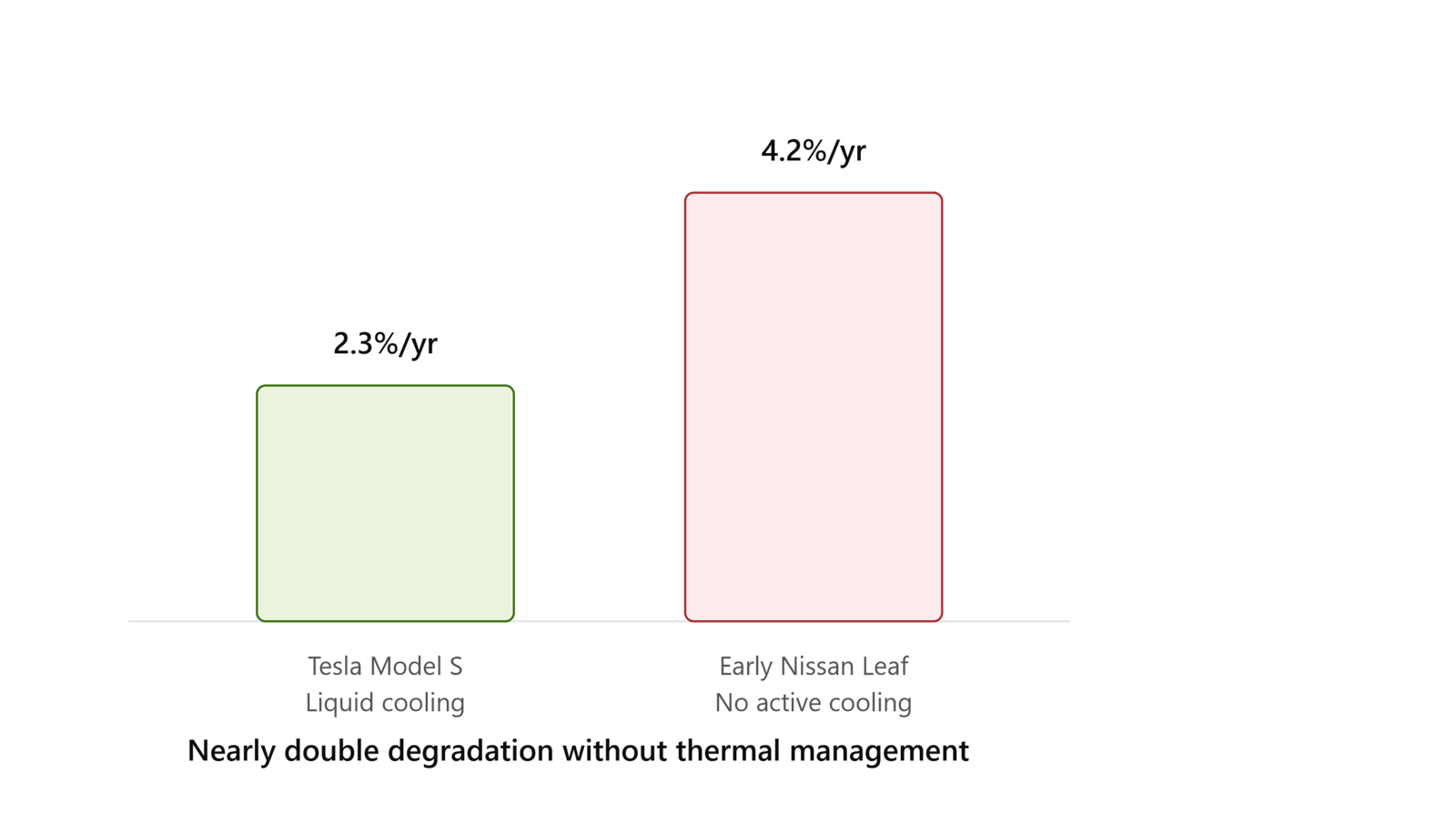
- An early Nissan Leaf without active thermal management degraded at 4.2% per year in warm states like Arizona, nearly double the Tesla Model S’s 2.3% per year rate with liquid cooling, a real illustration of why thermal management technology matters more in Arizona than in milder climates.
- Sustained heat accelerates the chemical reactions that break down lithium-ion cells, and studies consistently show EV and hybrid batteries degrading faster in hot climates than in moderate ones, adding an estimated 0.4% per year to the baseline degradation rate.
- Arizona’s low minimum liability requirements mean if someone with minimum coverage hits your EV, the shortfall on a total loss could be significant, a risk compounding directly with the state’s accelerated battery degradation.
- Arizona currently offers no statewide purchase incentives for EVs as of 2026, though it does provide a statewide HOV lane exemption and exemption from emissions testing.
Why Arizona’s heat specifically matters for your battery
This is worth understanding in real depth, since it’s the defining factor that separates Arizona EV ownership from milder-climate states covered elsewhere in our state guides. Phoenix regularly hits 110°F or higher for weeks at a time, with Tucson, Mesa, Scottsdale, and the East Valley not far behind. That sustained heat puts enormous stress on lithium-ion battery packs, forcing the thermal management system to run continuously just to keep the pack within its normal operating range. Over years, that constant cycling degrades the cells faster than it would in a cooler climate.
As covered in our broader battery degradation guide, EVs operating in hot climates degrade about 0.4% faster per year than those in mild conditions, on top of the roughly 2.3% average annual degradation rate documented across more than 22,700 real-world vehicles. Heat accelerates the underlying chemical reactions that break down lithium-ion cells regardless of vehicle brand, but how much it actually matters depends heavily on your specific vehicle’s thermal management system.
The Nissan Leaf versus Tesla Model S comparison, and why it matters for your buying decision
This specific data point deserves real attention if you’re shopping for an EV in Arizona. An early Nissan Leaf, built without active thermal management, degraded at 4.2% per year in warm states like Arizona, nearly double the Tesla Model S’s 2.3% per year rate, which benefits from liquid cooling. This isn’t a minor technical footnote, it’s a direct illustration of how much a vehicle’s specific battery cooling system matters in a climate like Arizona’s, far more than it would in a milder state.
The practical implication for Arizona shoppers specifically: prioritizing a vehicle with active liquid thermal management, standard on most current mainstream EVs but notably absent on some older or budget models, is a genuinely more important buying consideration in Arizona than it would be in most other states covered throughout this site. This connects directly to the resale value and insurance considerations covered in our broader battery degradation guide, since a battery that’s degraded faster than expected affects both your vehicle’s actual cash value and your total-loss exposure in a claim.
How this connects directly to your insurance exposure
This is the part that ties Arizona’s climate directly to your coverage decisions, not just your battery’s long-term health. When a battery already stressed by years of Arizona heat gets damaged in an accident, even a relatively minor one, the insurance math turns unfavorable faster than it would for a battery that’s aged normally in a milder climate. As covered throughout our broader battery cost and comprehensive-coverage guides, insurers frequently declare a vehicle a total loss when battery repair costs exceed what the vehicle is worth to fix, and a battery that’s already lost more of its capacity to heat-driven degradation is worth less to begin with, making that total-loss threshold easier to cross.
Practical steps this suggests specifically for Arizona EV owners:
Understand your depreciation curve, especially given how much faster it can move in Arizona’s heat. Your total loss risk increases every year, and that increase compounds faster here than in a cooler climate.
Ask specifically about GAP coverage if you’re financing or leasing. As covered in our dedicated GAP insurance guide, GAP covers the difference between what you owe and what the insurer pays on a total loss, and on a depreciating EV in Arizona heat specifically, that gap can grow faster than a driver in a milder state would expect.
Consider new car replacement coverage for vehicles in their first one to two years of ownership, a genuinely useful hedge against the accelerated depreciation pattern documented above.
Make sure your uninsured/underinsured motorist coverage is adequate. Arizona’s minimum liability requirements are low, and if someone with minimum limits hits your EV, the shortfall on a total loss could be significant, a risk that compounds directly with the accelerated battery degradation and total-loss patterns covered throughout this guide.
Arizona’s claims process timeline, worth knowing in advance
Arizona has a ten-day claim acknowledgment requirement and a 15-day acceptance window under the state’s unfair claims settlement practices rules, meaning the process moves relatively fast once you file. Understanding your actual exposure before an accident happens, rather than discovering it mid-claim, is genuinely more valuable given how quickly Arizona’s process moves once you’ve filed.
The incentive picture: purchase side offers less than many states, but real perks remain
Unlike Colorado, covered in our dedicated guide, Arizona currently offers no statewide incentives, rebates, or tax credits for purchasing or leasing an EV as of 2026. This is worth knowing upfront if you’re comparing Arizona against other states in your broader relocation or purchase decision. That said, Arizona EV owners do get two genuinely useful non-financial perks: a statewide HOV lane exemption, and exemption from the state’s emissions testing requirements, neither directly reducing your insurance cost, but both worth factoring into your total ownership experience.
Separately, local EV charger rebates and time-of-use charging rates remain available through individual utility providers, worth exploring alongside the broader home electrification rebates currently available in Arizona, though these connect more to your charging costs than to insurance specifically.
Charger installation considerations specific to Arizona’s climate
Worth a brief mention given the heat-focused theme of this guide: Arizona’s ambient temperatures accelerate insulation degradation and increase conductor resistance in home charging installations specifically, meaning proper ampacity derating and adherence to relevant electrical code correction factors matter more here than in milder climates. This connects to the professional-installation guidance covered throughout our broader home charger insurance guides, since a charger installed without accounting for Arizona’s specific thermal load factors carries elevated safety and, potentially, insurance-relevant risk.
Practical steps for Arizona EV owners
- Prioritize a vehicle with active liquid thermal management if you’re still shopping, given the documented near-doubling of degradation rate for batteries without it in Arizona’s climate specifically.
- Understand that your total-loss risk grows faster here than in milder states, and plan your coverage, particularly GAP and new-car replacement coverage, accordingly.
- Carry uninsured/underinsured motorist coverage well above Arizona’s low minimum, given how significant a shortfall could be if an underinsured driver totals your EV.
- Ensure your home charger installation accounts for Arizona’s specific thermal load factors, both for safety and to support any future insurance claim involving the charger.
- Factor in the absence of state purchase incentives when budgeting your total EV cost, while still taking advantage of the HOV lane exemption and emissions-testing exemption as genuine, if non-financial, perks.
The bottom line
Arizona’s defining EV insurance factor isn’t a unique legal requirement or credit-scoring rule, it’s climate. Sustained extreme heat accelerates battery degradation measurably faster than in milder states, with a stark real-world illustration in the gap between an older, passively cooled Nissan Leaf and a liquid-cooled Tesla Model S. That accelerated degradation directly raises your total-loss risk over time, making GAP coverage, new car replacement protection, and adequate uninsured motorist coverage genuinely more valuable considerations for an Arizona EV owner than they might be elsewhere. Combine that with Arizona’s currently limited purchase-side incentives, and the practical takeaway is clear: prioritize thermal management when choosing your EV, and build your coverage around the state’s accelerated depreciation reality rather than assuming standard, milder-climate assumptions apply.
This article is for informational purposes only and does not constitute financial or insurance advice. Insurance requirements, degradation rates, and incentive programs vary and change frequently. Always confirm current requirements directly with the Arizona Department of Insurance and a licensed insurance agent.