Roadside Assistance for Electric Cars: What’s Actually Covered
There’s a persistent myth that owning an EV means signing up for a lifetime of range-anxiety roadside emergencies. The real data tells a much more boring story: most EV breakdowns have nothing to do with the high-voltage battery at all. This guide breaks down what EV roadside assistance actually covers, the specific gap around out-of-charge situations that catches owners off guard, and how coverage differs between manufacturer plans, motor clubs, and insurance add-ons.
Key takeaways:
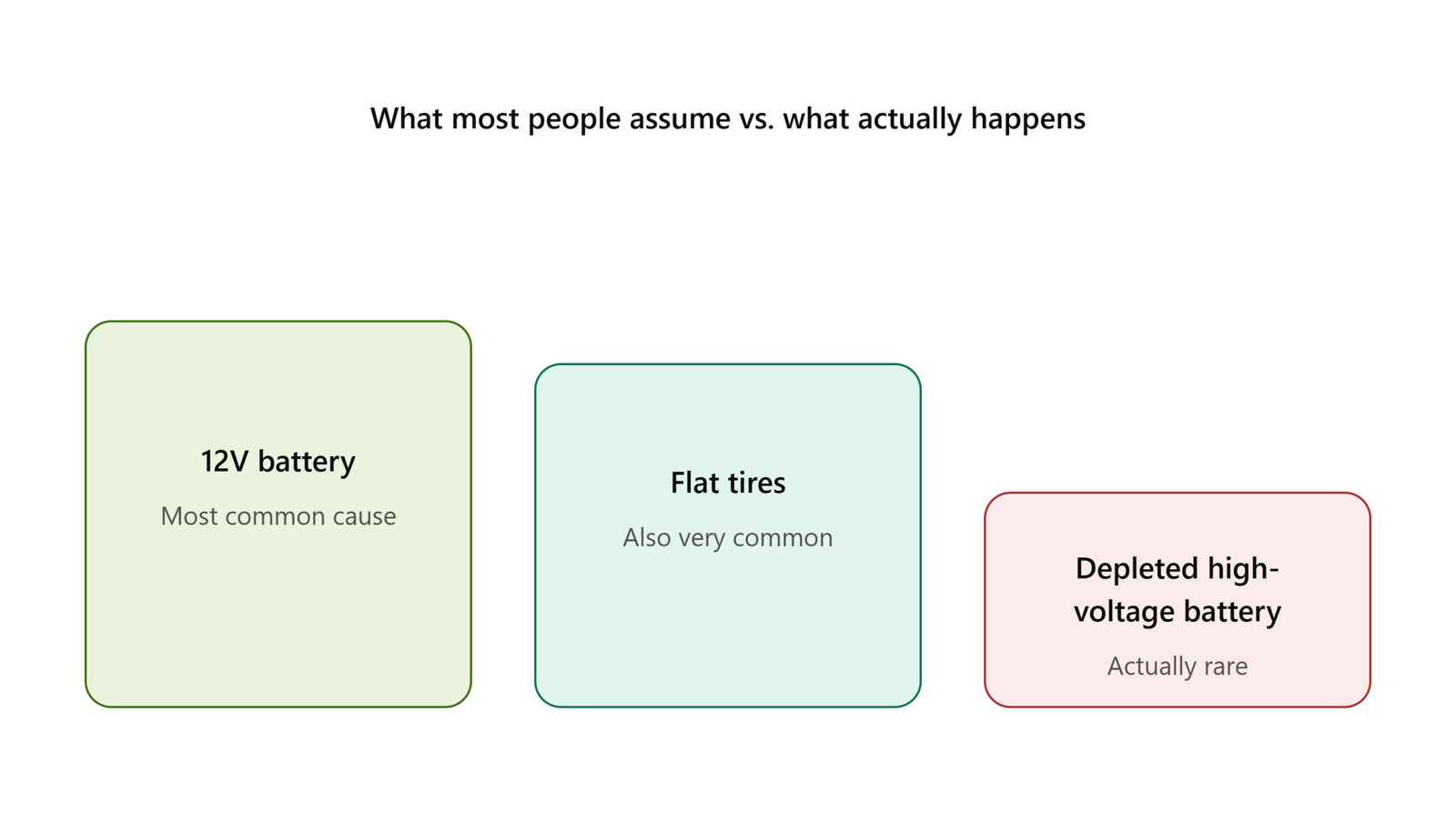
- The most common cause of an EV roadside call isn’t a depleted high-voltage battery, it’s the small 12-volt auxiliary battery, the same component that causes breakdowns in gas cars, or a flat tire.
- Out-of-charge service is real but limited almost everywhere: Audi caps it at 10 times a year, and many programs treat it as a lower-priority, non-guaranteed service rather than a core benefit.
- EVs generally require flatbed towing, not standard wheel-lift towing, to avoid drivetrain damage, a detail worth confirming with any plan before you need it.
- Coverage sources overlap significantly: manufacturer roadside assistance (often 3-5 years free), motor clubs like AAA, and insurer-provided add-ons all offer genuinely different service structures worth comparing rather than assuming any one covers everything.
First, what actually causes most EV breakdowns
This reframes the entire topic, so it’s worth leading with. Running an EV’s high-voltage battery completely flat is a small slice of actual breakdowns. The two most common culprits are the same ones that strand gas car drivers: the 12-volt auxiliary battery (a small, separate battery that powers your EV’s electronics, locks, and infotainment system, distinct from the large high-voltage pack that drives the wheels) and flat tires. Potholes and road debris don’t care what powers your car, and many EVs ship without a traditional spare tire, which changes how tire-related roadside events actually get resolved.
In plain terms: roadside assistance for an EV is less about heroic last-second mobile charging and more about quietly handling the same boring, common failures that strand any driver, gas or electric.
What’s typically covered across most plans
Regardless of which provider you use, manufacturer, motor club, or insurance add-on, the core service categories tend to look similar:
Towing. Getting your disabled vehicle to a repair facility, charging station, or your home. As covered in our dedicated guide to EV roadside assistance for dead batteries, this needs to specifically be flatbed towing for an EV, not the wheel-lift method commonly used for gas cars, since standard wheel-lift towing risks drivetrain damage on an EV.
Flat tire assistance. Inflating a low tire, installing a spare if one exists, or initiating a tow if the tire is unsafe to drive on or no spare is available, a genuinely more common scenario for EVs given how many ship without a traditional spare.
12-volt battery jump-start or testing. Since this is the single most common EV roadside event, as covered above, confirm any plan you’re considering specifically addresses this rather than assuming it’s covered simply because «battery service» appears in the plan description, which sometimes refers only to the high-voltage pack.
Lockout service. Assistance when you’re locked out due to a dead key fob, app malfunction, or a mechanical lock issue, relevant for EVs given how many rely on phone apps or key fobs rather than traditional keys.
Out-of-charge service, with real limits. This is covered in detail below, since it’s the area where coverage varies most and catches owners off guard most often.
The out-of-charge gap, explained
This is the detail most owners assume is unlimited and free, and it usually isn’t. Manufacturer programs frequently cap this specific service. Audi’s roadside assistance, for example, explicitly limits out-of-charge service to 10 times a year, worth knowing since it’s easy to assume «roadside assistance» means unlimited help for every scenario. Other providers treat out-of-charge situations as a lower-priority or non-guaranteed benefit rather than a core service on par with towing or a flat tire.
The practical response, when a genuinely dead high-voltage battery does happen, generally falls into one of two paths: a tow to the nearest charging station or dealership (the more common, lower-tech solution most providers default to), or a mobile charging truck that adds enough range on the spot to get you moving again without a full tow. AAA has been expanding mobile EV charging specifically, though this service remains limited to select cities rather than available nationwide, worth checking whether your specific area is covered before assuming it’s an option.
Manufacturer roadside assistance: what to expect
Most new EVs bundle roadside assistance from the manufacturer for a set period, commonly 3 to 5 years, as covered in our broader EV roadside assistance guide. A few real, specific examples illustrate how these programs actually structure coverage:
Tesla covers a warrantable breakdown that renders the vehicle undrivable with transportation up to 800 km to the nearest Service Center, flat tire service up to 80 km when the repair is completed through Tesla directly, and lockout assistance for vehicle, fob, or app malfunctions.
Audi covers roadside service including tire inflator kit assistance, spare tire changes, lockout service, and extrication, plus the capped out-of-charge service described above. Notably, Audi’s terms specify that if vehicle entry is unsuccessful during a lockout, the owner is solely responsible for any resulting loss or damage, and the vehicle gets towed to the nearest authorized dealership instead, a detail worth knowing before you assume every lockout scenario resolves on the spot.
These structures vary meaningfully between manufacturers, so don’t assume your specific brand’s program mirrors another’s, confirm your actual plan’s limits directly.
Motor clubs: AAA as the primary example
AAA offers roadside assistance for EVs comparable to what gas car drivers receive: battery service (including 12V testing and jump-starts), flat tire changes, fuel delivery for hybrid vehicles, lockout service, extrication, and, in select areas, EV-specific mobile charging at no additional cost to members. As covered in our broader roadside assistance comparison, AAA’s structural advantage is that membership follows you as a driver rather than being tied to a specific vehicle, useful if you drive multiple cars or borrow vehicles regularly. Tier level (Classic, Plus, Premier) affects towing distance and the number of service calls included, worth matching to your actual driving patterns rather than defaulting to the cheapest tier.
What to actually check before you need it
Given how much variance exists between plans, a few specific confirmations matter more for EVs than they would for a gas car:
Flatbed towing, explicitly confirmed, not assumed. As covered throughout this guide and our dedicated dead-battery roadside guide, this is non-negotiable for protecting your EV’s drivetrain.
Destination flexibility. Some plans allow towing specifically to a charging location, while others limit you to the nearest repair facility regardless of whether that location can actually recharge your vehicle, an important distinction if you’re stranded with a genuinely depleted battery rather than a mechanical issue.
How the plan handles a missing or non-functional spare tire. Given how many EVs ship without a traditional spare, confirm whether «flat tire service» for your specific plan means a spare installation, a tow, or a mobile tire repair service, since the practical outcome differs significantly between these.
The specific cap on out-of-charge service, if any, similar to Audi’s 10-times-a-year limit, so you know realistically how often you can rely on this benefit before it’s exhausted.
Whether coverage follows your VIN or you as a driver. Manufacturer programs are tied to the vehicle, motor club memberships like AAA follow you personally, and insurer-provided add-ons typically attach to your specific insured vehicle, a distinction worth understanding if you drive more than one car regularly.
Where insurance-based roadside add-ons fit
As covered in our broader guide to EV insurance roadside assistance for dead batteries, adding roadside coverage directly through your auto insurer is often the most cost-effective route if you already carry full coverage, since it attaches to your existing policy for a modest annual cost. The key question when comparing this option against a manufacturer plan or AAA membership is the same one covered throughout this guide: does it specifically guarantee flatbed towing and address the 12V-battery and flat-tire realities that actually cause most EV roadside events, not just the headline-grabbing out-of-charge scenario.
The bottom line
EV roadside assistance covers largely the same core scenarios as any vehicle’s roadside plan, towing, flat tires, lockouts, battery jump-starts, with the crucial difference that towing must be flatbed-specific to protect the drivetrain, and the most common actual cause of a roadside call is the mundane 12-volt battery or a flat tire, not a depleted high-voltage pack. Out-of-charge service exists across most providers but is more limited than people assume, frequently capped and sometimes treated as secondary to the core services. Before you need any of this, confirm your specific plan’s flatbed guarantee, destination flexibility, spare tire handling, and out-of-charge limits directly, rather than assuming «roadside assistance» means the same thing across every manufacturer, motor club, or insurance add-on.
This article is for informational purposes only and does not constitute financial or insurance advice. Roadside assistance coverage, limits, and availability vary significantly by provider, plan, vehicle, and region, and change frequently. Always confirm specific coverage terms directly with your provider.