Ford Mustang Mach-E Insurance Cost Breakdown
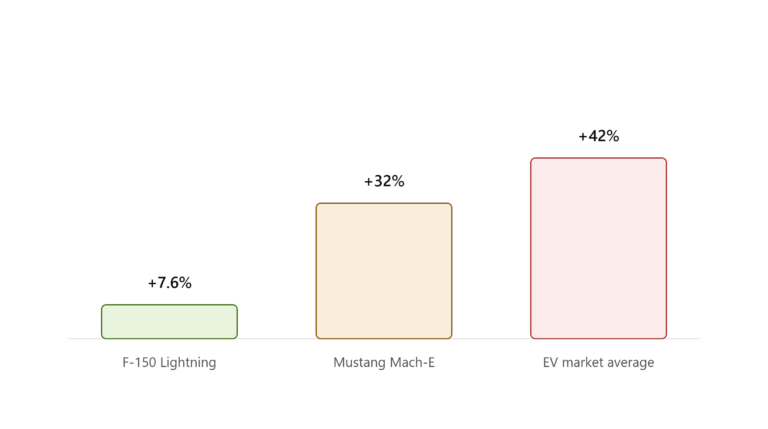
Here’s a genuinely surprising data point: the electric Mustang Mach-E costs about 32% more to insure than the gas-powered Mustang coupe it’s named after. That’s the opposite pattern from the Ford F-150 Lightning, which actually insures cheaper than its gas F-150 sibling. This guide breaks down the real Mach-E numbers and explains exactly why this particular EV bucks the «some EVs are basically at parity with gas now» trend covered elsewhere on this site.
Key takeaways:
- Full coverage on a Mach-E typically runs $2,000 to $2,800 a year for a clean-record driver in their 30s to 50s, though the full range spans from about $1,100 to over $3,000 depending on trim, state, and driver profile.
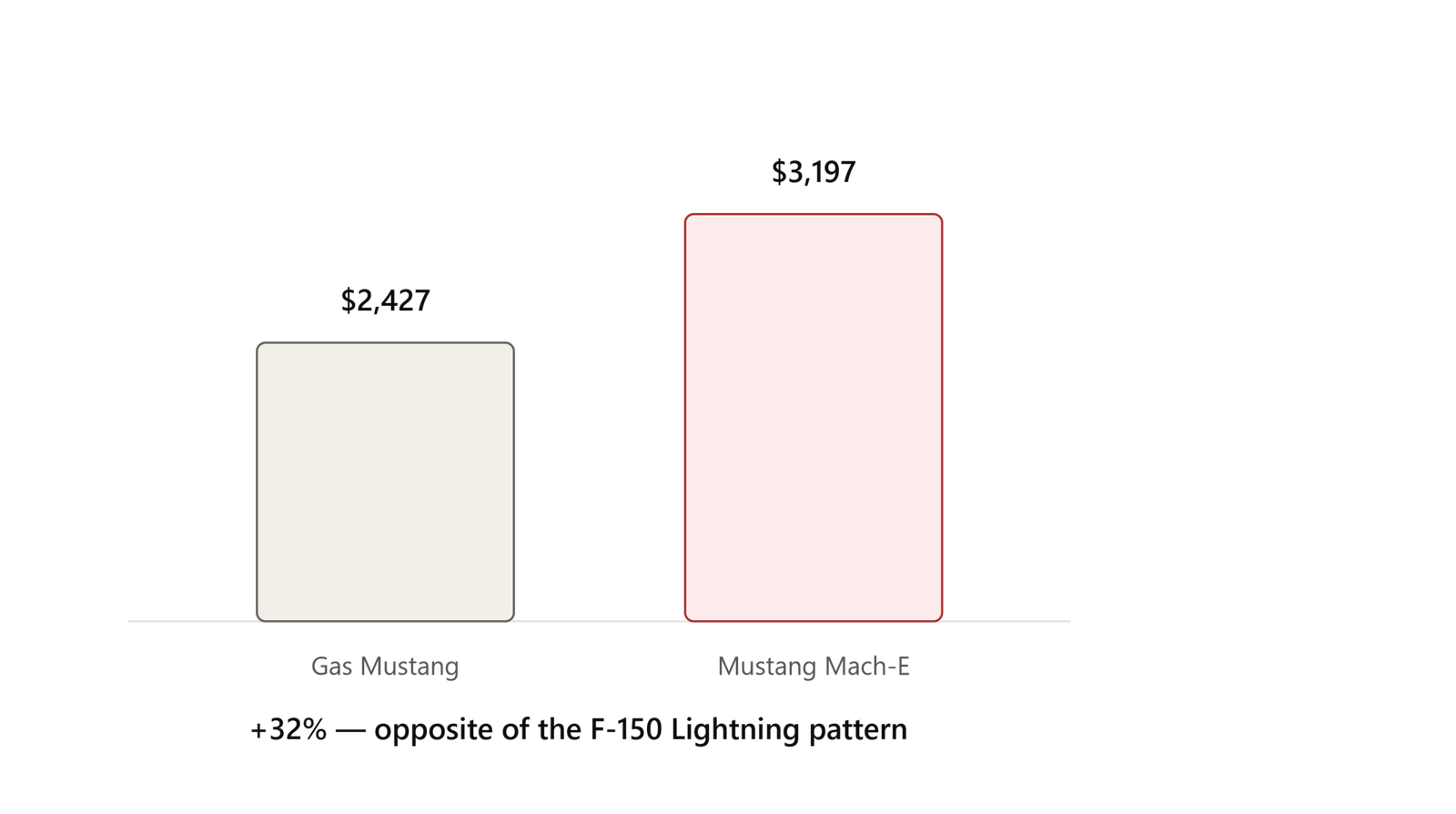
- A direct 2026 comparison found the Mach-E averaging $3,197 a year against just $2,427 for the gas-powered Mustang, a 32% gap that runs opposite to the pattern seen with Ford’s own F-150 Lightning.
- GEICO and Erie consistently rank among the cheapest insurers, with GEICO’s full coverage averaging around $137 a month in one comparison.
- The Mach-E depreciates steeply, losing about 57% of its original value after five years, which meaningfully lowers insurance costs on a used example compared to a new one.
The real numbers, pulled together
Consistent with the wide-range pattern covered throughout our other model-specific guides, sources vary based on methodology, but a genuinely useful picture emerges:
- One source finds full coverage averaging $2,089 a year, with GEICO offering the cheapest rate at $137 a month.
- Another finds a similar $174 a month national average across coverage levels and model years, with real-world owner reports ranging from $1,100 to $1,400 a year on the low end up to $3,000-plus on GT trims or in expensive states.
- A third pegs the average at $208 a month ($2,496 a year), noting this runs about 28% higher than a broader vehicle-class comparison point.
- CarEdge’s analysis lands at $2,518 a year, describing it as $162 more than the average popular model overall.
- The Zebra’s data shows $1,257 for a 6-month policy ($2,514 annualized), with Erie offering the cheapest rate at $149 a month.
Bringing this together: budget roughly $2,000 to $2,800 a year for full coverage as a realistic planning range if you’re a clean-record driver in your 30s to 50s, with real-world quotes swinging as low as $1,100 or as high as $3,000-plus depending on your specific trim, state, and driver profile.
The genuinely surprising comparison: Mach-E vs. gas Mustang
This is the detail that sets this article apart from a simple cost rundown, and it’s worth understanding in context. A 2026 industry report found the average Mustang Mach-E premium at $3,197 a year, compared to just $2,427 for the gas-powered Mustang, a difference of nearly 32%. This runs directly opposite to the pattern Ford’s own F-150 Lightning shows, where the electric truck actually costs less to insure than its gas F-150 sibling, as covered in our broader EV-versus-gas insurance comparison guide.
Why the difference between Ford’s two flagship EVs? The F-150 Lightning shares more structural and repair-network commonality with the conventional F-150, an extremely high-volume, well-understood vehicle with decades of repair infrastructure behind it. The Mustang Mach-E, despite carrying the Mustang name, is a genuinely different vehicle platform from the gas Mustang coupe, an EV-specific crossover architecture that doesn’t benefit from the same repair-network overlap. This illustrates a broader point worth remembering throughout this site: sharing a nameplate with a gas vehicle doesn’t guarantee EV insurance parity, what matters is how much actual engineering and repair-network infrastructure the EV variant genuinely shares with its gas counterpart.
Where the Mach-E sits versus the broader EV market
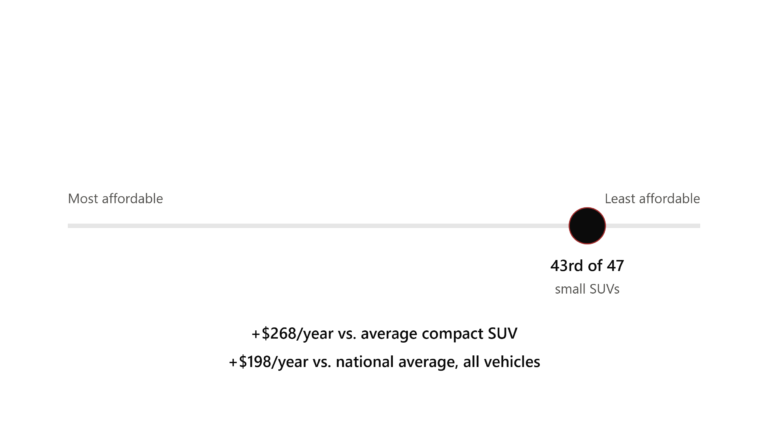
Despite costing more than its own gas Mustang sibling, the Mach-E still lands well below the priciest end of the EV spectrum covered throughout our other model guides. Segment-wide EV insurance averages around $4,000 a year when including luxury models and high-performance trims, and the Mach-E lands closer to the $2,000 to $2,600 range for a typical 40-something driver with a clean record, positioning it as a mid-pack EV rather than an especially cheap or especially expensive one. Within its own SUV category specifically, one detailed ranking placed the Mach-E 92nd out of 256 SUVs for insurance affordability, a reasonably positioned middle-tier result.
Why the Mach-E costs what it does
EV-typical repair and technology factors apply here as much as anywhere else on this site. Specialized battery technology, higher repair costs, and a more limited pool of certified service centers than a mainstream gas vehicle would have all push the baseline cost upward, the same pattern covered throughout our broader EV cost guides.
Trim matters significantly, especially the GT. Real-world owner reports specifically flag the GT Performance Edition as pushing premiums well above $3,000 a year, consistent with the broader pattern covered in our Tesla Model 3 and Model S guides, where higher-performance trims carry a genuine, separate pricing tier.
Vehicle age and depreciation swing the number substantially. The Mach-E debuted in 2021, and older examples have depreciated significantly, losing about 57% of their original value after five years. As covered throughout our GAP insurance and used-EV cost guides, this steep early depreciation curve directly and meaningfully lowers insurance costs on an older or used Mach-E compared to a new one, since a lower vehicle value reduces the comprehensive and collision math your insurer is pricing against.
Standard safety features help offset some of the cost. Front crash prevention, blind-spot detection, lane-departure warning, and automatic emergency braking, all standard on the Mach-E, can help reduce accident frequency, partially offsetting the elevated repair-cost factors above.
Theft risk is comparatively low. While location plays the biggest role in theft exposure generally, the Mach-E isn’t typically a primary target for vehicle theft, a genuine point in its favor relative to certain other EVs covered throughout our broader Tesla-specific research.
Best insurers for a Mach-E
GEICO appears repeatedly as the cheapest option across multiple sources, with full coverage averaging around $137 a month in one detailed comparison, consistent with GEICO’s broader strength covered throughout this site.
Erie shows up as the cheapest option in a separate comparison, at $149 a month for full coverage, consistent with Erie’s broader strength for EV-specific claims handling covered in our battery coverage guide, though as noted elsewhere on this site, Erie’s availability is limited to the Northeast and Great Lakes regions.
The rate spread between insurers runs wide for this vehicle specifically. One source found full coverage ranging from $137 a month with GEICO up to $334 a month with AIG for the identical Mach-E, and minimum coverage spanning $63 to $147 depending on the insurer, a genuinely large gap worth taking seriously when shopping.
Ford’s broader insurance trend, worth knowing
Beyond the Mach-E specifically, it’s worth noting that Ford as a brand saw insurance premiums decrease by about 8% in 2025, a decline that tied Jeep and trailed only Kia among automakers for the steepest drop over that span. This connects to the broader EV insurance market trend covered in our guide on whether EV rates drop over time, suggesting Ford’s overall insurance risk profile, EVs included, has been trending in a favorable direction even if the Mach-E specifically still costs more than its gas sibling.
How to actually lower your Mach-E premium
Consider a used, slightly older Mach-E if minimizing cost is a priority. Given the steep depreciation curve documented above, an older example genuinely costs less to insure, following the same used-versus-new logic covered throughout our broader EV cost guides.
Get quotes from at least three or four insurers, given the roughly $200-a-month spread documented between GEICO and AIG for the identical vehicle.
Favor the standard trim over the GT Performance Edition if premium cost matters, consistent with the trim-level guidance covered throughout our Tesla-specific cost breakdowns.
Ask about safety feature discounts specifically, given the Mach-E’s strong standard driver-assistance package.
Choose a higher deductible if you can comfortably absorb it, following the general deductible guidance covered throughout our broader EV coverage guides, particularly relevant given how much the Mach-E’s premium already runs above its gas Mustang sibling.
The bottom line
The Ford Mustang Mach-E sits in the middle of the broader EV insurance spectrum, more affordable than luxury and performance-focused EVs covered elsewhere on this site, but genuinely more expensive than its own gas-powered Mustang sibling, a 32% gap that stands in direct contrast to how the F-150 Lightning compares to its gas counterpart. GEICO and Erie consistently offer the most competitive rates, and the Mach-E’s steep early depreciation curve means a used example can meaningfully undercut a new one on insurance cost. Whatever trim or model year you’re considering, the roughly $200-a-month spread between the cheapest and most expensive insurers for this specific vehicle makes comparison shopping genuinely worthwhile rather than optional.
This article is for informational purposes only and does not constitute financial or insurance advice. Insurance rates vary by insurer, state, model year, trim, and individual driver profile, and change frequently. Always get a personalized quote before making a purchasing decision.