Ford F-150 Lightning Insurance: Truck EV Rates Explained
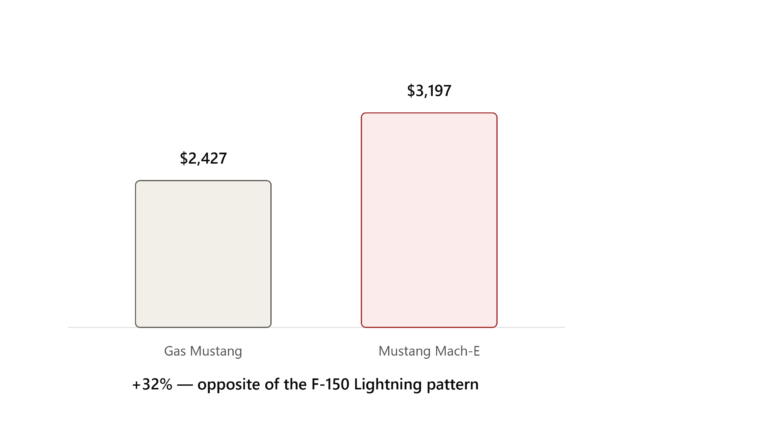
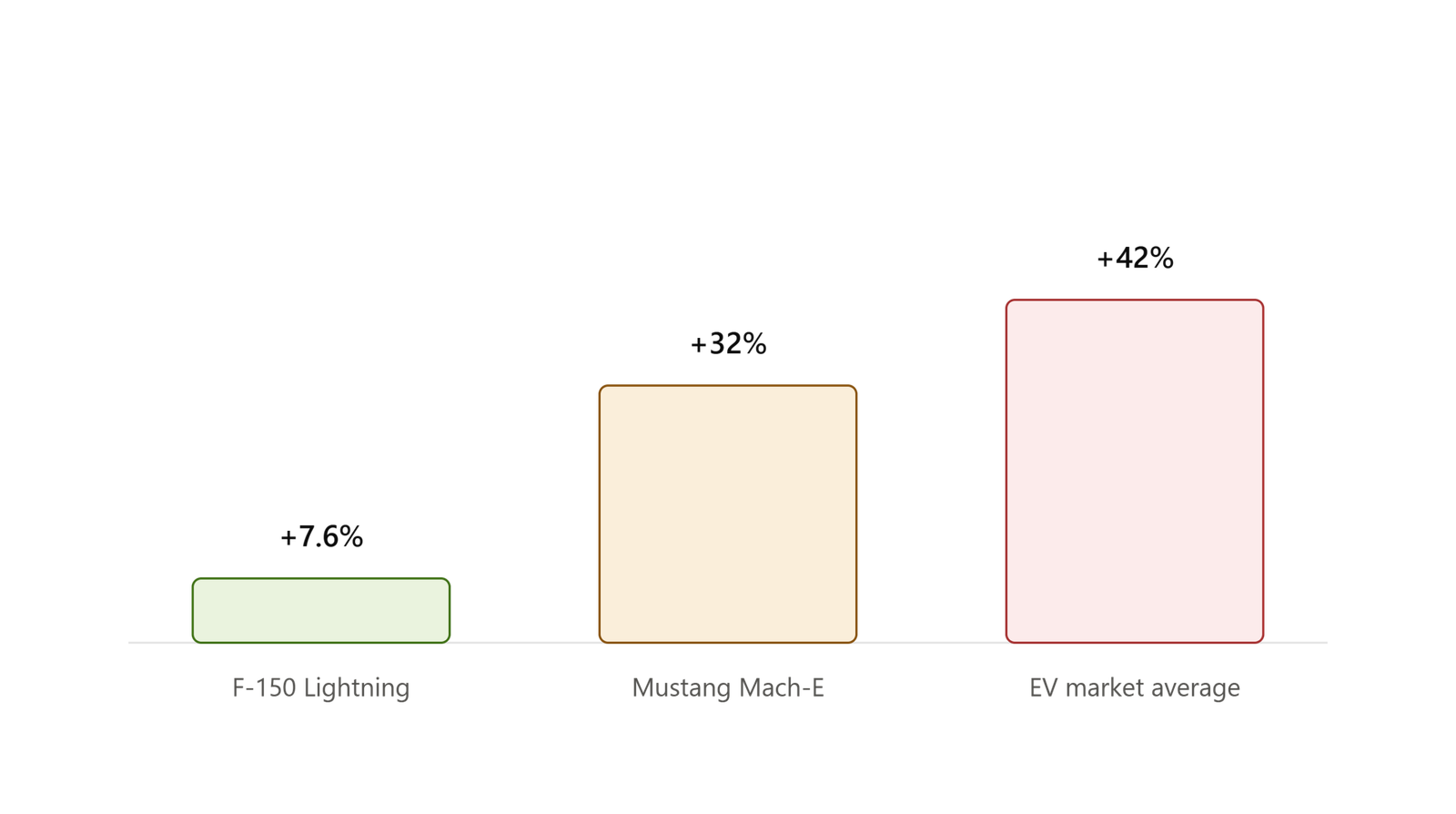
The F-150 Lightning tells a genuinely different story than its Mustang Mach-E sibling covered elsewhere on this site. Where the Mach-E costs 32% more to insure than its gas counterpart, the Lightning sits just 7.6% above the gas F-150, one of the smallest EV-to-gas insurance gaps of any vehicle covered throughout this site, and it beats the Tesla Cybertruck on price too. This guide explains exactly why the Lightning performs so differently and what that means for your actual premium.
Key takeaways:
- The F-150 Lightning averages $2,778 a year against $2,581 for the gas F-150, a gap of just $197, or about 7.6%, dramatically smaller than the roughly 42% gap EVs show against gas cars overall.
- Mercury Insurance specifically ranked the Lightning among the cheapest EVs to insure in 2025, cheaper than its direct EV truck rival, the Tesla Cybertruck.
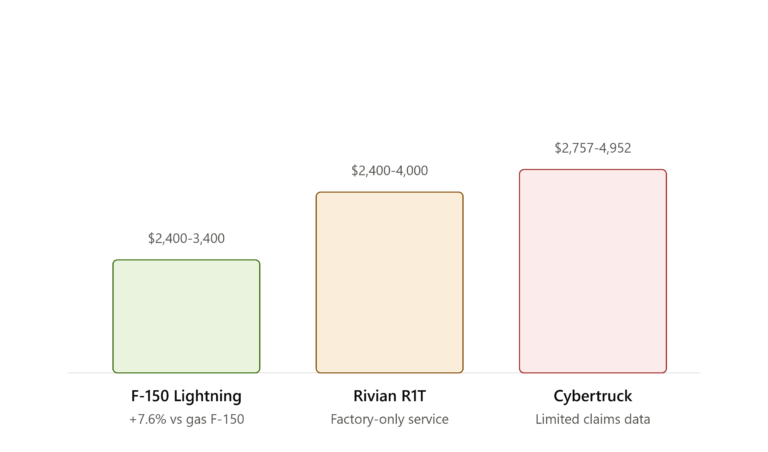
- Realistic full-coverage budgeting for 2026 sits around $2,400 to $3,400 a year, with $2,600 to $3,100 as the more typical range for most driver profiles.
- The reason the gap is so small: the Lightning shares meaningful structural and repair-network overlap with the conventional F-150, America’s best-selling and most repair-familiar vehicle.
The headline number: one of the smallest EV-to-gas gaps anywhere
This is worth leading with, since it’s genuinely unusual among the vehicles covered throughout this site. A 2026 industry report found the F-150 Lightning averaging $2,778 a year to insure, against $2,581 for the gas-powered F-150, a difference of just $197, or roughly 7.6%. Put that in context: the same report found EVs running about 42% more expensive than gas vehicles on average across the entire market. The Lightning’s gap is dramatically smaller than that broader pattern, and dramatically smaller than the 32% gap its own Mustang Mach-E sibling shows against the gas Mustang, covered in our dedicated Mach-E guide.
Other sources frame the gap slightly differently but land in a similar range: one analysis puts the EV premium at roughly 6% to 15% over the comparable gas F-150, and another describes electric versions of mainstream models generally, the Lightning included, running about 15% to 25% above their gas counterparts. Regardless of exactly which figure you use, every source agrees on the same core conclusion: the Lightning’s EV premium over its gas sibling is unusually small compared to the broader EV market.
Why the Lightning’s gap is so much smaller than the Mach-E’s
This is the most useful insight in this entire guide, and it connects directly to the repair-network logic covered throughout our broader Tesla and EV cost research. The F-150 Lightning shares substantially more structural DNA and repair-network overlap with the conventional gas F-150 than the Mach-E shares with the gas Mustang. The F-150, in any form, is America’s best-selling vehicle, with an enormous, deeply established network of body shops, parts suppliers, and trained technicians built up over decades. The Lightning, despite its electric powertrain, benefits from a meaningful share of that same infrastructure for body work and general repairs, even though its battery and high-voltage components still require specialized attention.
The Mach-E, by contrast, is a purpose-built EV crossover platform that doesn’t share nearly as much physical structure or repair-network overlap with the gas Mustang coupe, despite carrying the same nameplate. This is the clearest real-world illustration on this entire site of a principle worth remembering: sharing a badge with a gas vehicle doesn’t automatically produce EV insurance parity, what matters is how much genuine engineering and repair-network infrastructure actually gets shared between the two.
The real cost numbers for 2026
Pulling together multiple sources:
- One comprehensive guide puts the realistic range at $2,600 to $3,100 a year for full coverage, depending heavily on driver profile, location, and trim.
- A separate source finds a similar but slightly wider band of $2,400 to $3,400 a year for a clean-record driver.
- The Zebra’s data shows $1,399 for a 6-month policy ($2,798 annualized), with Progressive offering the cheapest rate at $134 a month.
- A specialty insurance comparison site pegs full coverage at $233 to $251 a month ($2,796 to $3,012 a year).
Bringing this together: budget roughly $2,600 to $3,100 a year as a realistic planning range for a typical driver, with the wider $2,400 to $3,400 range capturing most real-world scenarios once trim and location are factored in.
The Lightning beats its direct EV truck rival on price
This is worth highlighting specifically, since it’s a genuinely useful data point if you’re cross-shopping electric trucks. Mercury Insurance’s own ranking of the cheapest trucks and SUVs to insure specifically found the F-150 Lightning among the top electric vehicles for low insurance cost, cheaper to insure than its most direct rival, the Tesla Cybertruck, covered in our dedicated Cybertruck guide. Given that the Cybertruck’s elevated pricing is driven partly by limited claims data and its unusual stainless-steel construction, as covered in that guide, the Lightning’s advantage here reflects the same repair-network-overlap logic covered above: a genuinely more conventional, well-understood vehicle platform costs less to insure than a genuinely novel one, even when both are electric trucks competing in the same category.
Why the Lightning still costs more than the gas F-150, even if only modestly
The gap is small, but it’s real, and it traces back to the same fundamental factors covered throughout this site, just present here in a more muted form:
Higher purchase price. The Lightning ranges from the low $50,000s for the Pro trim to well above $90,000 for the Platinum, a genuinely wide range that pushes comprehensive and collision costs upward compared to a similarly equipped gas F-150.
Specialized high-voltage battery components. Even with strong repair-network overlap for body work, the battery and electric drivetrain still require the specialized attention and parts covered throughout our broader battery cost guides.
A still-developing EV-specific service network. While the Lightning benefits from F-150 body-work infrastructure, the electric-specific repair network remains less mature than the decades-old conventional F-150 service ecosystem, a gap that’s actively narrowing but not yet fully closed.
How trim and buying choices affect your specific rate
New versus used matters significantly. As covered throughout our GAP insurance and used-EV guides, a lower actual cash value directly reduces what your insurer is on the hook for in a total loss, meaning a used $45,000 Lightning costs meaningfully less to insure than an $80,000-plus new Platinum trim.
More repair history helps as the truck ages into the market. By 2026, insurers have accumulated more real-world data on which Lightning trims generate frequent or severe claims, a maturing process similar to the broader EV market trend covered in our guide on whether EV rates drop over time.
Financing status affects whether you need GAP coverage. If you owe less than the truck’s current value, following the logic covered in our dedicated GAP insurance guide, you may not need that additional coverage, trimming your total insurance cost.
High-end trims remain the priciest to insure within the lineup. A loaded Platinum or Lariat, whether new or used, still sits at the top of the Lightning’s own internal insurance price ladder, consistent with the trim-level pattern seen across nearly every vehicle covered throughout this site.
Best insurers for a Lightning
Progressive is specifically cited as offering the cheapest rate for the latest Lightning model year in one comparison, at $134 a month for full coverage.
Beyond that specific finding, the broader guidance covered throughout our other Ford and EV truck guides applies directly here: compare quotes from several insurers given how much variance exists even for a comparatively EV-friendly vehicle like the Lightning, and specifically ask about EV-relevant discounts and telematics programs covered throughout our broader savings guides.
The bottom line
The Ford F-150 Lightning is one of the clearest exceptions to the broader «EVs cost dramatically more to insure» pattern documented throughout this site, running just 7.6% above its gas F-150 sibling and beating its direct EV truck rival, the Tesla Cybertruck, on price. The reason comes down to genuine repair-network and structural overlap with America’s best-selling, most repair-familiar vehicle, a sharp contrast to the Mustang Mach-E’s 32% premium over its own gas sibling despite sharing a nameplate. If you’re choosing between an electric and gas F-150, or between the Lightning and a rival EV truck, insurance cost is a meaningfully smaller factor in that decision than it would be for almost any other EV covered on this site.
This article is for informational purposes only and does not constitute financial or insurance advice. Insurance rates vary by insurer, state, model year, trim, and individual driver profile, and change frequently. Always get a personalized quote before making a purchasing decision.