Honda Prologue Insurance Cost Guide
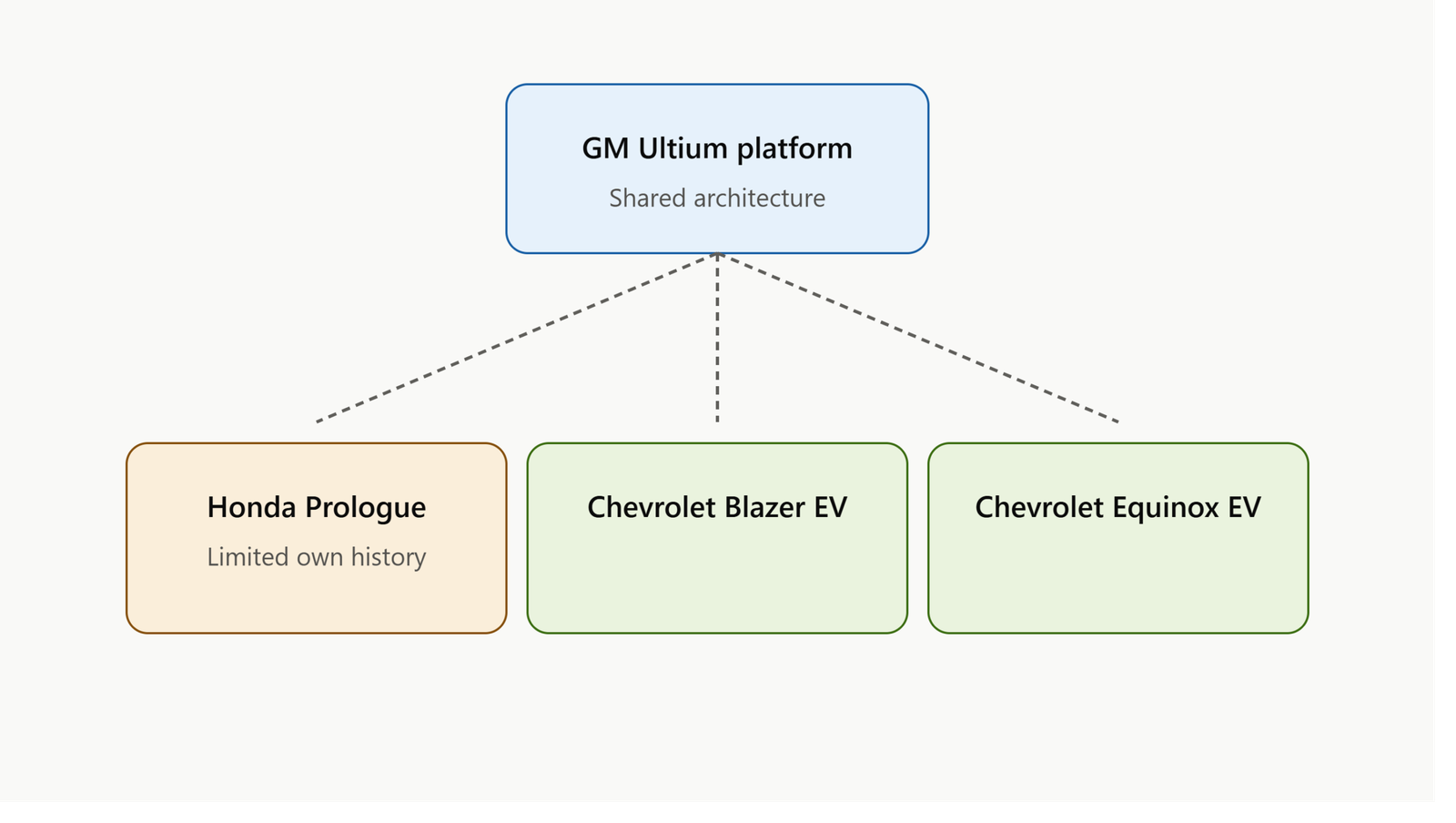
The Prologue wears a Honda badge, but underneath it’s built on General Motors’ Ultium platform, shared with the Chevrolet Blazer EV and Equinox EV. That cross-brand engineering creates a genuinely unusual situation for insurers: this isn’t a vehicle with decades of Honda-specific claims history to price against, it’s a new entrant built on someone else’s technology. This guide covers the real numbers and what that platform-sharing arrangement means for your premium.
Key takeaways:
- Full coverage on the Prologue typically runs $2,300 to $2,800 a year across most 2026 sources, with real owner reports ranging from about $120 a month in lower-cost states to $230 to $260 in expensive markets like California and New Jersey.
- The Prologue ranks 137th out of 256 SUVs for insurance affordability, landing in the more expensive tier compared to all vehicle types, despite Honda’s broader reputation for reasonable ownership costs.
- Because it’s built on GM’s Ultium platform rather than a Honda-specific architecture, underwriters don’t have decades of claims history to lean on, a genuine source of pricing uncertainty similar to what we documented for the Tesla Cybertruck.
- GEICO, Progressive, and USAA consistently rank among the cheapest insurers, with rates spreading by more than $289 a month between the cheapest and most expensive options for the identical vehicle.
The real numbers
Pulling together multiple 2026 sources gives a genuinely wide range for this newer model:
- MoneyGeek’s detailed analysis finds $2,355 a year for full coverage, with GEICO offering the most affordable average at $196 a month.
- The Zebra’s data shows $1,341 for a 6-month policy ($2,682 annualized), describing the Prologue as costing $223 a month against a $184-a-month average for typical SUVs.
- A monthly-focused guide finds a realistic $150 to $220 a month range, with real owner forum reports spanning $120 a month on a multi-car policy in lower-cost states up to $230 to $260 in expensive markets.
- CarEdge finds a notably higher $2,753 to $2,765 a year across two separate analyses, describing this as $397 more than the average popular model in their broader dataset.
Bringing this together: budget roughly $2,300 to $2,800 a year for full coverage as a realistic planning range, with your specific state playing an outsized role in where you land within that band.
The genuinely distinct story here: a Honda badge, a GM platform
This is worth understanding in real depth, since it’s a structural situation unique among the models covered throughout this site. The Honda Prologue is a new, electric compact SUV built on GM’s Ultium platform, meaning it shares its underlying architecture, and much of its actual engineering, with vehicles like the Chevrolet Blazer EV and Equinox EV rather than with any prior Honda vehicle. Insurers love predictable, boring data, built from years of accumulated claims history for a specific, well-understood vehicle. The Prologue isn’t that yet, underwriters don’t have decades of Prologue-specific claims history to lean on, and that uncertainty tends to push rates up until the actuarial picture settles, similar in spirit to the limited-claims-data uncertainty we documented for the Tesla Cybertruck in our dedicated guide, but arising here from a cross-manufacturer platform-sharing arrangement rather than simply being a brand-new nameplate.
This raises a genuinely interesting question worth flagging for buyers specifically comparing the Prologue against its Chevrolet platform-mates: since insurers price risk partly based on the underlying vehicle architecture and repair profile, and the Prologue shares that architecture closely with the Blazer EV and Equinox EV, it’s worth directly comparing quotes across all three vehicles if you’re cross-shopping, since the platform commonality may mean your actual risk profile, and therefore your best available rate, looks similar across the Honda and Chevrolet badges despite the different brand names.
Where the Prologue ranks, and why
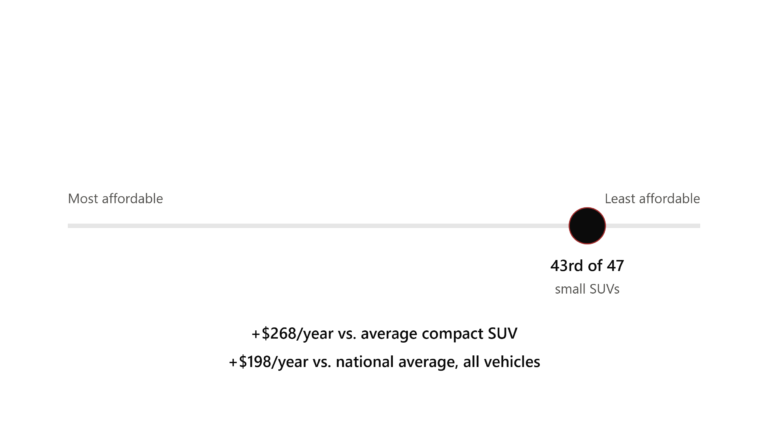
Ranked 137th out of 256 SUVs for insurance affordability, the Prologue falls into the more expensive category compared to all vehicle types, according to MoneyGeek’s broader analysis. This is a somewhat less severe standing than we found for the Kia EV6 (43rd of 47 in its narrower segment) or the Toyota bZ4X (41st of 47), though it’s worth noting these comparisons use different segment groupings (256 SUVs broadly versus 47 small SUVs specifically), so the rankings aren’t perfectly apples-to-apples across our various model guides. The consistent theme across all of them, though: mainstream EVs from established automakers, Honda included, still land in the more expensive tier for insurance affordability relative to their broader vehicle class, the general EV cost pattern documented throughout this site applying regardless of brand reputation.
The real price context worth knowing
It’s worth noting a genuinely relevant pricing development: Honda cut Prologue prices by $7,500 across the board in April 2026, bringing the base EX trim down to $39,900 with 308 miles of EPA-estimated range. This connects directly to the depreciation and GAP insurance principles covered throughout this site, a manufacturer price cut on a vehicle you already own, similar to Tesla’s 2023 price-cut episode covered in our GAP insurance guide, can meaningfully affect the used-market value of Prologues purchased before the cut, worth being aware of if you’re financing an existing Prologue or shopping the used market specifically for this model.
Separately, the 2026 Prologue no longer qualifies for the federal EV tax credit, since the Clean Vehicle Credit expired for new EVs purchased on or after October 1, 2025, though state-level incentives remain available in several states, and the separate Section 30C home charger tax credit remains available through June 30, 2026, details worth factoring into your total ownership cost picture alongside the insurance figures throughout this guide.
Why the Prologue costs more than typical SUVs
Standard EV repair-cost factors apply, layered on top of the platform-uncertainty issue. EVs frequently cost more to repair than gas vehicles because of specialized labor, driver-assist system calibration, and the risk that a damaged battery means a five-figure replacement, the same baseline factors covered throughout this site’s broader battery and repair guides.
A genuinely wide MSRP range affects comprehensive and collision costs. The 2026 Prologue spans from $39,900 to $50,400 across its three trims, with earlier model years running as high as $59,805 for the top Elite trim, a real spread that directly shapes the comprehensive and collision math your insurer applies depending on your specific configuration.
The insurer spread is dramatic here
This is worth taking seriously given how wide it runs. Full coverage spans from $120 a month with GEICO to $409 a month with AIG for the identical Prologue, and minimum coverage ranges from $55 with GEICO to $174 with Farmers, a spread exceeding $289 a month at the high end. This is one of the widest insurer-to-insurer gaps documented across our model guides, making comparison shopping genuinely more valuable for the Prologue than for many other vehicles covered on this site.
Best insurers for a Prologue
GEICO consistently posts the cheapest rates across multiple sources, at $120 a month for full coverage in one detailed comparison and averaging $196 a month in another.
Progressive offers the cheapest rate for the latest model year in The Zebra’s comparison, at $125 a month.
Nationwide and USAA round out the cheapest tier in that same comparison, at $170 and $187 a month respectively.
A caution worth repeating: treat any quote far above $300 a month for a clean-record driver with real skepticism, since some early cost-to-own tools have produced glitched or unrealistic figures for this newer model, consistent with the broader caution about unrealistic advertised rates flagged throughout our other model guides.
How to actually lower your Prologue premium
Get quotes from GEICO, Progressive, Nationwide, and USAA specifically, given their consistent strength across the sources reviewed for this article.
Consider cross-shopping quotes for the Chevrolet Blazer EV or Equinox EV alongside your Prologue quote, given the shared Ultium platform, this comparison can help you sanity-check whether you’re being quoted a fair, architecture-appropriate rate.
Ask specifically how a recent price cut affects your coverage if you already own a Prologue purchased before April 2026, given the real depreciation implications covered above.
Bundle with home or renters insurance and ask about multi-vehicle discounts, following the general savings guidance covered throughout this site.
The bottom line
The Honda Prologue occupies a genuinely unusual position among the models covered on this site: a well-established, trusted brand name attached to a vehicle built on another manufacturer’s platform, meaning insurers are pricing it with less Prologue-specific claims history than they’d have for a comparable Honda built on Honda’s own architecture. That uncertainty, combined with the standard EV repair-cost factors covered throughout this site, keeps the Prologue in the more expensive tier of its broader vehicle class despite Honda’s reputation for reasonable ownership costs. GEICO and Progressive consistently offer the strongest rates, and given the documented $289-plus spread between the cheapest and most expensive insurers, comparison shopping matters more here than for many other vehicles on this site.
This article is for informational purposes only and does not constitute financial or insurance advice. Insurance rates vary by insurer, state, model year, trim, and individual driver profile, and change frequently. Always get a personalized quote before making a purchasing decision.