Chevrolet Bolt Insurance Cost: The Budget EV Analysis
The Chevrolet Bolt is the clearest proof point on this entire site that going electric doesn’t automatically mean an expensive insurance bill. It consistently lands at or near the national average for all vehicles, gas included, a genuinely different story from every Tesla model covered elsewhere on this site. This guide breaks down the real numbers and explains exactly why the Bolt bucks the broader EV cost trend.
Key takeaways:
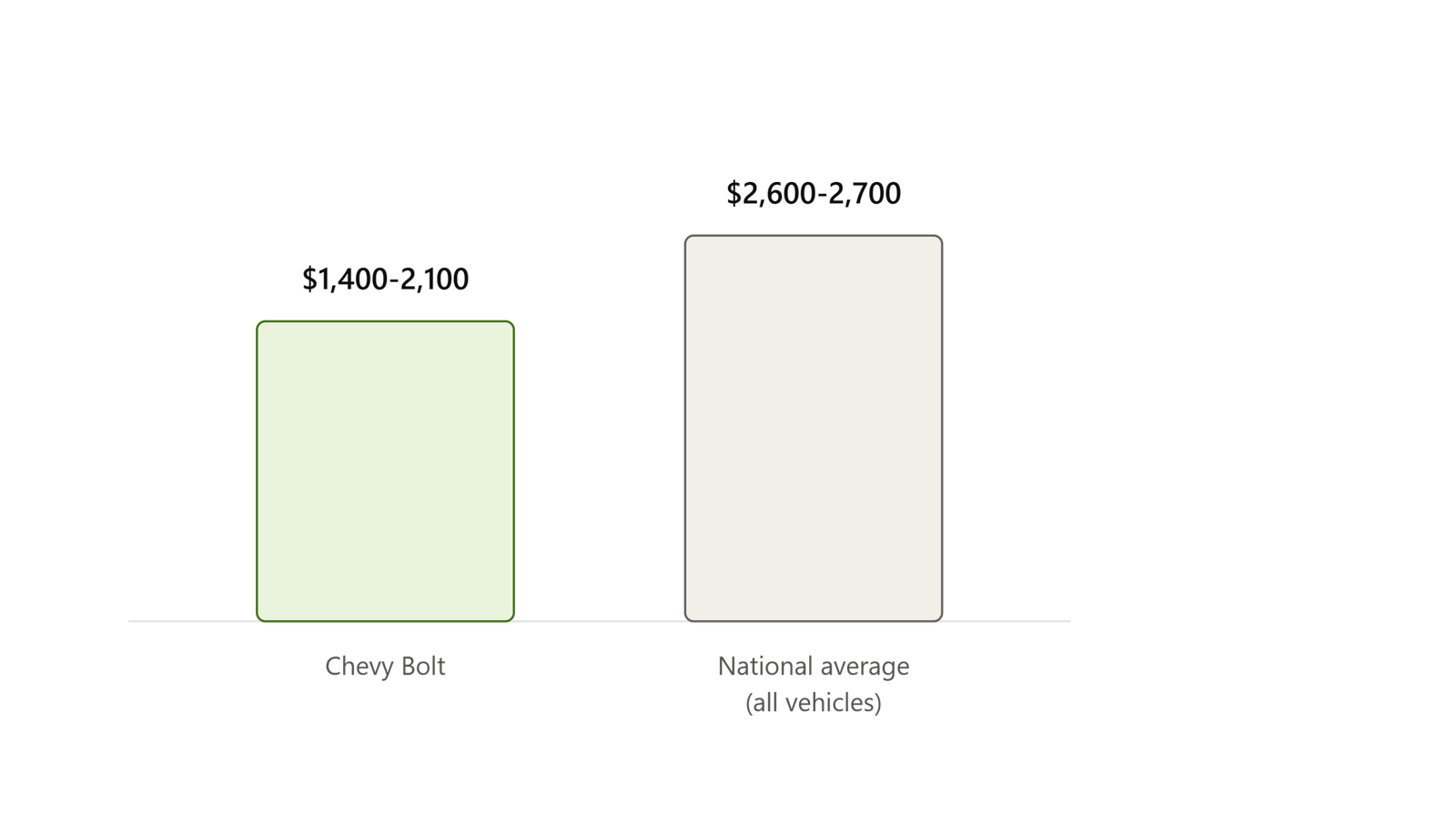
- Full coverage on a Bolt typically runs $1,400 to $2,100 a year across most 2026 sources, landing at or below the roughly $2,600 to $2,700 national average for all vehicles, gas and electric combined.
- USAA, GEICO, and Nationwide consistently rank as the cheapest insurers, with USAA quoting as low as $48 a month for liability and $100 a month for full coverage.
- A real, important wrinkle: Chevrolet discontinued the Bolt in 2023 following battery malfunction reports and a related recall, with a relaunch planned for the 2027 model year, worth knowing if you’re shopping the used market for one now.
- The Bolt’s below-average theft rate helps offset its EV-typical elevated repair costs, part of why it lands closer to gas-car pricing than most other EVs covered throughout this site.
The real numbers, pulled together
Consistent with the pattern covered throughout our other model-specific guides, different sources report somewhat different figures depending on methodology, but the Bolt’s numbers cluster in a genuinely affordable range across nearly every source reviewed:
- One source finds full coverage averaging $2,075 a year, with GEICO offering the cheapest rate at $1,531 a year.
- Another pegs the 2025 model year average at $1,486 a year, with PEMCO (a regional insurer) offering the cheapest rate at $932 a year.
- A third finds a full-coverage average of $197 a month ($2,364 a year), with USAA offering the cheapest rate at $100 a month for full coverage and just $48 a month for liability-only.
- A broader directional estimate puts typical full-coverage costs in the $1,500 to $1,800 a year range for a clean-record, mid-30s-to-mid-50s driver with an average commute.
Compare any of these figures against the roughly $2,600 to $2,700 national average for full coverage across all vehicle types, gas and electric combined, and the Bolt’s positioning becomes clear: it sits at or meaningfully below what the average American driver pays for any car, not just relative to other EVs.
Why the Bolt breaks from the typical EV cost pattern
As covered throughout this site, EVs generally cost more to insure than gas cars, driven by expensive battery packs, specialized repair networks, and higher purchase prices. The Bolt sidesteps several of these factors more successfully than almost any other EV covered in our broader research:
Lower purchase price directly reduces total-loss exposure. The Bolt’s original MSRP ranged from about $32,495 to $35,545 depending on trim, positioning it firmly as an affordable, mainstream vehicle rather than a premium one, which keeps the comprehensive and collision math favorable compared to pricier EVs.
A below-average theft rate offsets some of the typical EV repair-cost premium. This is a genuinely distinct advantage: while certain EV models have faced elevated theft and vandalism concerns, as covered in our Tesla-specific research, the Bolt’s comparatively low theft rate works in the opposite direction, partially offsetting the specialized-component repair costs that push EV premiums up generally.
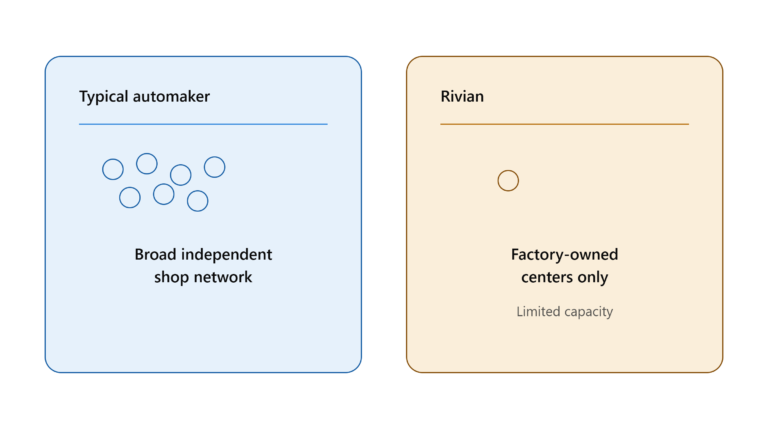
It’s backed by an established, mainstream automaker’s repair network. As covered throughout our cheapest-EVs-to-insure ranking, vehicles from legacy automakers that also build gas cars consistently insure closer to gas-car pricing than EV-only brands, and the Bolt is a clear example of this pattern in action.
Best insurers for a Bolt, ranked
USAA consistently posts the cheapest rates across multiple sources, at $48 a month for liability and $100 a month for full coverage in one comparison, in line with USAA’s broader strength covered throughout this site for eligible military-affiliated drivers.
GEICO shows up repeatedly as the cheapest non-military option, with one source finding GEICO’s full coverage at $1,531 a year against the broader average of $2,075.
Nationwide is specifically cited as offering the cheapest rate for the latest Bolt model year in at least one comparison, at $136 a month for full coverage.
PEMCO, a regional Pacific Northwest insurer, appears as the cheapest option in another source, at $932 a year for full coverage, a reminder consistent with our broader guide to regional versus national insurers: don’t assume a familiar national brand automatically beats every regional option available in your specific state.
The recall and discontinuation wrinkle, worth knowing before you buy used
This is a genuinely important detail for anyone shopping the used Bolt market specifically, separate from the insurance cost conversation but directly relevant to your buying decision. Chevrolet discontinued Bolt production in 2023 following reports of battery malfunctions and a related recall addressing manufacturing defects that posed a fire risk in certain units. Chevrolet has since announced plans to relaunch the Bolt EV for the 2027 model year, but if you’re shopping the used market for an earlier Bolt right now, it’s worth specifically confirming that any recall-related battery work has been completed and documented for the exact vehicle you’re considering, both for safety and because unresolved recall status can be a relevant factor if you ever need to file an insurance claim, as covered in our broader battery fire and degradation guides elsewhere on this site.
Where the Bolt ranks against other vehicles broadly
It’s worth being precise about the Bolt’s actual affordability ranking, since «cheap for an EV» and «cheap overall» aren’t quite the same claim. One detailed ranking placed the Bolt 89th out of 256 SUVs for insurance affordability and 361st out of 827 vehicles overall, a middle-tier position rather than a top-tier bargain. This is still a genuinely strong showing, especially compared to the EV rankings covered throughout our broader model guides, but it’s honest to note the Bolt isn’t literally the cheapest vehicle on the road to insure, just meaningfully more affordable than the typical EV, and comparable to or better than the broader market average.
How to get the most affordable Bolt insurance
Get quotes from at least three insurers, given how much variance exists even among sources reviewed for this article, from PEMCO’s $932 a year up toward $2,364 a year at other companies for broadly similar coverage.
Check USAA eligibility first if you have any military connection, given how consistently it posts the lowest figures across independent sources.
Ask specifically about roadside assistance coverage. Batteries in older EVs tend to hold less charge over time, as covered in our broader battery degradation guide, and mobile charging or towing assistance can be particularly useful for an aging Bolt specifically, given how many are now several years into their ownership lifecycle following the 2023 production pause.
Confirm any recall work is completed before insuring a used Bolt, given the battery recall history covered above, both for safety and to avoid any complication in a future claim.
Compare a Bolt directly against similar EVs when shopping. Bolt insurance rates run similar to comparable EVs like the Nissan Leaf, Hyundai Ioniq 5, and Kia Niro, all covered in our broader cheapest-EVs-to-insure ranking, worth cross-shopping if you’re choosing between several budget-friendly EV options rather than committed to the Bolt specifically.
The bottom line
The Chevrolet Bolt stands out as genuine proof that EV ownership doesn’t require accepting a dramatically elevated insurance bill, landing at or below the national average for all vehicles combined, not just other EVs. USAA, GEICO, and Nationwide consistently offer the most competitive rates, and the Bolt’s combination of a modest purchase price, below-average theft rate, and mainstream automaker repair network explains why it breaks so cleanly from the typical EV cost pattern documented throughout this site. The one genuine caveat, worth taking seriously if you’re shopping the used market specifically, is confirming that any battery recall work tied to the 2023 production pause has been properly completed on the specific vehicle you’re considering before you buy and insure it.
This article is for informational purposes only and does not constitute financial or insurance advice. Insurance rates vary by insurer, state, model year, and individual driver profile, and change frequently. Always get a personalized quote before making a purchasing decision.