Electric Car Insurance in Florida: What You Need to Know
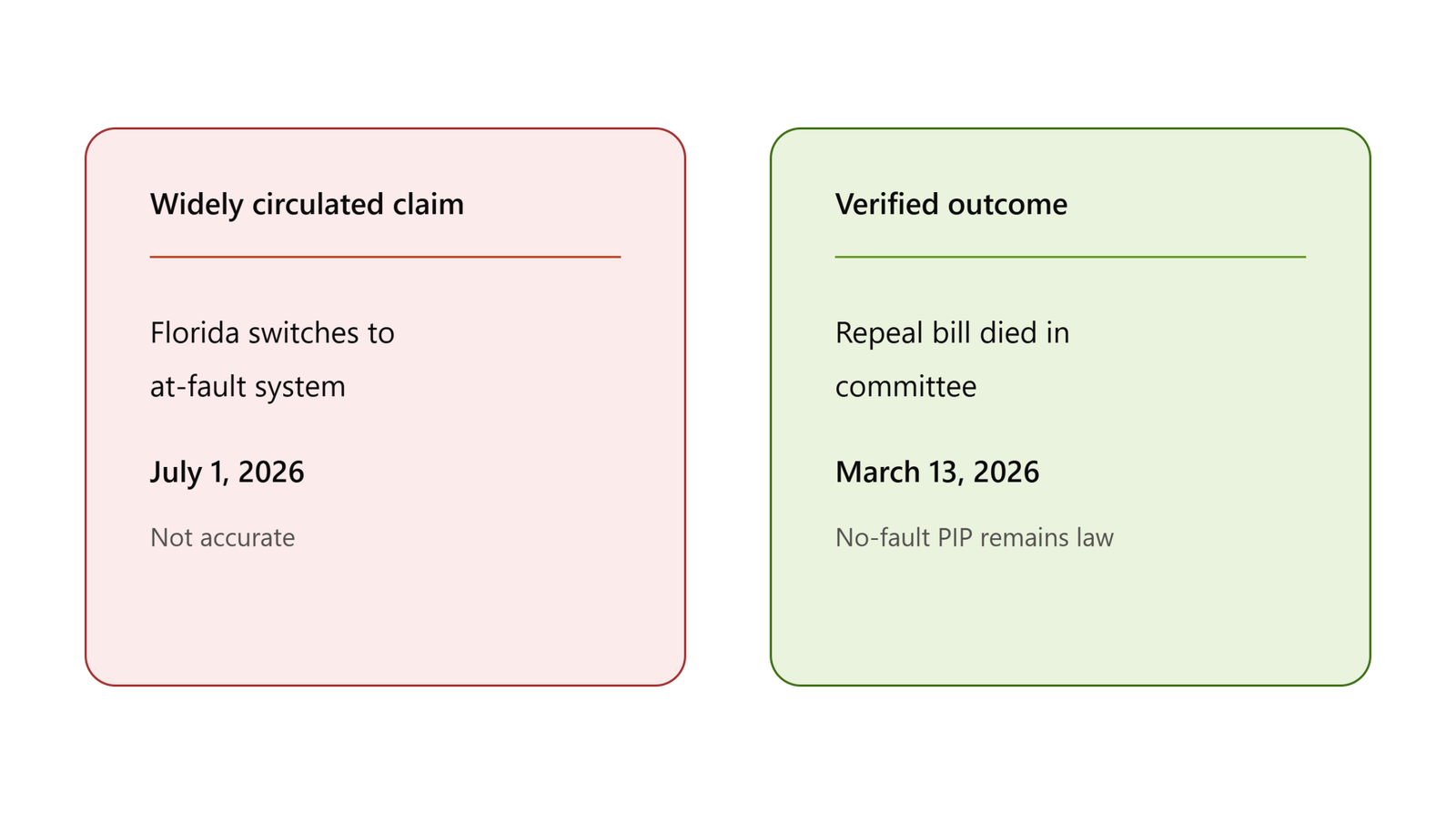
If you’ve searched anything about Florida car insurance recently, you may have run into a genuinely confusing claim: that Florida is scrapping its no-fault system for a traditional at-fault model in mid-2026. According to the most rigorously sourced reporting available, that’s not accurate, the repeal effort died in a Florida Senate committee in March 2026, and the state’s PIP-based no-fault system remains in effect. This guide sorts through that confusion and covers what Florida actually requires, and what it means for EV owners specifically.
Key takeaways:
- Florida requires $10,000 in personal injury protection (PIP) and $10,000 in property damage liability (PDL), figures that haven’t changed and, per verified legislative records, remain the law after a repeal attempt died in committee on March 13, 2026.
- Some online sources and AI-generated summaries have incorrectly claimed Florida is switching to an at-fault system on July 1, 2026, a claim directly contradicted by sources that verified the actual outcome of the 2026 legislative session.
- Florida’s $10,000 PDL minimum covers only a fraction of a totaled EV’s value, given that even a mainstream new vehicle now averages over $47,000, industry professionals commonly recommend $50,000 to $100,000 in PDL coverage instead.
- Neither PIP nor PDL covers your own vehicle from weather events, meaning comprehensive coverage is genuinely essential in a state where major storms routinely total thousands of vehicles in a single event.
Clearing up the no-fault confusion first
This deserves to be addressed directly before anything else, since getting it wrong could mean carrying the wrong coverage. Multiple sources have claimed Florida is transitioning from its no-fault PIP system to a traditional at-fault (tort) framework starting July 1, 2026, replacing PIP with mandatory bodily injury liability coverage. However, sources that specifically verified the outcome of the 2026 Florida legislative session report a different, more reliable conclusion: as of the legislative session’s close on March 13, 2026, Florida’s no-fault PIP law has not been repealed, and the $10,000 minimum PIP coverage requirement still applies to most registered vehicles. The specific Senate proposal in question, SB 522, died in the Banking and Insurance committee on that date.
One source addresses this confusion directly, noting that several websites and AI-generated search summaries have echoed the incorrect repeal claim, likely stemming from outdated coverage of a bill that was proposed but ultimately failed to pass. The practical guidance from multiple reliable sources is consistent: do not change your coverage based on headlines about a repeal bill that did not pass, and confirm your specific requirements directly with the Florida Department of Highway Safety and Motor Vehicles (FLHSMV) or a licensed agent rather than relying on any single online source, including this one, given how much conflicting information is currently circulating.
Florida’s actual current requirements
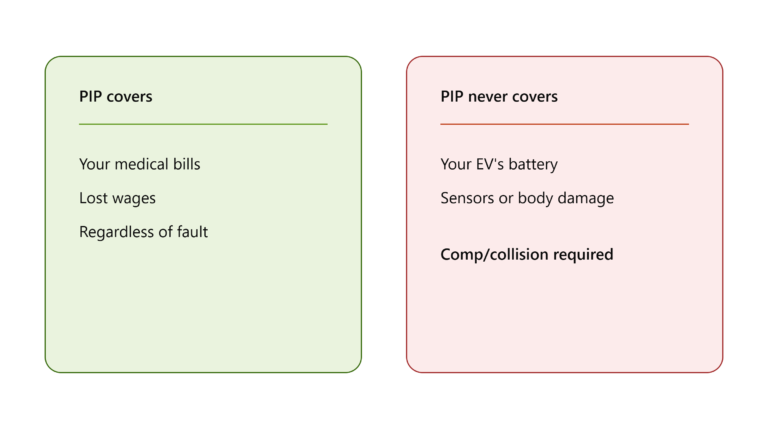
Florida requires $10,000 in personal injury protection (PIP), in line with the state’s no-fault system, and $10,000 in property damage liability (PDL) coverage on any four-wheel motor vehicle registered in the state. PIP covers up to 80% of your necessary and reasonable medical expenses and up to 60% of lost wages, regardless of who caused the accident, subject to the $10,000 aggregate limit. Florida remains one of twelve no-fault states in the U.S., a structural difference from at-fault states like California, covered in our dedicated guide, and Texas, covered in our dedicated guide as a no-fault state requiring its own PIP.
Why the $10,000 PDL minimum is a genuine problem for EV owners
This is worth taking seriously given everything covered throughout this site about EV repair and replacement costs. The average transaction price for a vehicle in 2026 exceeds $47,000, and if you total someone’s car while carrying only the $10,000 PDL minimum, you’re personally liable for every dollar above that limit, with Florida courts able to collect those judgments through wage garnishment and property liens. For an EV specifically, where values frequently exceed $50,000 to $80,000 as covered throughout our dedicated Tesla, Rivian, and Lucid guides, a $10,000 PDL minimum covers a genuinely small fraction of what you’d owe if you’re at fault in an accident involving another EV.
Insurance professionals commonly recommend a minimum of $50,000 in PDL coverage for anyone with assets, and $100,000 for homeowners, guidance that applies with particular force to any Florida driver, EV owner or not, but especially relevant here given how much more expensive EV-involved accidents specifically tend to run, as covered throughout this site’s broader model and coverage guides.
What Florida’s minimum coverage doesn’t protect, worth understanding clearly
Neither PIP nor PDL pays anything toward damage to your own vehicle, from any cause, including hurricane, flooding, hail, or falling debris. The only coverage that protects your own vehicle from weather events is comprehensive coverage, part of what carriers call full coverage. In a state where major storms routinely total thousands of vehicles in a single event, this is a genuinely important gap to understand, especially for an EV owner given the elevated total-loss patterns and battery-related complications covered in our dedicated guide to EV battery fires and our broader comprehensive-versus-collision coverage guide.
Collision coverage isn’t part of the legal minimum either. If you cause an accident carrying only Florida’s minimum coverage, your own vehicle’s repairs are entirely your responsibility, a risk that compounds directly with EV repair costs documented throughout this site.
Comprehensive and collision are required by lenders, regardless of the state’s legal minimum, if you’re financing or leasing your EV, consistent with the general lending requirements covered in our dedicated leasing versus financing guide.
Uninsured motorist coverage, genuinely important in Florida specifically
Florida has one of the highest rates of uninsured drivers in the country, and uninsured motorist (UM/UIM) coverage, while not required, is strongly recommended given that risk. If you’re hit by an uninsured driver while carrying only Florida’s minimum PIP and PDL, you have essentially no recourse for your own vehicle damage or losses beyond what your own limited coverage provides, a risk that matters more for an EV owner given the elevated replacement costs covered throughout this site.
The broader EV cost context in Florida
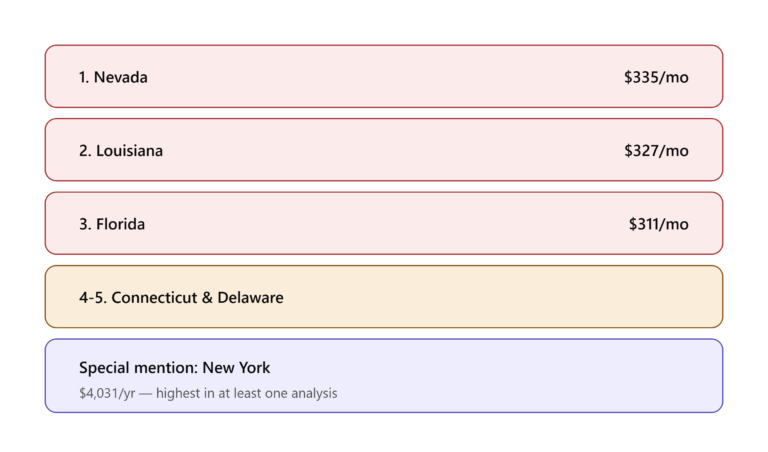
As covered in our dedicated state-by-state EV insurance guide, Florida consistently ranks among the more expensive states for EV insurance generally, driven by heavy traffic congestion, a high uninsured driver rate, and significant hurricane and flood exposure, all factors that drive general insurance costs up before any EV-specific factors are even applied. This aligns with the broader pattern documented throughout this site: Florida’s combination of an already-elevated baseline and genuine EV-specific cost factors puts it toward the higher end of the state-level spectrum covered in our comprehensive state comparison research.
Practical steps for Florida EV owners
- Verify your actual current requirements directly with FLHSMV or a licensed agent, given the genuine, documented confusion online about whether Florida’s no-fault system is changing, don’t rely on any single source, including this one, without confirming directly.
- Seriously consider PDL coverage well above the $10,000 minimum, given how easily an EV-involved accident can exceed that limit, with $50,000 to $100,000 as the commonly recommended range from insurance professionals.
- Carry comprehensive coverage given Florida’s hurricane and flood exposure, since minimum PIP and PDL provide zero protection for your own EV from weather events.
- Add uninsured motorist coverage, given Florida’s notably high uninsured driver rate and the elevated stakes of an EV-involved accident.
- If you’re financing or leasing, confirm your lender’s specific coverage requirements, which will exceed the state’s bare legal minimum regardless of the no-fault system’s current status.
The bottom line
Florida’s actual, current requirement is $10,000 in PIP and $10,000 in PDL under its no-fault system, and despite genuine, documented confusion online claiming otherwise, the most rigorously verified reporting confirms this system remains in place after a repeal effort died in committee in March 2026. Whatever the eventual outcome of future legislative sessions, Florida’s minimum coverage is widely considered inadequate for the real cost of an accident involving any modern vehicle, and especially inadequate for an EV specifically, given how far the state’s $10,000 PDL minimum falls short of what a totaled Tesla, Rivian, or other EV covered throughout this site is actually worth. Confirming your specific requirements directly, carrying meaningfully more coverage than the legal floor, and adding comprehensive and uninsured motorist protection are the practical steps that matter most for a Florida EV owner right now.
This article is for informational purposes only and does not constitute financial or insurance advice. Insurance requirements and relevant legislation change frequently and have been subject to genuine public confusion recently. Always confirm current requirements directly with the Florida Department of Highway Safety and Motor Vehicles and a licensed insurance agent.