Tesla Model S Insurance: Why It Costs So Much
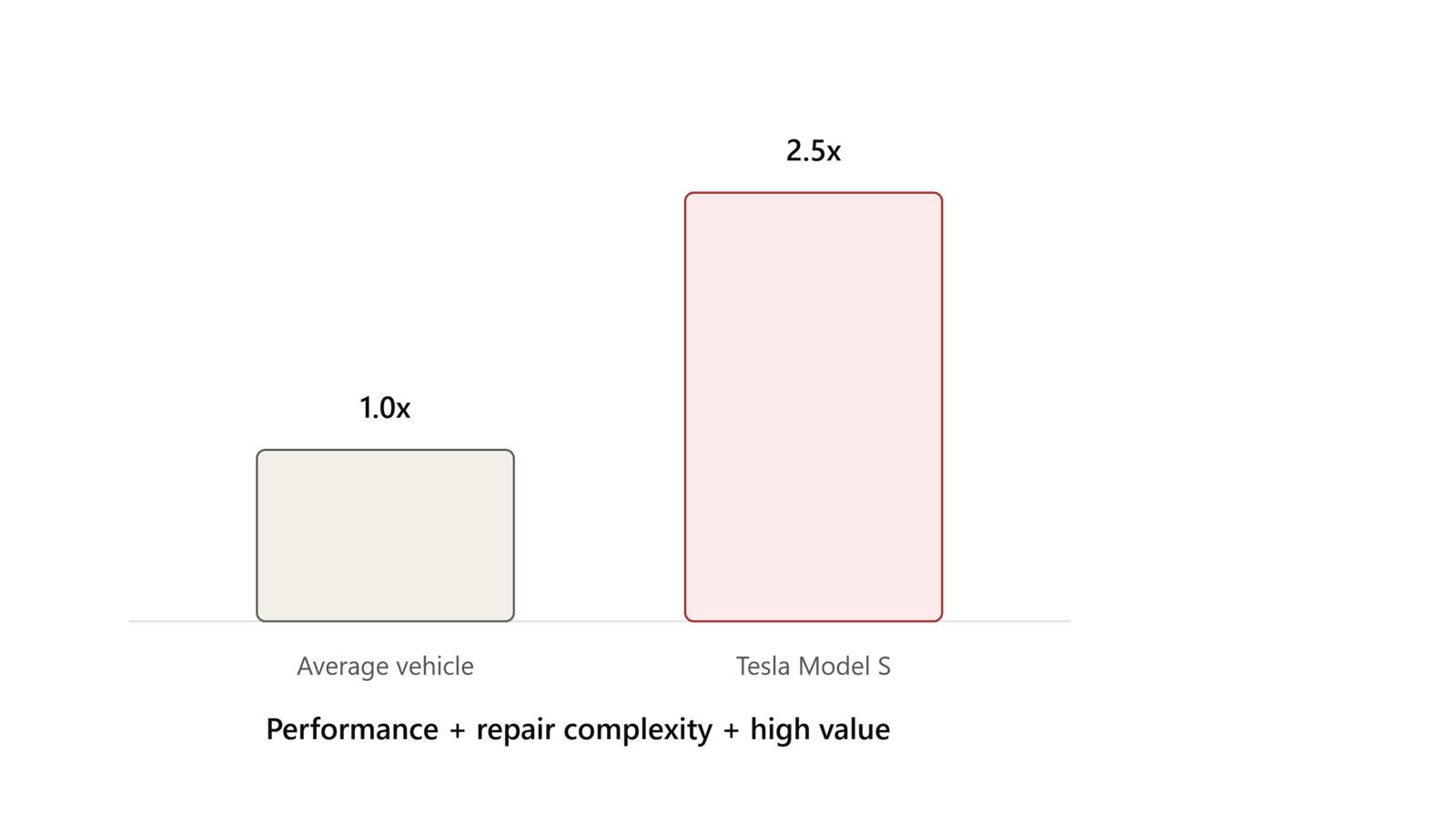
A Model S isn’t just an expensive Tesla, it’s a genuine performance flagship with a Plaid variant that hits 60 mph in under two seconds, a starting price north of $85,000, and collision claims running two and a half times higher than the average car. Every factor that makes other Teslas expensive to insure is present here too, just turned up considerably. This guide breaks down exactly why, with real numbers.
Key takeaways:
- Model S collision claims run about 2.5 times higher than the average vehicle, a statistic that captures both the car’s performance potential and its expensive repair profile in one number.
- Full coverage typically runs $2,800 to $6,000 a year depending on trim and location, with budget scenarios in low-cost states landing around $2,000 to $2,500 and high-cost-state Plaid owners seeing $4,500 to $6,500 or more.
- The Plaid trim, with 1,020 horsepower and a 0-60 time under two seconds, sits in its own risk tier, insurers specifically price extreme acceleration capability as a claim-severity factor, independent of whether you ever actually use it.
- Comprehensive and collision costs alone represent roughly 45% of a Model S’s total premium, directly reflecting the vehicle’s six-figure replacement value.
The core numbers
Estimates vary by source and methodology, consistent with the pattern covered throughout our Tesla research, but a genuinely useful range emerges: full coverage on a Model S typically runs $2,800 to $6,000 a year, with one detailed regional breakdown finding budget buyers in low-cost states with older trims and clean records landing around $2,000 to $2,500 a year, while drivers in high-cost states (California, Florida, New York, Louisiana, Texas) on newer Performance or Plaid models can see $4,500 to $6,500 a year or more. A separate source pegs the average annual premium at a more moderate $2,640, illustrating the same wide-methodology-driven variance covered in our Model Y guide. Trim-specific monthly figures range from $393 a month for full coverage on the Plaid down to $83 a month for minimum coverage on older, base configurations.
The practical guidance from this range: if you’re shopping for a Model S, especially a Performance or Plaid trim, assume you’ll pay at least 50% to 80% above the national average insurance premium unless you specifically know you’re in a low-cost state with an excellent driving record.
The collision claims number that explains everything
This is the single most useful statistic for understanding why Model S insurance costs what it does: collision claims for the Model S run about two and a half times higher than the average car. This one number captures multiple factors at once, the car’s genuine performance capability, its expensive repair profile, and its high replacement value, and it’s exactly the kind of claims-severity data that feeds directly into insurer pricing models, similar to the claims-data mechanics covered in our Model 3 safety and insurance guide.
Why performance specifically drives up the price
Speed correlates with claim severity, and insurers price that directly. A Model S Plaid can exceed 200 mph and reaches 60 mph in under two seconds, putting it solidly in supercar acceleration territory. Speeding contributes to nearly one-third of traffic fatalities according to NHTSA data, and insurers classify vehicles capable of this kind of performance in their highest performance tiers, carrying meaningful premium surcharges independent of any individual driver’s actual habits. Even the non-Plaid, dual-motor Model S is still genuinely quick, with 0-60 times around 3.1 seconds, meaning this pricing factor applies across the lineup, not just the flagship trim.
Higher performance potential is priced in even for cautious drivers. This is worth being explicit about: the surcharge isn’t just for drivers who actually exploit the Plaid’s acceleration, insurers price the vehicle’s capability itself as a risk factor, the same way a sports car costs more to insure than a sedan with an identical driving record behind the wheel.
Why repair costs run so high
A cracked bumper isn’t an $800 fix. On a Plaid specifically, Tesla-certified repair centers use proprietary parts, and a repair that would be routine on a mainstream sedan can become a $15,000 job once specialized labor and parts availability are factored in, consistent with the proprietary-parts problem covered throughout our broader Tesla insurance research.
Aluminum body panels and complex electronics compound minor damage. As covered in our detailed Tesla insurance breakdown, unibody aluminum construction means damage to one section of a panel can require replacing the entire piece, and the Model S’s high-end electronics and complex battery pack add further expense even to seemingly minor collisions.
Not every body shop is certified to work on a Model S. This repair-network limitation, covered extensively throughout our EV coverage guides, applies with particular force to the Model S given its complexity and lower production volume relative to the Model 3 and Model Y.
Why vehicle value matters so directly
High MSRP drives the comprehensive and collision math. The Model S starts around $79,990 to $86,630 depending on the source and model year, with the Plaid trim exceeding $100,000. These figures directly increase the comprehensive and collision components of your premium, which together represent approximately 45% of the total Model S insurance cost, a genuinely large share tied purely to the vehicle’s replacement value rather than any behavioral risk factor.
Total-loss exposure scales with vehicle worth. As covered throughout our battery cost and GAP insurance guides, insurers price for the real possibility of writing a large, six-figure check if a new Plaid is totaled, a meaningfully bigger financial exposure than the equivalent scenario on a mainstream sedan.
Model year moves the number substantially. A 2025-2026 Model S can cost two to three times as much to buy as a 2016-2017 example, and insurance pricing scales directly with that gap, following the same model-year cost pattern documented in our Model Y guide. A used, older Model S is a genuinely different insurance risk than a brand-new one, even carrying the same nameplate.
Does lease or loan status change anything?
Yes, in the same way covered throughout our leasing versus financing guide: lenders and lessors typically require low deductibles and full coverage on a financed or leased Model S, which pushes the monthly premium up regardless of what coverage level you might otherwise choose if you owned the car outright.
How to actually lower a Model S premium
Choose the standard dual-motor trim over the Plaid if cost matters. As covered above, the Plaid’s performance profile carries a real, separate pricing tier, and stepping down to the standard trim meaningfully reduces this specific cost driver.
Shop specifically for high-value-vehicle insurance programs. Some insurers offer specialized coverage for high-value vehicles, including optional coverages like towing and labor, rental car reimbursement, and gap insurance, alongside features like accident forgiveness and a vanishing deductible, worth comparing directly against standard policies given how much of the Model S’s risk profile is tied to its high value specifically.
Consider a used, older Model S if you want the badge without the newest-model-year premium. Given the two-to-three-times purchase price gap between recent and older model years documented above, a well-maintained older Model S can meaningfully reduce your insurance cost while still delivering the core ownership experience.
Get multiple quotes, and expect more variance than a mainstream vehicle. Consistent with the broader Tesla-shopping guidance covered in our Model Y guide, getting at least five quotes rather than three is worthwhile given how differently insurers price this specific combination of performance and value.
Ask directly about agreed value endorsements if you’re insuring a genuinely high-value or collectible Model S configuration, similar to the Agreed Value concept covered in our EV conversion insurance guide, ensuring your payout in a total loss reflects the vehicle’s real value rather than a standard depreciation schedule.
The bottom line
The Model S costs so much to insure because it combines nearly every expensive-to-insure factor covered throughout this site into a single vehicle: genuine supercar-level performance in the Plaid trim, a six-figure purchase price that directly drives comprehensive and collision costs, and the same proprietary-parts, limited-repair-network problem that affects every Tesla model, just applied to a more complex and expensive vehicle. The 2.5x collision claims severity statistic is the single number that captures this whole picture most efficiently. If you’re shopping for a Model S with cost in mind, the standard trim over Plaid, an older model year, and getting several quotes specifically for high-value-vehicle coverage are the levers most within your control.
This article is for informational purposes only and does not constitute financial or insurance advice. Insurance rates vary by insurer, state, model year, trim, and individual driver profile, and change frequently. Always get a personalized quote before making a purchasing decision.