What to Do If Your Insurer Denies a Battery Claim
A denial letter isn’t the final word, it’s the start of a conversation you didn’t ask for but now need to have. Many denied claims are successfully overturned when policyholders push back with the right evidence and strategy, and battery-specific denials often hinge on a narrow, specific technicality worth understanding before you accept the decision. This guide walks through exactly why battery claims get denied and the concrete steps to appeal one.
Key takeaways:
- Every denial letter must state a specific reason, and understanding that exact reason, a coverage exclusion, insufficient documentation, or an administrative error, determines your entire appeal strategy, don’t skip past this step.
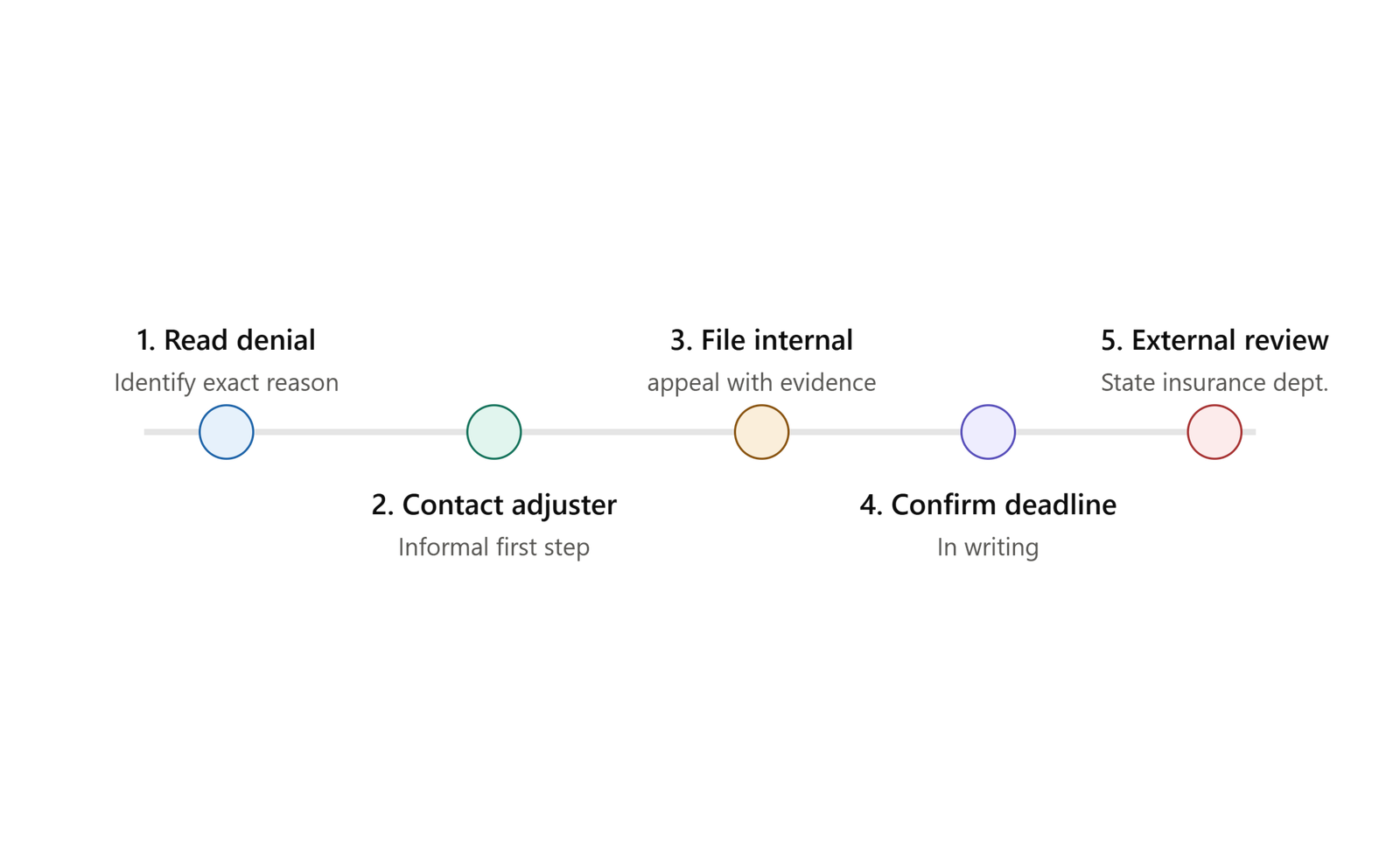
- Most auto insurers use a two-step process: an internal appeal where you ask the same company to reconsider, followed by external review through your state’s insurance department if the internal appeal fails.
- Battery claims specifically get denied for a narrow set of recurring reasons: gradual degradation (never covered by any policy), power surge damage attributed to an external source rather than direct storm damage, and disputes over whether damage stems from a covered event at all.
- If your denial letter doesn’t clearly state an appeal deadline, call your insurer and get that deadline confirmed in writing before doing anything else, since missing it can forfeit your right to appeal entirely.
Step 1: Read the denial letter carefully and identify the exact reason
The insurer is legally required to provide you with the specific reason for the rejection, and that explanation is your roadmap for everything that follows. Common categories worth recognizing immediately:
Policy exclusions. As covered throughout our broader battery coverage guides, gradual capacity loss, manufacturing defects, and internal malfunctions unrelated to a collision are never covered by any standard auto policy, this is the manufacturer warranty’s territory, not insurance, and no appeal will overturn a denial based on this specific exclusion.
A dispute over whether the cause qualifies as a covered event. This is the most common genuinely appealable category for battery claims specifically. As covered in our dedicated guide to EV battery damage coverage, a real documented case involved an insurer denying a claim for battery damage caused by a power surge during home charging, arguing the standard policy covered fire, theft, and weather damage to the vehicle’s body, but excluded electrical system failure caused by an external power supply issue. This is a genuine gray area, not a clear-cut exclusion, and it’s exactly the kind of denial worth challenging with the right evidence.
Insufficient documentation or evidence. Sometimes a claim gets denied simply because the initial submission lacked something the insurer needed, a missing inspection report, unclear photos, or an incomplete description of how the damage occurred, all fixable without a full formal appeal.
Administrative errors. Mistakes like incorrect information on file or a reported policy lapse can trigger a denial that has nothing to do with the actual merits of your claim, worth checking for specifically before assuming the denial reflects a genuine coverage dispute.
Step 2: Contact the adjuster directly before filing a formal appeal
If you believe your claim was wrongfully denied, reach out to the adjuster who handled your case first. Clarify your position and provide any new or overlooked evidence that might resolve the issue at this informal stage, before escalating to a formal written appeal. This step alone resolves genuine misunderstandings or documentation gaps a meaningful share of the time, without requiring the more involved internal appeal process covered next.
Step 3: File a formal internal appeal if the informal conversation doesn’t resolve it
Most insurers use a two-step process. Your first formal step is an internal appeal, asking the same insurance company to reconsider its own decision with a complete, organized packet of supporting evidence. Follow the insurer’s stated appeal instructions to the letter, and use certified mail with a return receipt when you send your appeal packet, giving you documented proof of what you sent and when the insurer received it.
For a battery-specific denial, your appeal packet should specifically include:
- Documentation establishing the actual cause of the battery damage, particularly important if the dispute centers on whether the event qualifies as covered (a power surge, a specific weather event, a collision) versus excluded (gradual wear, an external electrical fault).
- Any professional inspection or diagnostic report addressing the battery’s condition and the specific mechanism of failure, since a battery claim denial often hinges on exactly this kind of technical determination.
- Photos and any error codes or diagnostic readouts from the time of the incident, supporting your account of what happened and when.
- A clear, factual written statement describing the sequence of events, avoiding speculation about fault or blame, and focusing on the objective facts the adjuster needs to reconsider the decision.
Step 4: Confirm your appeal deadline in writing, immediately
If your denial letter does not state a clear appeal deadline, call your insurer and get that deadline confirmed in writing before you do anything else. This is a genuinely critical, easy-to-miss step, missing an appeal deadline can forfeit your right to challenge the denial entirely, regardless of how strong your underlying case is.
Step 5: Escalate to external review if the internal appeal fails
Once you exhaust the internal process, you have the right to external review by an independent organization not affiliated with your insurer. For auto insurance claims specifically, your state’s Department of Insurance handles consumer complaints and can compel insurers to justify their decisions, and you can typically file a complaint directly through your state’s insurance department website. External review requests typically must be submitted within a set window, commonly around four months of your final internal denial, so track every date throughout this entire process carefully.
When escalating, attach your denial letter, your written appeal response, and a concise timeline of events, not your entire claim file, to make the external review process faster and more effective, consistent with the streamlined-escalation guidance covered throughout our broader claims research.
When to bring in professional help
If you’ve gone through the internal appeal process and still aren’t getting anywhere, it might be time to bring in a professional. An attorney, insurance advocate, or even a trusted independent broker can help you understand your options and potentially speak on your behalf, since they understand how the appeals system actually works and may be able to push your case in the right direction more effectively than continuing to navigate it alone. This is particularly worth considering for a battery-specific denial given how technical the underlying dispute often is, whether damage stemmed from a covered peril or an excluded cause frequently requires exactly the kind of expert documentation an advocate or attorney can help you assemble and present effectively.
A practical checklist for the entire process
- Read the denial letter fully and identify the specific, stated reason, not just the fact that you were denied.
- Confirm your appeal deadline in writing if it isn’t clearly stated.
- Contact the adjuster directly first with any new or overlooked evidence before filing a formal appeal.
- Assemble a complete, organized evidence packet specifically addressing the stated reason for denial, not a generic collection of documents.
- Submit your formal internal appeal via certified mail with a return receipt.
- Keep a detailed log of every interaction with the insurance company throughout the process, dates, names, and summaries of what was discussed.
- If the internal appeal fails, escalate to your state’s Department of Insurance for external review, attaching a concise, focused packet rather than your entire file.
- Consider professional help if the technical or financial stakes justify it, particularly for a genuinely disputed battery-cause determination.
The bottom line
A denied battery claim is genuinely worth fighting in many cases, but the strategy depends entirely on why it was denied in the first place. If the denial cites gradual degradation, a manufacturing defect, or normal wear, that’s a hard exclusion no appeal will overturn, that’s warranty territory, not insurance. But if the denial hinges on a genuine dispute about whether the damage qualifies as a covered event, the power-surge-versus-weather-damage gray area covered in our dedicated battery coverage guide being a real, documented example, that’s exactly the kind of decision a well-documented appeal can successfully challenge. Read the denial letter carefully, confirm your deadlines in writing, build a complete evidence packet addressing the specific stated reason, and don’t hesitate to escalate to your state’s insurance department, or bring in professional help, if the internal appeal doesn’t resolve things in your favor.
This article is for informational purposes only and does not constitute financial or legal advice. Appeal processes, deadlines, and requirements vary significantly by insurer, state, and individual policy. Consider consulting your state’s Department of Insurance or a licensed attorney for guidance specific to your situation.