Charging Station Accident: Who Is Liable?
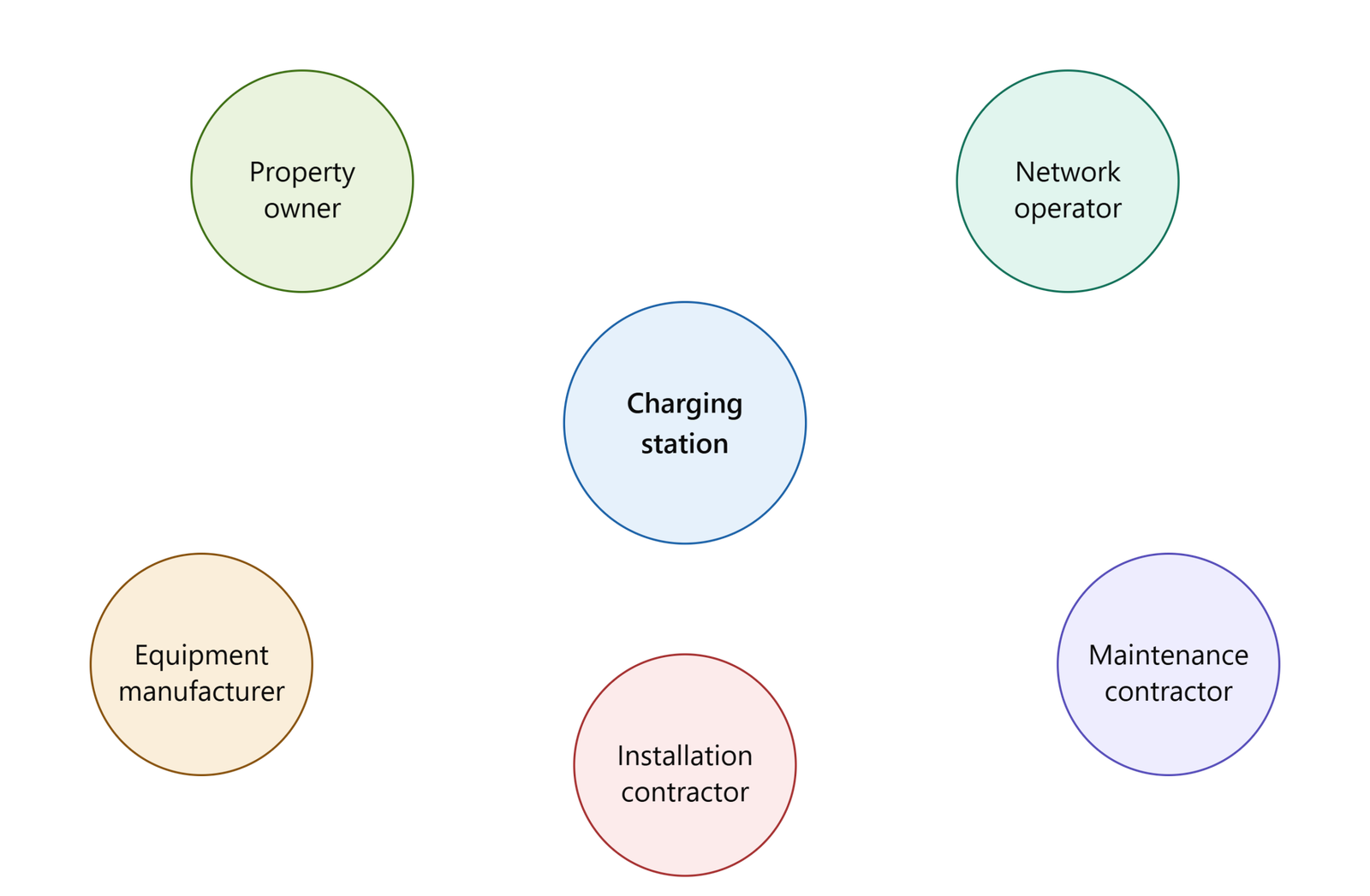
A single injury at a charging station can involve six potentially responsible parties: the property owner, the charger owner or operator, the equipment manufacturer, the installer, a maintenance contractor, and sometimes another careless driver, all at once. With over 160,000 public charging stations now operating across the United States, this is a genuinely growing category of claim, and figuring out who actually pays requires understanding which of these parties controlled the specific hazard that caused your injury. This guide breaks down exactly how liability gets assigned.
Key takeaways:
- Charging station injuries typically fall under premises liability law, meaning the property owner has a legal duty to keep the area reasonably safe, inspect regularly, repair hazards, and warn about known dangers.
- Liability can spread across multiple parties simultaneously: property owners, charging network operators, equipment manufacturers, and installation contractors can each bear some responsibility depending on what specifically caused the incident.
- Trip-and-fall hazards from loose cables and poor lighting are among the most common charging station injury claims, and evidence like photos, surveillance footage, and maintenance records typically determines fault.
- If you own or operate a charging station commercially, your insurance needs extend well beyond standard liability coverage, into property, business interruption, environmental, and even cyber liability territory.
The starting legal framework: premises liability
For most charging station incidents, especially trip-and-fall injuries, liability typically falls under premises liability law, the same body of law governing any injury on someone else’s property. Property owners have a legal duty to keep the area reasonably safe for lawful visitors, which includes a duty to inspect the property regularly, repair hazards, and warn about dangers they know about or reasonably should know about. When these duties are ignored, loose cords, poor lighting, or faulty equipment can turn an ordinary charging stop into an injury that never should have happened, and the property owner can be held responsible for that failure.
Why charging stations specifically create new hazard categories
Charging stations introduce risks that traditional gas stations simply don’t have, worth understanding since they explain why this liability picture is genuinely more complex than a standard parking lot slip-and-fall:
Visibility issues turn simple pathways into accident zones. Low lighting and dark-colored charging cables make hazards harder to detect, especially at night or in covered parking structures, a combination that shows up repeatedly in documented charging station injury cases.
Electrical hazards add a category of risk gas stations don’t present. Faulty or improperly maintained equipment can create electrical shock or burn risk, a genuinely distinct hazard type from the trip-and-fall category, and one that typically implicates different potentially liable parties, covered below.
The equipment itself sits in a gray zone of responsibility. Unlike a gas pump, which is typically owned and maintained by the station itself, EV charging equipment can be owned by the property owner, leased from a third-party network operator, or maintained under a separate service contract, any of which changes who’s actually responsible for a specific maintenance failure.
The full list of potentially liable parties
This is worth understanding in detail, since a single incident can genuinely involve several of these simultaneously, and correctly identifying which party controlled the specific hazard determines where your claim actually needs to go:
Property owners can face liability for hazardous conditions on their premises, including trip hazards, inadequate lighting, or failure to maintain safe access to the charging equipment itself, the baseline premises liability framework covered above.
Charging network operators may share responsibility specifically for equipment they own or maintain under a service agreement, separate from the property owner’s general premises duty, particularly relevant given how many charging stations operate under a leased or third-party service model rather than being owned outright by the property where they’re installed.
Equipment manufacturers may be held responsible for design defects or manufacturing flaws that result in injuries, a product liability claim distinct from the premises liability claims covered above, and one that typically requires more technical, specialized evidence to prove.
Installation contractors can be liable if improper installation creates dangerous conditions, connecting directly to the professional-installation guidance covered throughout our broader home charger guides, the same principle that protects your insurance coverage for a home charger also matters for who bears liability at a commercial or public station if faulty installation caused an injury.
Maintenance contractors bear responsibility if a documented maintenance failure, rather than a design or installation flaw, caused the hazard, a distinction that typically requires reviewing maintenance records and service history to establish.
A careless driver can also factor in, if another vehicle caused the incident (backing into someone at a charging station, for example), that introduces standard auto liability principles on top of the premises and product liability questions covered above.
What to actually do if you’re injured at a charging station
Document everything immediately. Photos, surveillance footage, and maintenance records often determine fault in EV charging station injury claims, and this evidence can disappear or become harder to obtain the longer you wait, loose cords get moved, lighting gets fixed, and surveillance footage often gets overwritten on a rolling basis.
Report the incident to whoever manages the location, the property owner, the charging network’s customer service line, or both, creating an official record that the incident occurred and was reported promptly.
Preserve any physical evidence, including the specific charger’s identification number, station ID, or network name, since this connects the incident to a specific piece of equipment and its maintenance history.
Seek medical attention and keep those records, both for your own health and because medical documentation becomes part of any eventual claim.
Consider consulting an attorney with specific experience in premises liability and EV charging station cases if the injury is significant, given how genuinely complex multi-party liability determinations can become in this specific category.
Battery fires: a separate, more serious liability category
Worth distinguishing clearly from the trip-and-fall and electrical shock categories covered above: EV battery fires represent a more serious, technically complex liability question. If a fire is caused by a manufacturing defect or a design flaw in the battery or electrical system, this may support a product liability claim against the automaker or battery manufacturer, separate entirely from any premises liability question about the charging station itself. These cases are highly technical and require expert analysis to prove the defect, connecting directly to the thermal runaway and battery safety considerations covered in our dedicated EV battery fire guide. If a charging station’s own defective equipment specifically caused an electrical fire, that introduces a further, separate liability thread pointing back toward the equipment manufacturer or the station’s maintenance history.
If you own or manage a charging station commercially
This is worth a direct section if you’re on the other side of this equation, a business or property owner considering or already offering EV charging. Your insurance needs extend well beyond standard general liability coverage:
Liability insurance protects against lawsuits and compensation payouts related to accidents, property damage, or legal claims arising from your charging station specifically.
Property insurance covers the charging equipment itself if it’s vandalized or damaged beyond repair, connecting to the charging cable theft patterns covered in our dedicated guide on that topic.
Business interruption insurance replaces lost revenue if your business relies on income from the charging station and a covered event causes downtime.
Environmental insurance addresses remediation costs if a charging station fire causes environmental contamination, a genuinely specialized coverage category worth discussing directly with a commercial insurance broker if you’re operating charging infrastructure at any meaningful scale.
Leasing or third-party charging arrangements create a shared responsibility model, worth mapping out clearly, identify every activity involved with your charging station, installation, maintenance, equipment ownership, and confirm in writing which party bears responsibility for each, before an incident forces that question to be answered under pressure.
How this connects to your own EV insurance
It’s worth noting how this liability question interacts with your own coverage as an EV driver, not just as a potential injury claimant. As covered in our dedicated guide on whether insurance covers damage from public charging stations, if a charging station’s equipment damages your vehicle rather than injuring you personally, that’s a different claims path entirely, potentially involving your own comprehensive coverage alongside any claim against the network operator, separate from the personal injury liability framework covered throughout this guide.
The bottom line
Charging station accidents sit at a genuinely complex intersection of premises liability, product liability, and sometimes standard auto negligence, with as many as six different parties potentially bearing some responsibility for a single incident. Property owners carry the baseline duty to maintain safe conditions, but charging network operators, equipment manufacturers, and installation or maintenance contractors can all share liability depending on what specifically caused the hazard, loose cables and poor lighting for trip-and-fall injuries, defective equipment or improper installation for electrical hazards, and manufacturing defects for the more serious battery fire category. If you’re injured, documenting the scene immediately and identifying the specific equipment involved matters enormously given how quickly evidence can disappear, and if you’re a property owner or business considering charging infrastructure, mapping out your specific insurance needs, liability, property, business interruption, and environmental coverage, before an incident happens is far more manageable than sorting out shared responsibility after the fact.
This article is for informational purposes only and does not constitute legal or insurance advice. Liability determinations and insurance requirements vary significantly by state, jurisdiction, and individual circumstances. Consider consulting a licensed attorney or insurance professional for guidance specific to your situation