Flood Damage and Electric Cars: Insurance Reality Check
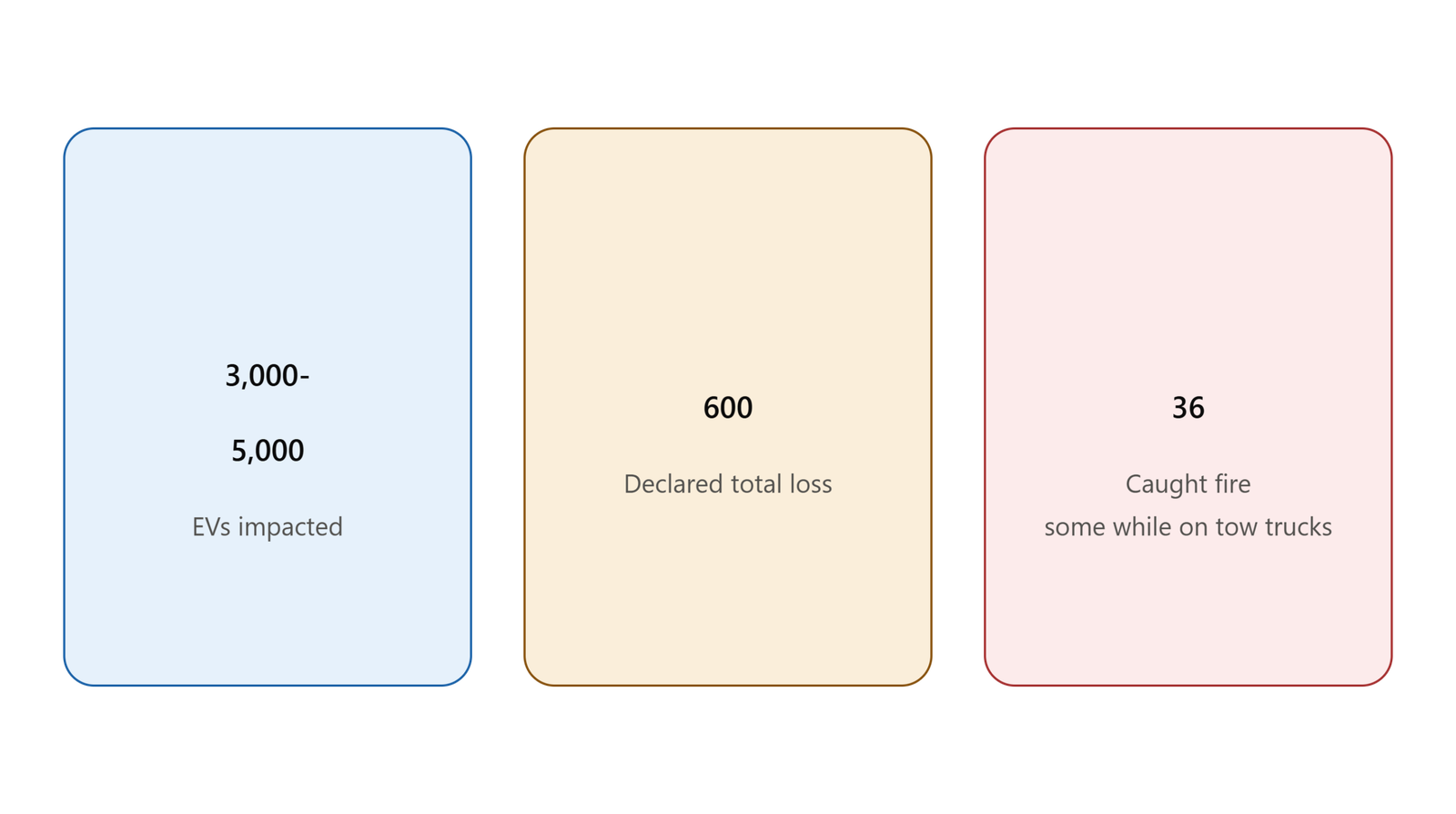
Hurricane Ian flooded between 3,000 and 5,000 EVs in Florida in 2022. Six hundred were declared a total loss. Thirty-six caught fire, and in several documented cases, the fire started while the vehicle was already on a flatbed tow truck, well after the flooding itself had ended. This isn’t a hypothetical risk, it’s a documented pattern that federal safety agencies have since built specific guidance around. This guide covers what actually happens when an EV floods, how insurance handles it, and the safety protocol that’s now standard practice.
Key takeaways:
- Flood-damaged EV batteries can produce flammable gases and reignite hours or even days after the initial exposure, which is why NHTSA specifically instructs owners not to park a flood-damaged EV within 50 feet of a structure, another vehicle, or anything combustible.
- Flood damage is covered under comprehensive insurance, the same category covering fire, theft, and weather, but flood-damaged EVs are declared total losses at a notably high rate given how the water compromises the battery, wiring, and control systems simultaneously.
- Saltwater flooding is measurably more dangerous than freshwater flooding for EV batteries, since saltwater is far more electrically conductive and corrosive to the internal battery components.
- A totaled flood vehicle receives a salvage or flood title, legally required to be disclosed on resale, and this typically reduces the vehicle’s market value by 40% or more even after repairs.
The Hurricane Ian numbers, in full
This is worth understanding in detail since it’s the most thoroughly documented real-world case study available. Hurricane Ian in 2022 impacted between 3,000 and 5,000 EVs to various degrees in Florida. Of those, 600 were declared a total loss, and approximately 36 caught fire. In several instances, the fire erupted while the impacted EVs were being towed on flatbed trailers, meaning the ignition happened after the flood event itself, sometimes hours or days later, catching responders and tow operators off guard. A subsequent hurricane, Idalia in 2023, caused fewer EV fires than Ian, attributed partly to a weaker storm and partly to increased public awareness that prompted more owners to move vehicles to higher ground in advance, evidence that owner behavior genuinely affects outcomes in this specific scenario.
Why flooded EV batteries specifically pose a fire risk
According to the National Fire Protection Association, flood-damaged batteries in EVs and hybrids can produce flammable gases, posing a major fire hazard distinct from what a flooded gas car presents. The mechanism: EVs have sealed battery packs that are waterproof to a certain extent, but if water breaches those seals, it can cause short circuits or damage individual battery cells, potentially leading to failure or the thermal runaway process covered in detail in our dedicated EV battery fire guide. Water exposure can also damage electrical components more broadly, wiring, connectors, and control units, causing malfunctions, short circuits, and corrosion that can develop and worsen over time, not just at the moment of flooding.
Saltwater versus freshwater: a meaningful, specific distinction
This is worth understanding clearly, since it changes how seriously a specific flooding event should be treated. A detailed teardown study of ten flood-damaged EVs recovered after Hurricane Ian found that nine of the vehicles retained a high state of charge despite the saltwater exposure and ten months of storage, and researchers identified specific infiltration pathways through which saltwater entered the battery packs. Notably, in that specific study, the volume of water infiltration was insufficient to trigger a thermal event in any of the ten vehicles examined, even after extended storage, though the researchers were clear that the root causes of water infiltration identified in the study represent a genuine, ongoing safety concern worth continued research, not a reason for complacency.
The practical takeaway: saltwater flooding, from a hurricane storm surge specifically, carries a different, generally more corrosive and electrically conductive risk profile than freshwater flooding from a typical inland flood, worth keeping in mind if you’re assessing risk in a coastal versus inland location.
The critical safety instruction from NHTSA
This is genuinely important, actionable guidance directly from a federal safety agency, not general advice. NHTSA specifically states that flooded vehicles may have high voltage and short circuits that can shock and cause fires, and instructs: do not park a damaged vehicle with a lithium-ion battery in a garage or within 50 feet of your house or other structure, another vehicle, or combustibles. If you suspect your battery has been damaged, contact your dealer directly. This 50-foot clearance instruction reflects the documented reignition risk covered throughout this guide, cases where a flood-damaged EV catches fire well after the water itself has receded, sometimes while already on a tow truck as documented in the Hurricane Ian data above.
How the insurance claims process actually works
Comprehensive coverage applies, not collision. Flood damage falls under comprehensive coverage, the same category protecting against fire, theft, and weather events generally, consistent with the coverage-type distinctions covered throughout our dedicated comprehensive-versus-collision guide. If your policy includes only liability coverage, flood damage isn’t covered at all.
An adjuster will inspect and evaluate, sometimes remotely. Insurance companies typically send an adjuster to inspect the vehicle and evaluate the extent of water damage, deciding whether to repair the car or declare it a total loss. In the aftermath of a major disaster specifically, when adjusters are busy and travel is difficult, insurers increasingly ask policyholders to join a video call so the adjuster can assess damage remotely, a genuine shift in claims practice worth expecting if you’re filing after a widespread flooding event.
File your claim as soon as possible, and document thoroughly. Take photos or video showing the extent of the damage, including any contributing factors like downed trees or power lines alongside the flooding itself, supporting evidence that strengthens your claim regardless of how it’s ultimately assessed.
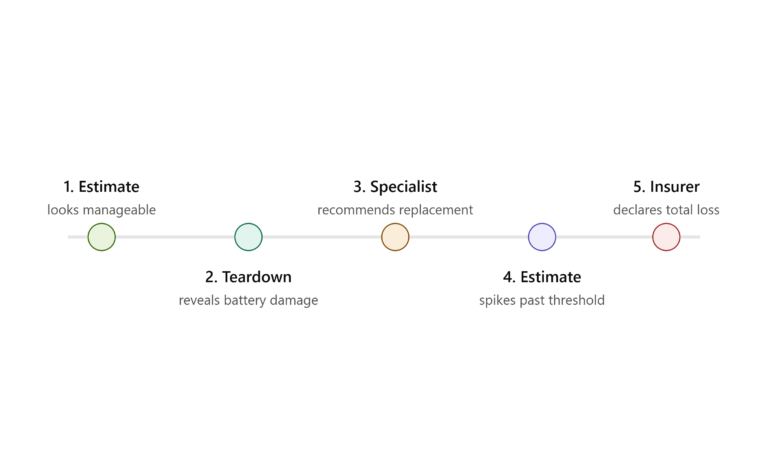
Total loss is common, and the mechanism is familiar from our broader research. Because flood damage often affects the battery, wiring, control units, and interior simultaneously, repair costs escalate quickly, echoing the same total-loss pattern covered throughout our dedicated guides on why insurers total EVs after minor accidents and what to do when your EV is totaled. If the car is repaired, the insurer pays the repair shop directly, minus your deductible. If it’s totaled, the insurer pays the actual cash value, minus your deductible.
The salvage title consequence, worth understanding fully
A car declared a total loss due to flooding typically receives a salvage or flood title, depending on the state, and this designation is legally required to be disclosed on resale. This significantly reduces the vehicle’s market value, often by 40% or more, even if it’s subsequently repaired and returned to the road. Even after repairs, flood vehicles can carry hidden corrosion, electrical issues, and reliability problems, and they’re both harder to insure and worth meaningfully less at resale, consistent with the salvage-title cautions covered in our dedicated guide on what to do when your EV is totaled.
What’s specifically not covered, worth knowing in advance
Water damage from your own negligence isn’t covered. If it’s determined the water damage stemmed from a slow leak due to poor maintenance, or from accidentally leaving a window open during a rainstorm, comprehensive coverage typically won’t apply, since these scenarios reflect an owner-controllable cause rather than a genuine external weather event.
Non-permanently-installed devices aren’t covered. Items like aftermarket navigation systems or sound equipment that aren’t permanently installed in the vehicle typically fall outside your comprehensive coverage even if the vehicle itself is covered.
If you’re financing or leasing when a flood totals your EV
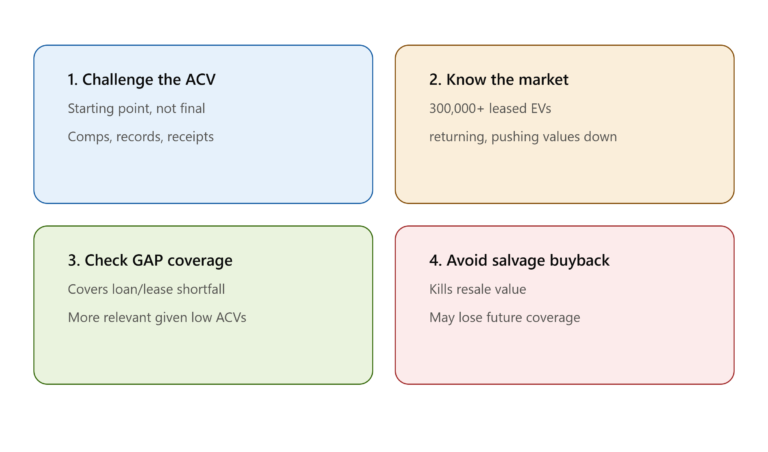
This connects directly to a theme covered throughout this site: if your EV is considered a total loss due to flooding while you’re still financing or leasing, your insurance pays what the car is worth, its actual cash value, but you may still owe more on the loan or lease than that payout covers. This is precisely the gap GAP insurance exists to close, covered in comprehensive detail in our dedicated GAP insurance guide, and it’s worth confirming you have this coverage specifically before a major storm season arrives, not after.
A timing consideration worth knowing before a storm approaches
Insurers often pause new policies or coverage changes when a major storm is on the way, a temporary practice called a binding restriction. If you wait too long once a storm warning is issued, it may already be too late to add comprehensive coverage for that specific event. If your comprehensive coverage is already in place before the restriction takes effect, your vehicle should still be protected, one more reason to review your coverage well before hurricane or flood season begins in your area, rather than scrambling once a specific storm is already approaching.
The bottom line
Flood damage to an EV is a documented, serious risk, not a rare edge case, with Hurricane Ian’s real 2022 numbers, 600 total losses and 36 fires among 3,000 to 5,000 impacted vehicles, illustrating exactly how this plays out at scale. The core safety takeaway from federal agencies is direct and specific: a flood-damaged EV can reignite well after the water recedes, sometimes during towing, which is why NHTSA’s 50-foot clearance guidance exists and matters. On the insurance side, comprehensive coverage handles flood damage the same way it handles fire and theft, but the combination of battery, wiring, and control system damage happening simultaneously makes total-loss declarations common, and the resulting salvage title meaningfully reduces the vehicle’s value even after repair. If you own an EV in a flood- or hurricane-prone area, confirming your comprehensive coverage and GAP insurance are both in place well before storm season, rather than during an active storm warning when binding restrictions may already be in effect, is the single most useful preparation step covered throughout this guide.
This article is for informational purposes only and does not constitute financial or insurance advice. Coverage details, claims processes, and safety guidance vary by insurer, location, and specific circumstances. Always follow official safety guidance from NHTSA and your local authorities regarding flood-damaged vehicles, and confirm specific coverage terms directly with your insurer.