How to File an EV Insurance Claim: Step-by-Step
The basic mechanics of filing an insurance claim are the same whether you drive a gas car or an EV, document, report, track, follow up. But EVs introduce a handful of extra steps and considerations at nearly every stage, from how the vehicle gets towed to how the battery gets inspected, that can genuinely affect your outcome if you skip them. This guide walks through the complete process with those EV-specific details built in at each step.
Key takeaways:
- The single most important habit across every source reviewed for this guide: document, report, track, and follow up, with every claim number, deadline, and conversation written down, not just remembered.
- For an EV specifically, insist on flatbed towing from the very first call, standard wheel-lift towing risks drivetrain damage, and most major insurers now let you file and upload photos directly through their app.
- An adjuster typically contacts you within one to three business days, and battery-related damage almost always requires a specialized inspection beyond a standard visual damage assessment.
- Three of the most common claim-derailing mistakes apply with extra force to EVs: admitting fault before the investigation is complete, waiting too long to notify your insurer, and accepting a first total-loss offer without checking it against real comparable values.
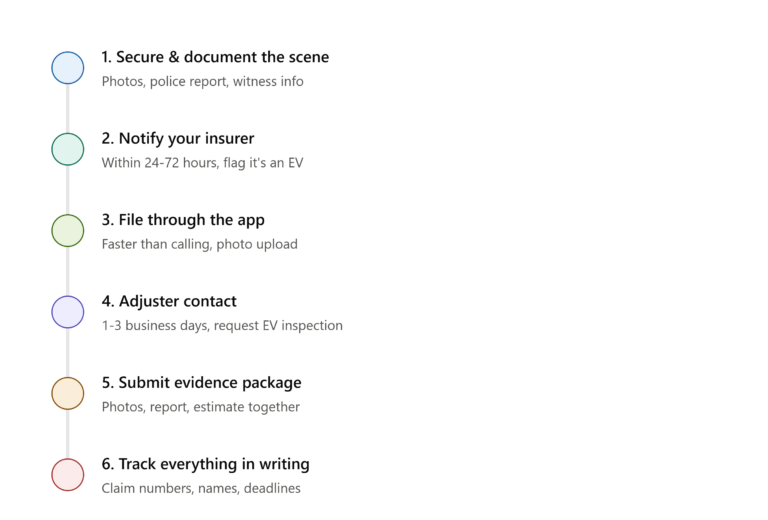
Step 1: Secure safety and document the scene immediately
Before anything insurance-related, make sure everyone is safe and, if there’s any risk of fire (a real possibility with a damaged high-voltage battery, as covered in our dedicated EV battery fire guide), get well clear of the vehicle. Once it’s safe, document the scene: photos of all vehicles involved, the surrounding area, license plates, and any visible damage. Save these photos with their original timestamps, and don’t edit images before sending them to your insurer, since altered or stripped metadata can complicate a claim later.
Contact police immediately for any accident involving injuries or significant property damage. An official police report creates an independent record of the incident and becomes one of the most important documents in your claim file. Collect driver and witness details, names, contact information, and insurance details, at the scene rather than trying to track them down afterward.
Step 2: Notify your insurer quickly, and specifically flag that it’s an EV
You should contact your insurer regardless of who’s at fault, and this applies in no-fault states too, as covered throughout our dedicated state guides. Waiting more than 24 to 72 hours to notify your insurer is specifically flagged as a common mistake that can complicate your claim, so don’t delay this step even if you’re still sorting out other details.
When you do call or file through the app, specifically mention that the vehicle is electric. This isn’t just a formality, it should trigger EV-specific handling on the insurer’s side: flatbed-only towing (never standard wheel-lift, which risks drivetrain damage, as covered in our dedicated EV roadside assistance guide), and routing toward an adjuster or shop with genuine EV repair experience rather than a generalist.
Step 3: Use your insurer’s app if available, it’s often faster than calling
Most major insurers, GEICO, State Farm, Progressive, and Allstate among them, have apps that let you file a claim, upload photos, and track status without calling anyone, and Progressive’s app specifically allows video walkthroughs of damage. Apps often get claims opened faster than phone calls, since the documentation goes directly into the system rather than being relayed by a phone representative. Open your claim immediately and request your claim number and adjuster contact information as part of this step.
Step 4: Expect adjuster contact within one to three business days
An adjuster will typically contact you within one to three business days of filing. Their job is to investigate the claim, assess the damage, determine fault, and recommend a settlement amount. They may be an in-house employee of your insurer or an independent contractor, this doesn’t change the process itself. Damage inspection typically happens one of three ways: the adjuster visits your vehicle directly, you take it to an insurer-approved repair shop, or you upload photos through the insurer’s app, increasingly common for minor damage specifically.
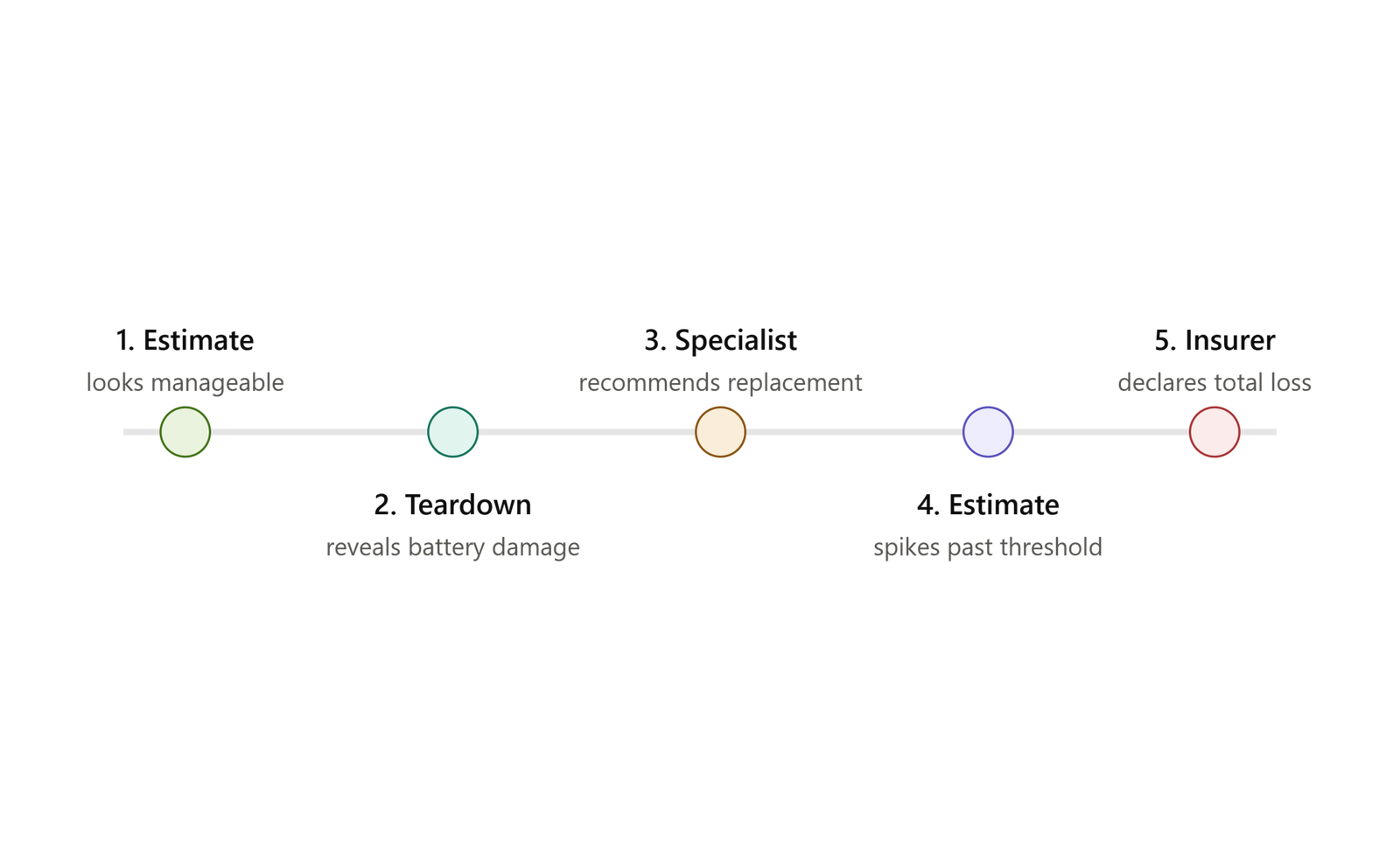
For EV-specific damage, particularly anything involving the battery or high-voltage system, insist on a specialized inspection rather than accepting a standard visual assessment alone. As covered throughout our broader battery coverage guides, a compromised lithium-ion pack is treated as a genuine fire risk, and a proper claim resolution requires someone qualified to actually assess that risk, not just estimate cosmetic repair costs.
Step 5: Submit your complete evidence package
Submit photos, the incident report, and estimate documents together as a complete package rather than piecemeal. Complete your insurance company’s claim form, available on their app or website or by calling customer service, and submit it alongside your documentation, keeping copies of everything you send. Review your policy coverage specifically before this step, so you understand which coverage type (collision, comprehensive, or liability against the at-fault driver) actually applies to your situation, following the guidance covered in our dedicated comprehensive-versus-collision guide.
Step 6: Track everything, and don’t assume a claim is finished until you have it in writing
This is one of the most consistently repeated pieces of advice across every source reviewed for this guide, write down every claim number, deadline, phone call, message, and document you submit. Record the adjuster’s name, direct phone number, email, and any supervisor’s contact at every call, since adjuster turnover is genuinely common during a drawn-out claim. Use your policy and claim numbers in the subject line of every email so messages get filed correctly by the carrier. Confirm any verbal commitment with a short follow-up email summarizing what was agreed and any deadline discussed, a written record that protects you if there’s ever a dispute about what was promised.
Do not assume a claim is finished until you receive the decision, payment explanation, denial reason, or next-step instructions in writing, not just a verbal confirmation over the phone.
The three mistakes that most commonly derail an EV claim
Admitting fault before the investigation is complete. Even a casual, well-intentioned comment at the scene can complicate a fault determination later, stick to factual descriptions of what happened rather than assigning blame yourself.
Waiting too long to notify your insurer. As covered above, delaying beyond 24 to 72 hours is specifically flagged as a common, avoidable mistake, notify your insurer promptly even if you’re still gathering other information.
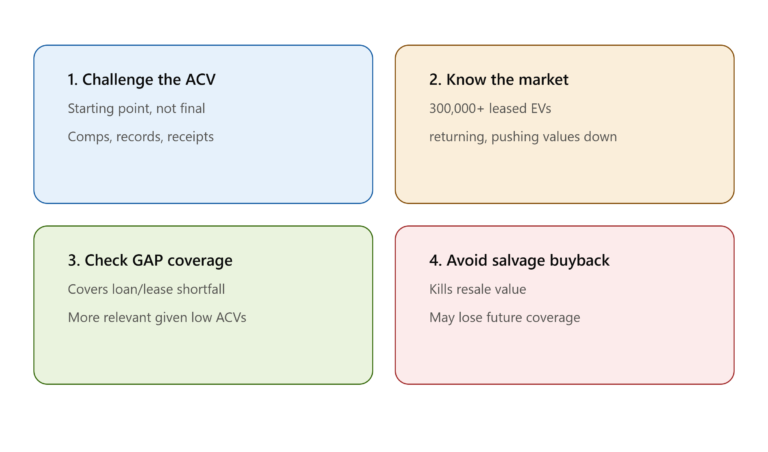
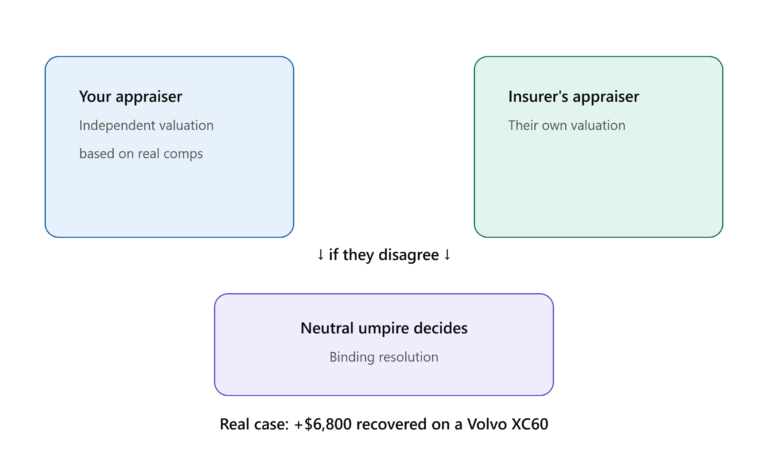
Accepting a first total-loss offer without checking it. As covered in detail in our dedicated guide on what to do when your EV is totaled, an insurer’s initial Actual Cash Value figure is a starting point for negotiation, not a final number, and this mistake specifically compounds with the EV-specific total-loss patterns documented throughout this site.
What to do if your claim is delayed or denied
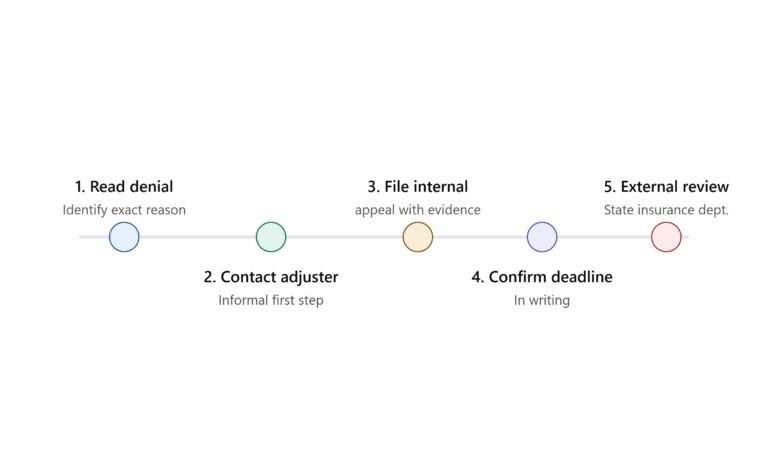
Processing times vary by claim complexity, follow up if a claim seems to be taking longer than the timeline your insurer initially gave you. Claim denials happen for various reasons, but they’re not always final, they can often be appealed successfully with proper documentation and persistence. If you hit a genuine wall:
File a complaint with your state’s Department of Insurance, using the carrier name, claim number, and a one-page timeline of what happened, rather than submitting your entire file.
Consult a licensed attorney before signing any release if injuries are involved, since settlement releases are typically final once signed.
When escalating to your state’s Department of Insurance, attach the denial letter, your written response, and a concise timeline, not the complete claim file, to make the review process faster and clearer.
Keep records for the long haul
Keep organized records of all correspondence, receipts, and documentation for at least three years, following the general insurance record-keeping guidance covered across multiple sources reviewed for this article. This matters specifically for EV claims given how often battery-related documentation, repair certifications, and specialized inspection reports become relevant well after the initial claim closes, whether for a future warranty question, a resale disclosure, or a diminished value claim covered in our dedicated guide on that topic.
The bottom line
Filing an EV insurance claim follows the same fundamental structure as any auto claim, document, report, track, follow up, but a handful of EV-specific details genuinely matter at nearly every stage: insisting on flatbed towing from your very first call, flagging the vehicle as electric so it gets routed to appropriately experienced adjusters and shops, and pushing for a specialized inspection rather than a standard visual assessment when battery or high-voltage damage is involved. Combine those EV-specific habits with the universal best practices, prompt notification, thorough documentation, careful record-keeping, and a healthy skepticism toward any first offer, and you’re in a genuinely stronger position than the large majority of claimants who simply accept whatever the process hands them.
This article is for informational purposes only and does not constitute financial or insurance advice. Claims processes and requirements vary significantly by insurer, state, and individual circumstances. Consider consulting your state’s Department of Insurance or a licensed attorney for guidance specific to your situation.