Volkswagen ID.4 Insurance Cost Guide
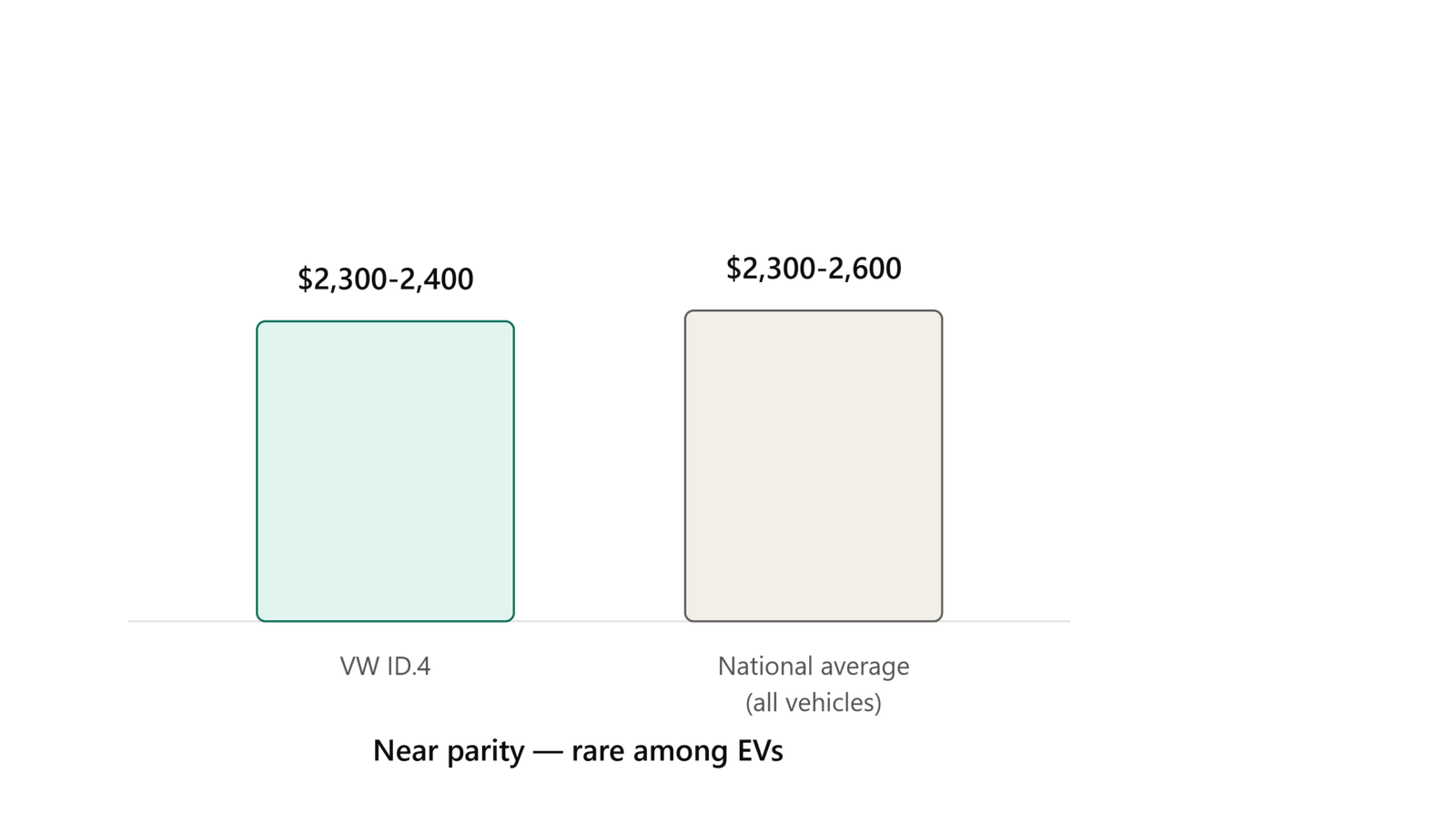
Here’s the single most useful fact about ID.4 insurance: it costs roughly the same as the U.S. national average for full coverage across all vehicles, gas and electric combined. Not «cheap for an EV.» Not «close to average.» Genuinely in line with what the typical American driver pays for any car. This guide covers the real numbers and explains why the ID.4 achieves something few EVs manage.
Key takeaways:
- Full coverage on the ID.4 typically runs $2,000 to $2,700 a year across most 2026 sources, with $2,300 to $2,400 as a commonly cited average, landing right around the broader U.S. average of $2,300 to $2,600 for all vehicles combined.
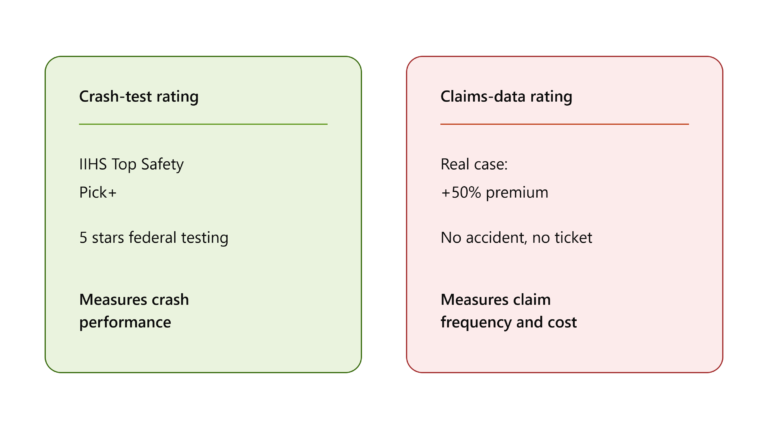
- Strong crash-test and safety ratings are specifically cited as a reason insurers don’t treat the ID.4 as an unusually risky EV, helping keep premiums closer to mainstream gas crossover pricing than to performance-oriented EVs.
- As of 2026, insurers have accumulated meaningfully more ID.4-specific claims data than in earlier years, and repair shops have grown more EV-savvy, both trends narrowing the «EV penalty» this model faces.
- VW’s own ID. Buzz, a related but much newer model, illustrates the opposite scenario, insurers still pricing it as a rough blend of premium minivan and electric crossover due to limited real-world loss data.
The real numbers
Pulling together multiple 2026 sources gives a consistent, genuinely mainstream picture for the ID.4:
- One comprehensive guide finds $1,700 to $2,700 a year for 2024-2025 model years, depending on methodology and driver assumptions.
- A separate monthly-focused breakdown finds a tighter $2,000 to $2,400 a year range, specifically describing this as landing right around the broader $2,300 to $2,600 U.S. average for all vehicles.
- CarEdge finds $2,411 a year in two separate analyses, consistent with the other sources’ central estimates.
Bringing this together: budget roughly $2,000 to $2,700 a year for full coverage as a realistic planning range, with $2,300 to $2,400 as a reasonable single-number estimate, genuinely close to what an average American driver pays for any vehicle, not just other EVs.
Why «right around the national average» is a genuinely notable achievement
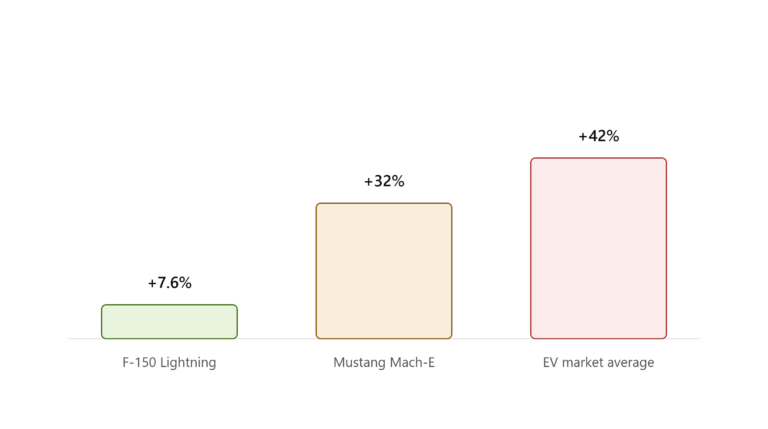
This deserves real emphasis, since it’s a different and more meaningful claim than most vehicles covered throughout this site can make. Every model guide on this site has documented EVs running anywhere from roughly 8% (the Nissan Leaf) to 42% (the broader EV market average) to as high as 68% (some luxury EVs in earlier data) above comparable gas vehicles. The ID.4 essentially closes that entire gap, landing at parity with the all-vehicle national average rather than merely narrowing the EV-specific premium documented elsewhere.
Why the ID.4 achieves this parity
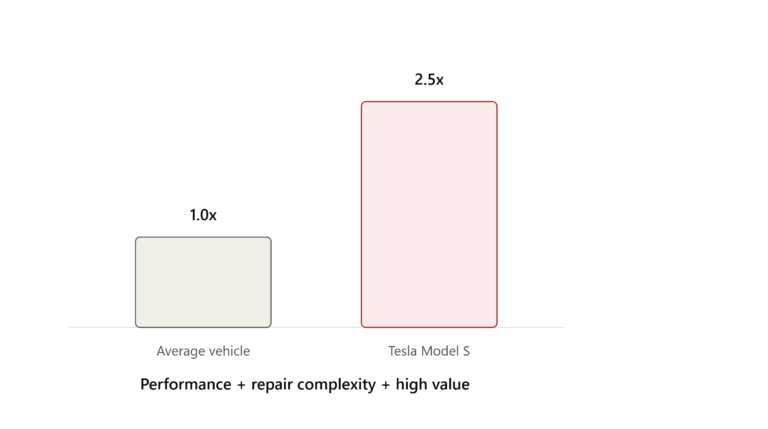
Strong safety performance changes how insurers categorize the risk. The 2024-2026 ID.4 earns high crash-test and safety ratings from independent testers, and that safety performance is specifically cited as a reason insurers don’t treat it as an unusually risky EV, a meaningfully different framing than the performance-and-repair-cost story that drives up premiums for Tesla and other high-performance EVs covered elsewhere on this site.
It’s a genuinely mainstream, mass-market vehicle, not a premium or performance play. As a mainstream electric SUV, ID.4 rates often look similar to gas crossovers with comparable value and performance, a direct contrast to vehicles like the Mustang Mach-E covered in our dedicated guide, which carries a genuine performance identity that pushes its insurance cost meaningfully above its own gas sibling.
The broader EV insurance market has matured in the ID.4’s favor. By 2026, insurers have more EV data, repair shops are more EV-savvy, and the general «EV penalty» on premiums has been shrinking, consistent with the market-wide trend covered in our guide on whether EV insurance rates drop over time. The ID.4 has been on the market long enough to benefit meaningfully from this maturation.
Aluminum bodywork and battery-related repairs still add some cost, worth being honest about, but strong safety scores and comparatively limited mechanical complexity help balance that equation rather than letting repair costs dominate the pricing the way they do for more repair-intensive models covered elsewhere on this site.
Vehicle age matters as much here as anywhere else
The same depreciation-driven logic covered throughout our GAP insurance and used-EV guides applies directly to the ID.4: a brand-new ID.4 Pro S with all the available technology simply costs more to repair or replace than a three-year-old base model, and insurance pricing reflects that directly. Given the ID.4’s average new price around $52,259 and a projected residual value of just $19,540 after five years, per CarEdge’s depreciation data, a used ID.4 represents a genuinely significant insurance-cost reduction opportunity, following the same pattern documented across nearly every model covered on this site.
A useful contrast: the ID. Buzz shows what «new to market» pricing looks like
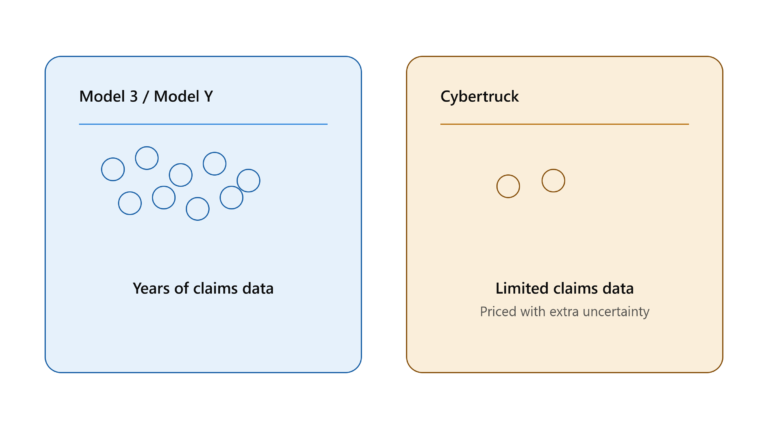
This is worth including specifically because it illustrates, by direct comparison within VW’s own lineup, exactly what the ID.4 has already moved past. Because U.S. insurers are only just starting to see real-world loss data on the VW ID. Buzz, most price it initially as a rough blend of a premium minivan and an electric crossover, using the ID.4 itself as one of the closest available proxies. Expect an equivalent ID. Buzz quote from the same carrier to run somewhat higher, often 10% to 30% more than a comparable ID.4 quote, and outlier quotes north of $4,000 a year aren’t unusual for the Buzz specifically, as insurers work through the same limited-claims-data uncertainty we documented for the Tesla Cybertruck in our dedicated guide.
This pairing, an established model achieving near-parity pricing, and a newer sibling still facing an early uncertainty premium, is one of the clearest illustrations on this entire site of how much accumulated claims history alone moves an EV’s insurance cost, independent of anything about the vehicle’s actual engineering or safety.
How to actually get the best ID.4 rate
Compare against a real gas-crossover baseline. Given how close the ID.4 already runs to mainstream gas pricing, getting a quote for a comparable RAV4 or Tiguan alongside your ID.4 quote gives you a genuinely useful sanity check, are you paying a real EV premium, or roughly the same as you’d pay for any similar crossover.
Consider a used ID.4 if minimizing cost further matters. Given the steep depreciation curve documented above, an older ID.4 offers real additional savings on top of the model’s already-favorable baseline pricing.
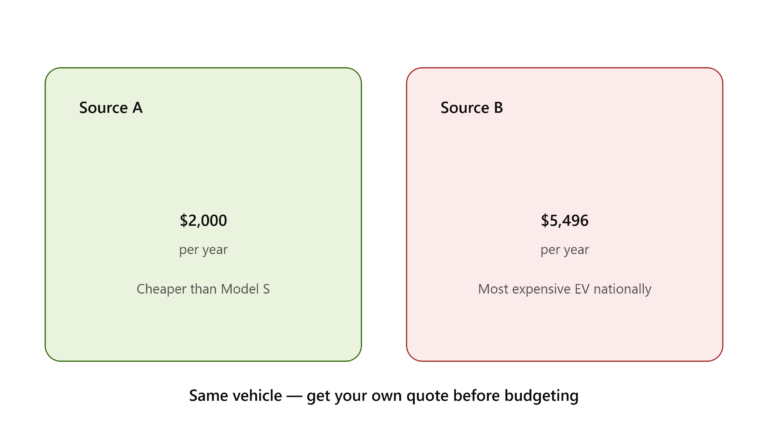
Shop multiple carriers regardless of how favorable the baseline looks. As covered throughout this site, individual insurer pricing varies enormously even for well-positioned models, and the ID.4’s favorable average doesn’t guarantee every insurer prices it the same way.
Ask about telematics and low-mileage programs, following the general savings guidance covered throughout our broader EV insurance guides, since these apply just as effectively to a mainstream EV like the ID.4 as to any other vehicle.
Improve your credit over time where it’s used as a rating factor, a lever you genuinely control, unlike your state or driving history, worth revisiting periodically as covered throughout our broader savings guides.
The bottom line
The Volkswagen ID.4 stands out from nearly every other EV covered on this site by achieving something genuinely rare: insurance pricing that lands at parity with the U.S. national average across all vehicles, not just «affordable for an EV.» Strong safety ratings, mainstream (rather than performance-oriented) positioning, and years of accumulated claims data all point in the same favorable direction. The contrast with VW’s own ID. Buzz, still working through early, limited-data pricing uncertainty, makes clear just how much of the ID.4’s favorable positioning comes from having simply been on the market long enough for insurers to price it with real confidence rather than conservative guesswork.
This article is for informational purposes only and does not constitute financial or insurance advice. Insurance rates vary by insurer, state, model year, trim, and individual driver profile, and change frequently. Always get a personalized quote before making a purchasing decision.