EV Insurance in Illinois: Cost Breakdown
Illinois presents a genuinely two-sided picture for EV owners: some of the strongest charger rebates in the country on the purchase side, ComEd customers can get up to $3,750 back on a Level 2 install, paired with Chicago’s position as the single most expensive city in the state for insurance. This guide breaks down exactly what Illinois requires, what you’ll pay, and how the state’s incentive programs fit into your total EV cost picture.
Key takeaways:
- Illinois requires 25/50/20 liability coverage, along with mandatory uninsured motorist coverage with $25,000 in bodily injury limits, a requirement not every state includes as mandatory.
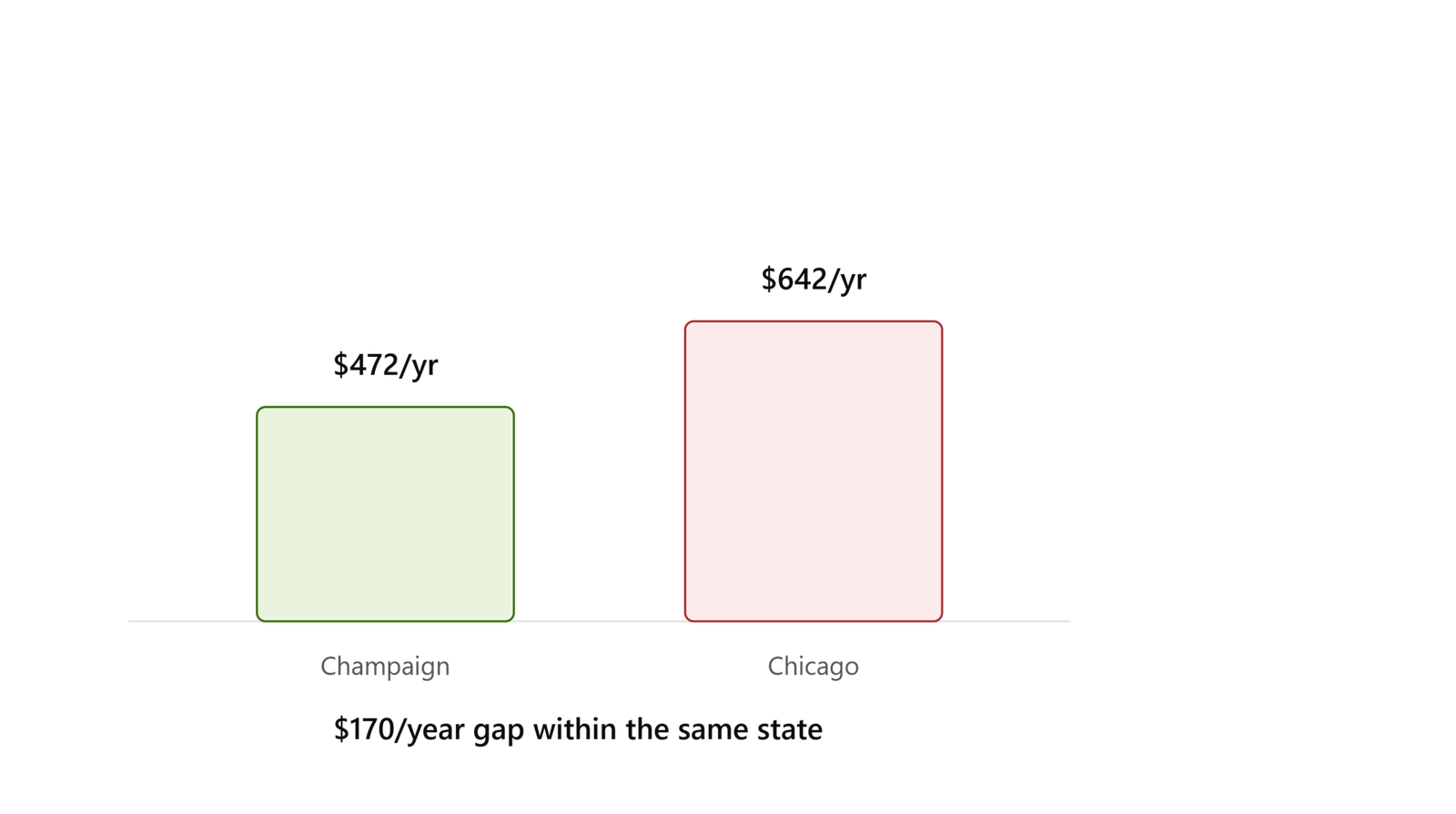
- Chicago drivers pay the most for minimum coverage in the state at $642 a year, while Champaign drivers pay the least at $472, a meaningful in-state gap before any EV-specific factors are applied.
- Illinois offers genuinely strong charger incentives: ComEd customers can receive rebates up to $3,750 for Level 2 charger purchase and installation, plus a separate federal tax credit worth 30% of installation costs up to $1,000, and vehicle rebates up to $4,000 through the Illinois EPA program.
- Statewide auto insurance increases are slowing in 2026, with Chicago drivers specifically expected to see premium growth of about 4% to 6%, down from the sharp hikes of prior years.
Illinois’s actual requirements
Illinois auto insurance requires 25/50/20 coverage: $25,000 for injuring one person, $50,000 for multiple injuries in a single accident, and $20,000 for property damage. Illinois also requires drivers to carry uninsured motorist coverage with bodily injury limits of $25,000, a mandatory requirement that stands out compared to states like Texas and Washington, covered in our dedicated guides, where UM/UIM coverage is only required to be offered, with drivers able to decline it in writing. This makes Illinois a genuinely stronger baseline for protection against uninsured drivers than several other states covered throughout our broader research, worth knowing if you’re comparing Illinois against other states in a relocation decision.
The real cost numbers, and the Chicago premium specifically
On average, Illinois state-minimum car insurance costs $462, with Erie Insurance offering the cheapest minimum coverage at an average of $316 annually. But this statewide average masks real city-level variance worth understanding directly: Chicago drivers pay the most for minimum coverage in the state at $642, while Champaign drivers pay the least at $472, a gap of $170 purely based on location within the same state, consistent with the broader city-level variance patterns documented throughout our state-by-state research. Larger cities with high traffic volume or elevated vehicle theft rates consistently drive rates upward, a pattern that applies with extra force to EV owners specifically given the elevated theft and repair-cost considerations covered throughout this site.
Why even Illinois’s stronger minimums can fall short for an EV
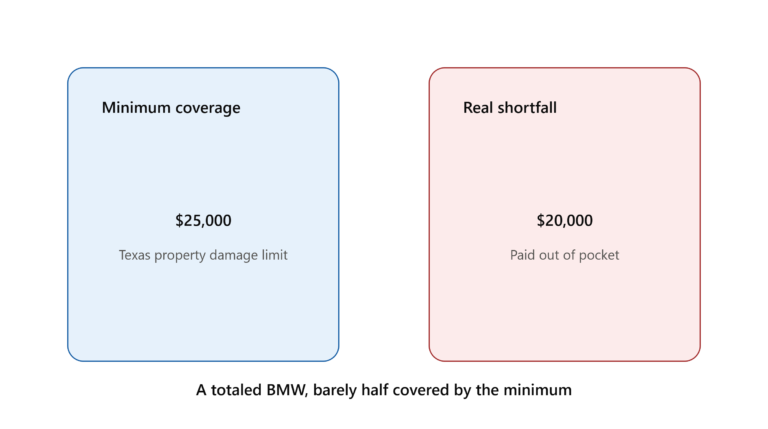
Insurance companies can total a car when repair costs hit 70% of fair market value, and as modern vehicles with complex systems cost significantly more to restore, that threshold becomes easier to reach. Cars with advanced safety technology, automatic emergency braking, blind-spot monitoring, lane departure warning, all standard on most current EVs, need specialized repairs that cost far more than traditional vehicles, meaning even minor damage can result in a total loss. This directly echoes the pattern covered throughout our broader battery and comprehensive-coverage guides, and it means Illinois’s $20,000 property damage minimum, while stronger than several states covered elsewhere in our research, can still fall short for a genuinely valuable EV total loss.
The rate trend for 2026, a genuine cooldown
Chicago drivers specifically should expect slower premium increases of about 4% to 6% in 2026, following the sharp hikes of prior years, though rates remain higher than average due to congestion, theft, and elevated repair costs. This tracks the broader national EV insurance moderation trend covered in our guide on whether EV insurance rates drop over time, though Illinois’s minimal regulatory oversight, according to one source, means staying informed and actively comparing options matters more here than in more heavily regulated states.
Illinois’s genuinely strong charger incentive picture
This is where Illinois stands out significantly, and it’s worth understanding as part of your total EV cost picture even though it doesn’t directly reduce your insurance premium. ComEd customers, the utility serving the Chicago metro area, can receive rebates up to $3,750 for Level 2 charger purchase and installation, with the program reserving 50% of funds for equity-eligible communities while remaining open to all ComEd customers. This connects directly to the ComEd Hourly Pricing enrollment requirement covered in our broader Illinois incentives research, worth confirming as part of the application process.
Layered on top of that utility-specific rebate, a separate federal tax credit covers 30% of home charger installation costs, up to $1,000 for residential installations, and Illinois offers vehicle purchase rebates up to $4,000 through the Illinois EPA Electric Vehicle Rebate Program, worth confirming the current application cycle and 180-day post-purchase window directly on the program’s official page given how these details can shift between cycles.
A useful, direct discount worth asking about
Worth flagging specifically: many insurance companies offer discounts for updated electrical systems, meaning a panel upgrade you complete specifically to support your EV charger, commonly $1,000 for a simple 100-amp to 200-amp conversion up to $3,000-plus for more complex installations in the Chicago area, may help offset its own cost over time through a modest insurance discount, worth asking your specific insurer about directly rather than assuming it’s automatic.
Age and driver-specific factors in Illinois
Following the pattern covered throughout our broader age-based EV insurance guide, Illinois shows meaningful age-based variance: Erie Insurance offers the best rates for teens with minimum coverage averaging $666, while the same carrier offers adults minimum coverage at $320, less than half. Illinois law specifically requires insurance companies to offer discounts to drivers aged 55 or over who complete approved defensive driving courses, with typical savings of 5% to 10% off premiums, a mandatory-offer discount worth confirming you’re receiving if you qualify.
Telematics savings, consistent with broader patterns
Telematics programs save most Illinois drivers around $120 annually according to one source, with families that include teen drivers saving roughly double that figure, and about a third of program participants reportedly maintaining safer driving habits even after completing the program. This tracks closely with the broader telematics guidance covered in our dedicated usage-based insurance guide, worth layering on top of whichever base insurer you choose for your EV specifically.
Best insurers for Illinois EV owners
Erie Insurance is specifically identified as offering the cheapest minimum coverage statewide, at $316 annually, and separately the best rates for teen drivers, consistent with Erie’s broader strength for EV-specific claims handling covered throughout our battery coverage and other model guides, though as noted elsewhere on this site, Erie’s availability is limited to the Northeast and Great Lakes regions, which does include Illinois.
Practical steps for Illinois EV owners
- Confirm your specific city’s rate positioning, given the documented $170 gap between Chicago and Champaign for minimum coverage alone.
- Take advantage of Illinois’s mandatory uninsured motorist requirement, a genuine structural advantage over states where this coverage is merely offered rather than required.
- Pursue the ComEd charger rebate if you’re in the Chicago metro area, given how substantial the up-to-$3,750 figure is compared to charger incentives in most other states covered throughout this site.
- Ask your insurer directly about a discount for any panel upgrade completed to support your EV charger.
- Enroll in a telematics program if your driving profile fits, given the documented $120-plus average annual savings for Illinois drivers specifically.
- If insuring a driver 55 or older, confirm you’re receiving Illinois’s mandatory defensive-driving-course discount.
The bottom line
Illinois combines a genuinely stronger-than-average liability framework, mandatory uninsured motorist coverage that many states leave optional, with real city-level cost variance that puts Chicago meaningfully above the rest of the state. The state’s charger incentive picture is a standout, ComEd’s up-to-$3,750 Level 2 rebate ranks among the strongest utility programs covered anywhere on this site, worth factoring into your total EV cost picture even though it sits separate from your ongoing insurance premium. With statewide rate increases finally slowing into 2026 after several difficult years, and genuine, confirmable discounts available for telematics, senior defensive driving courses, and potentially even electrical panel upgrades, Illinois EV owners have real, actionable levers to manage their total cost of ownership beyond simply comparing base insurer rates.
This article is for informational purposes only and does not constitute financial or insurance advice. Insurance rates, requirements, and incentive programs vary and change frequently. Always confirm current requirements directly with the Illinois Department of Insurance and a licensed insurance agent.