How to Dispute a Low EV Total Loss Valuation
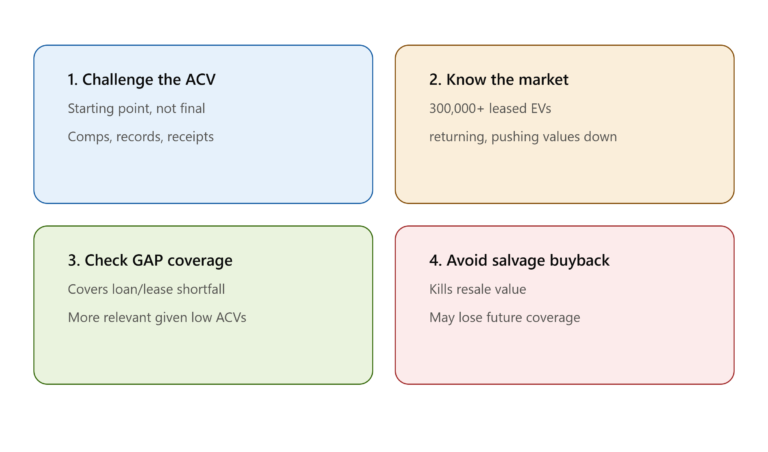
The first total loss offer your insurer hands you is almost never the final number. Drivers who push back typically recover $1,500 to $3,000 more than the carrier’s initial offer, and every standard auto policy includes a specific, formal mechanism, the appraisal clause, designed exactly for this situation. Given everything documented throughout this site about how easily an EV crosses the total-loss threshold, understanding how to actually dispute a lowball ACV offer may be the single most financially consequential skill covered in this entire series.
Key takeaways:
- Insurers calculate Actual Cash Value using proprietary databases, CCC ONE, Mitchell, and Audatex handle the bulk of the U.S. market, and a 2025 North Carolina class action specifically accuses CCC ONE of trimming comparable values by as much as 9%.
- The proven, formal path to disputing a low offer is invoking your policy’s appraisal clause, a provision in nearly every auto policy that lets you and the insurer each hire an independent appraiser, with a neutral umpire resolving any disagreement.
- Waiting too long is the most common mistake: once you accept or cash the settlement payment, your right to invoke the appraisal clause is typically waived permanently.
- More than a quarter of collision claims ended in total losses in 2023, a 29% increase from 2020, driven largely by rising repair costs, meaning this dispute skill is becoming more relevant, not less, over time.
Why the first offer is a starting point, not a final answer
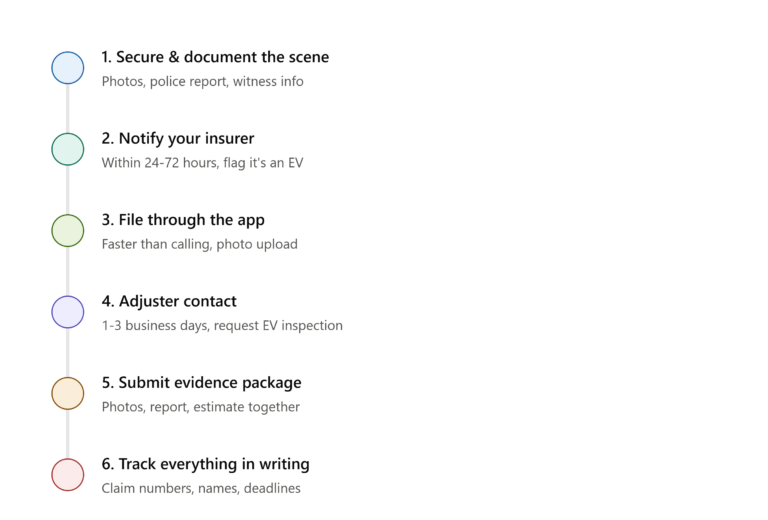
This is worth internalizing before anything else. Negotiation is genuinely built into the total loss process, insurers expect counter-offers, and the entire system, including the formal appraisal clause covered in detail below, exists specifically to handle valuation disagreements. As covered in our dedicated guide on what to do when your EV is totaled, the insurer’s Actual Cash Value figure is a starting point for negotiation, not a verified, final number, and this article picks up exactly where that one left off, walking through the formal dispute process in full.
Step 1: Request the complete valuation report
Insurers must provide the full report showing how they calculated your ACV, including every comparable vehicle used and every adjustment applied. Review this carefully, since the most common errors worth identifying include comparing your car to cheaper out-of-market vehicles, applying excessive negative condition adjustments, ignoring premium features or recent repairs, and selecting inappropriate comparables specifically chosen to suppress the value. Given that insurers calculate ACV using proprietary databases like CCC ONE, Mitchell, and Audatex, and that a 2025 North Carolina class action specifically accuses CCC ONE of trimming comparable values by as much as 9%, treating the initial report with genuine scrutiny rather than automatic trust is a reasonable, evidence-based starting position, not paranoia.
Step 2: Document your vehicle’s actual condition
Gather maintenance records, recent repairs, and photos showing your EV was in better condition than the insurer’s report assumes. For an EV specifically, this documentation matters even more than for a gas car, given the additional value drivers covered throughout our broader research: battery health and State of Health readings (as covered in our dedicated battery degradation guide), any recent software updates, charging equipment included in the sale, and verified low-mileage or single-owner history all matter and are worth documenting explicitly rather than assuming the insurer’s system captured them automatically.
Step 3: Research comparable vehicles yourself
Pull 5 to 10 comparable for-sale listings from your local market, searching dealerships, AutoTrader, Cars.com, CarGurus, and similar platforms for vehicles of the same year, make, model, trim level, and similar mileage in your specific area. Print or screenshot these listings as evidence. For an EV specifically, given how much the model-year and trim spread affects value throughout our dedicated model guides, precision matters here more than it might for a simpler gas car comparison, a Tesla Model Y Long Range and a Model Y Performance aren’t interchangeable comparables, and neither are vehicles from meaningfully different model years given the depreciation curves documented throughout our GAP insurance research.
Step 4: Consider an independent professional appraisal
Hiring an independent appraiser, typically $100 to $300, provides a professional valuation that creates strong evidence if you need to escalate the dispute further. This step is worth the cost proportionally more on a higher-value EV, where even a modest percentage disagreement can represent thousands of dollars, than it would on a lower-value vehicle where the appraisal fee might approach the size of the actual disputed amount.
Step 5: Submit a formal written dispute
Send the insurer your comparable listings alongside any maintenance records, service receipts, and independent appraisal, requesting a revised valuation. A simple, effective framing: ask the insurer to reevaluate the ACV using the attached documentation and independent appraisal, which reflects the vehicle’s actual pre-loss market value. Keep your tone factual throughout, adjusters respond better to a submission that reads like a professional business record than one that reads as a grievance or complaint. The insurer doesn’t have to accept your counter, but a written submission creates a documented record that matters if you need to escalate further.
Step 6: Invoke the appraisal clause if direct negotiation stalls
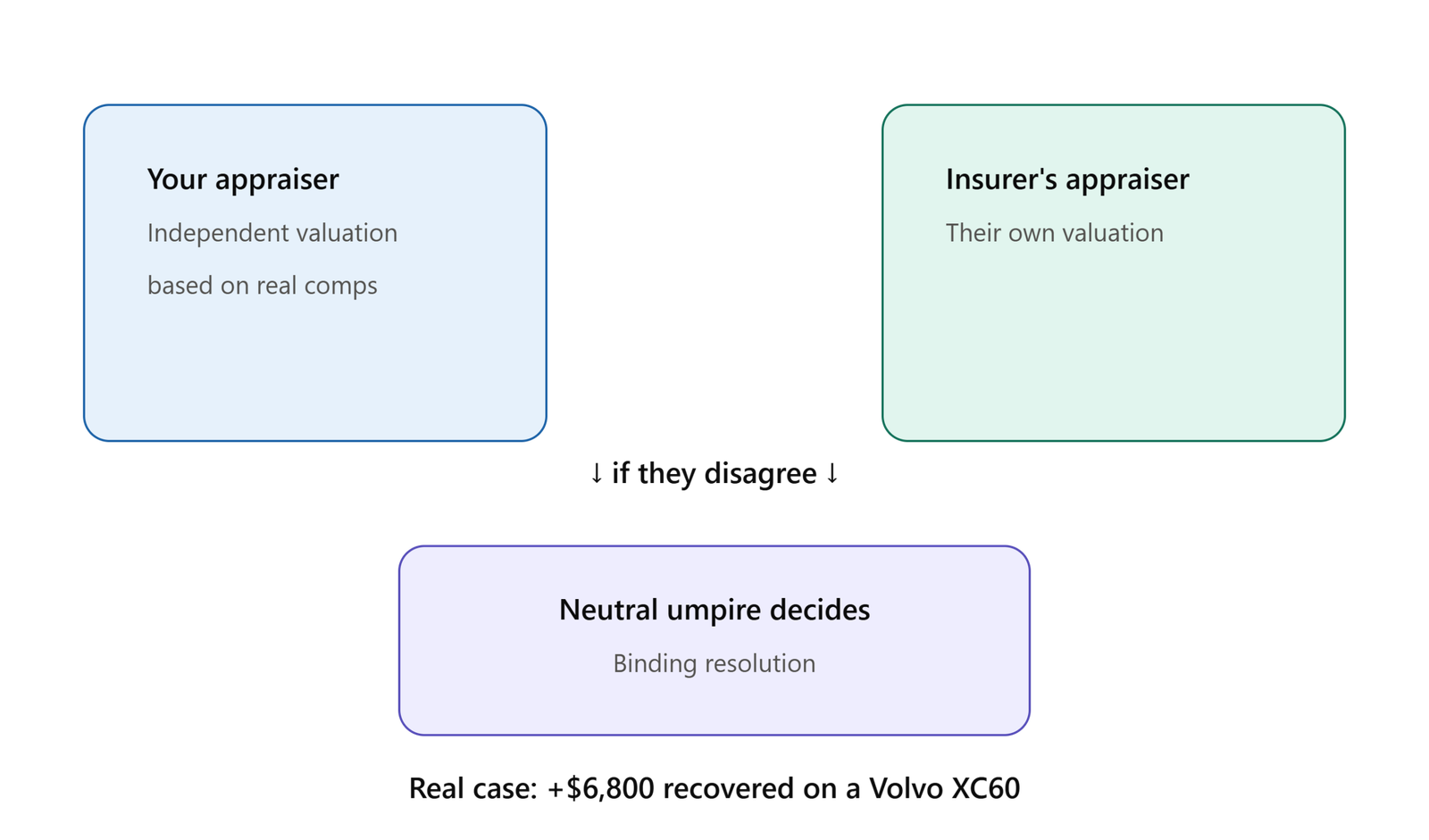
This is the single most important mechanism covered in this entire guide, and it’s worth understanding in real depth. The appraisal clause is a provision found in most auto insurance policies allowing the insured to dispute an insurer’s valuation by obtaining an independent appraisal process: each side selects an appraiser, and if those two appraisers disagree, they jointly select a neutral umpire to resolve the disagreement, with the resulting decision potentially binding depending on your specific policy language and state rules.
A real, documented example illustrates the scale of what’s possible. In one case, an insurer’s initial offer for a 2023 Volvo XC60 undervalued the vehicle by nearly $7,000. After invoking the appraisal clause and submitting an independent valuation with verified comparable sales and proper condition adjustments, the client received an additional $6,800. This is an unusually large gap, but it illustrates that the appraisal clause is a genuinely powerful, underused tool, not just a theoretical policy provision.
Two critical limitations worth understanding before you rely on this tool:
- The appraisal clause applies only to first-party claims, meaning claims against your own insurer. For third-party claims, against the at-fault driver’s insurer, this specific clause does not apply, and a different dispute path is needed.
- Appraisal resolves value disputes, not coverage disputes. If the insurer agrees your EV is a covered total loss but you disagree on the settlement amount, appraisal is the right tool. If the dispute is instead about whether the damage is covered at all, that’s a different process entirely, covered in our dedicated guide on what to do if your insurer denies a battery claim.
The single biggest mistake: waiting too long
This deserves direct, unambiguous emphasis. Once the settlement payment is accepted or cashed, the right to invoke the appraisal clause is typically waived, permanently. Don’t cash a check you’re still disputing, and don’t let the process drag on indefinitely either, appraisal requests typically have specific timing requirements laid out in your policy, worth confirming immediately rather than assuming you have unlimited time.
State-specific consumer protections worth knowing
This varies meaningfully by state, and it’s worth checking your specific state’s rules rather than assuming a single national standard applies. California’s Fair Claims Settlement Practices Regulations, for example, specifically require insurers to provide a detailed written statement explaining their valuation, and if the insurer fails to provide this documentation, you can file a complaint directly with the California Department of Insurance, consistent with the state-specific escalation guidance covered throughout our broader claims research. Confirm your own state’s specific requirements, since protections and mandatory disclosure rules genuinely differ from state to state.
Why this matters more for EVs specifically
Given everything documented throughout this site, EVs cross the total-loss threshold more easily than comparable gas cars, EV claim severity runs meaningfully higher on average, and total loss frequency across all vehicles hit a record 23.1% in 2025, a rate specifically elevated by rising repair costs, the exact dynamic covered in detail throughout our battery cost and total-loss guides. This means EV owners are statistically more likely than gas car owners to actually need the dispute process covered in this guide, making it worth understanding proactively, before you ever receive a lowball offer, rather than scrambling to learn it under pressure after the fact.
A practical checklist for the entire dispute process
- Request the complete valuation report and review it for comparable-selection errors or unsupported condition deductions.
- Document your EV’s actual condition thoroughly, including battery health, maintenance records, and any features the insurer’s system may have missed.
- Pull 5 to 10 genuinely comparable local listings matching year, make, model, trim, and mileage precisely.
- Consider an independent professional appraisal, particularly worthwhile given how much value a modest percentage disagreement represents on a higher-value EV.
- Submit a factual, professional written dispute with your complete evidence package attached.
- Invoke your policy’s appraisal clause if direct negotiation stalls, confirming first that your dispute is genuinely about valuation, not coverage, and that you’re within your policy’s timing requirements.
- Never accept or cash a settlement check while still disputing the amount, since doing so typically waives your right to any further challenge.
The bottom line
A low total loss offer on your EV isn’t the final word, it’s an opening position in a process every standard auto policy is specifically built to accommodate. The proven path, requesting the full valuation report, documenting your vehicle’s real condition, gathering genuine local comparables, and invoking your policy’s appraisal clause if direct negotiation doesn’t resolve things, has recovered real, documented money for real policyholders, $1,500 to $3,000 typically, and considerably more in specific cases like the $6,800 Volvo example covered above. Given how much more easily an EV crosses the total-loss threshold compared to a gas car, and how much more that threshold is being crossed industry-wide as repair costs continue climbing, this dispute process isn’t a rare, specialized skill, it’s a genuinely practical tool worth understanding before you ever need it.
This article is for informational purposes only and does not constitute financial, legal, or insurance advice. Appraisal clause provisions, timing requirements, and state regulations vary significantly by insurer, policy, and state. Consider consulting an independent appraiser, your state’s Department of Insurance, or a licensed attorney for guidance specific to your situation.