Progressive vs GEICO for Electric Cars: Which Is Cheaper?
Between the two, GEICO wins on price for most EV owners, but «cheaper» isn’t the whole story, and there are specific situations where Progressive is genuinely the better choice despite the higher average cost. This guide breaks down exactly where each one wins, using real rate data and the specific factors that matter for EV drivers.
Key takeaways:
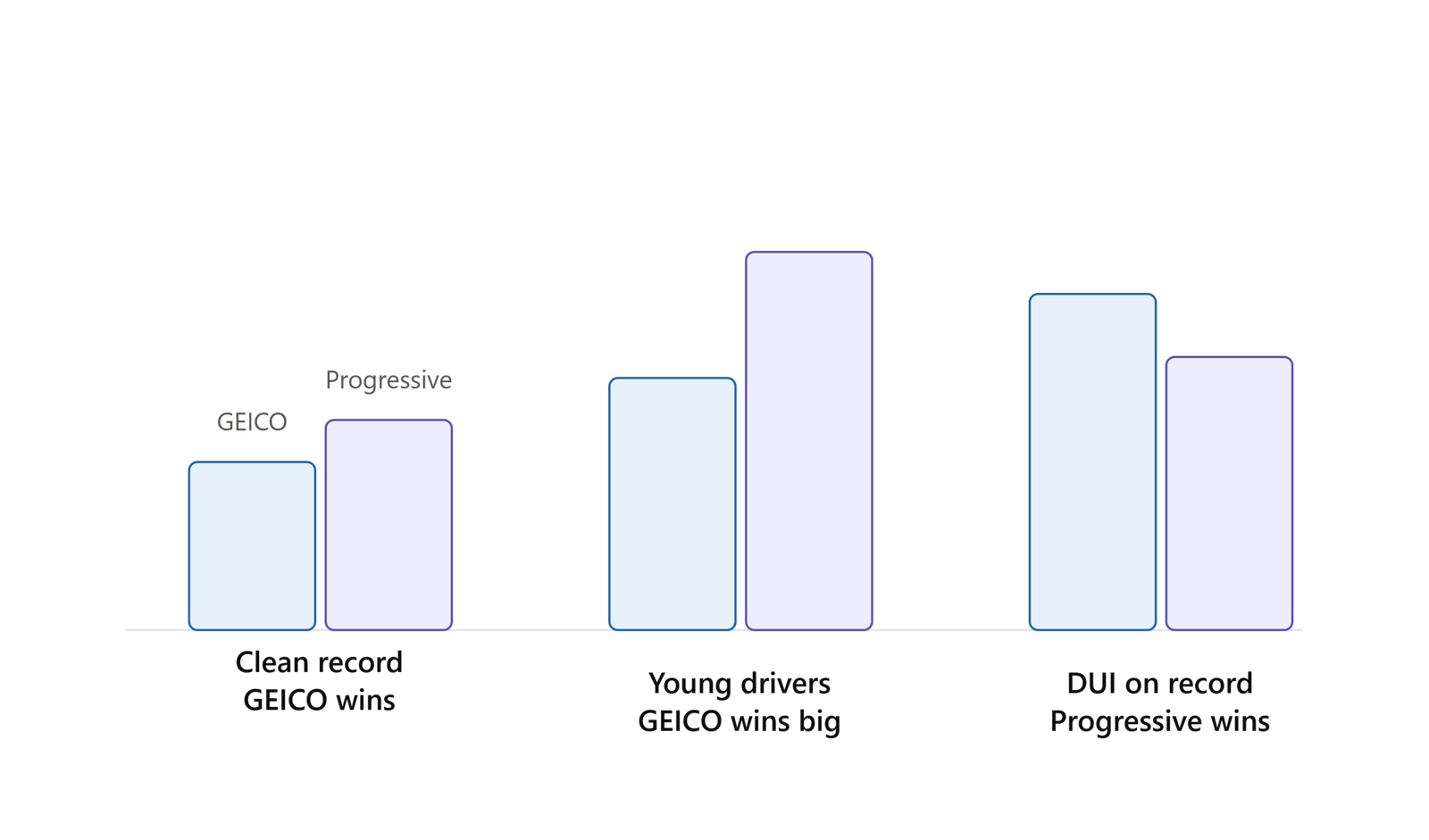
- GEICO is cheaper than Progressive for most driver profiles, with the gap ranging from about $330 a year for a clean-record adult up to nearly $1,700 a year for young drivers.
- Progressive flips the advantage for one specific group: drivers with a DUI, where Progressive runs roughly $850 a year cheaper than GEICO.
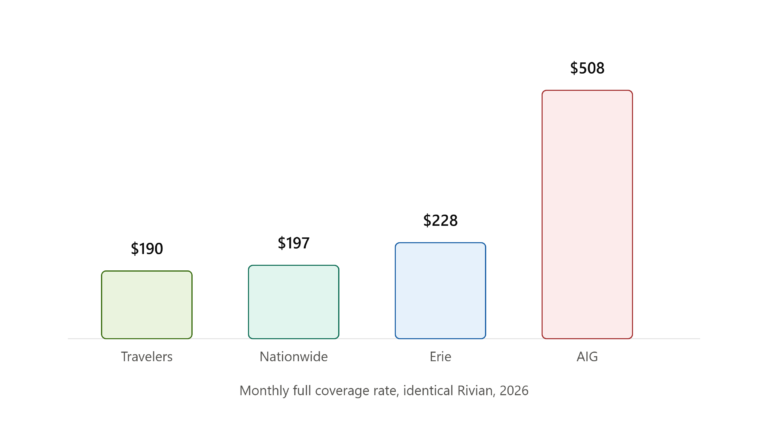
- Neither company offers a dedicated EV-specific discount, unlike Travelers or USAA, but both offer meaningful safety-feature and new-car discounts that apply to EVs.
- Progressive offers coverage GEICO doesn’t, including gap insurance, rideshare coverage, and custom parts protection, features genuinely relevant to many EV owners.
The headline numbers
Across multiple independent 2026 rate comparisons, a consistent pattern emerges:
- One major comparison found GEICO averaging $1,216 a year against Progressive’s $1,546 for most drivers, a gap of roughly $330 annually.
- Another found GEICO at $1,669 a year versus Progressive at $1,820, both still well under the $2,012 national average, but with GEICO holding a clear edge.
- A third comparison found GEICO customers paying about $150 a month for full coverage against Progressive’s $145 a month, one of the few data points where Progressive actually edged slightly ahead, illustrating that averages shift somewhat depending on the specific sample and methodology.
- For liability-only coverage specifically, one source found both companies essentially tied at $79 a month.
The overall pattern: GEICO wins on price in the large majority of comparisons and driver profiles, though the margin varies by study, and a small number of specific measurements show Progressive competitive or even slightly ahead.
Where the gap widens or disappears
This is more useful than the headline average, since your specific situation determines how much the gap actually matters to you:
Young drivers see the largest gap. One comparison found GEICO offering average yearly savings of $4,740 over Progressive for teen drivers specifically, and a separate analysis found the gap for young drivers reaching nearly $1,700 a year. If you’re insuring a young driver alongside an EV, as covered in our guide to EV insurance by age, this is a significant enough difference to prioritize GEICO quotes first.
The gap widens further after a violation, except for a DUI. After a speeding ticket, the GEICO advantage grows to roughly $429 a year, and after an at-fault accident, to about $485 a year. But a DUI flips the entire pattern: Progressive becomes roughly $850 a year cheaper than GEICO for drivers with a DUI on record, the one profile where Progressive wins clearly on price.
Senior drivers are a partial exception too. At least one comparison found GEICO’s advantage narrowing or reversing slightly for senior drivers specifically, worth confirming with direct quotes if you fall into this age bracket, as covered in our broader guide to EV insurance cost by age.
What each company actually offers beyond price
GEICO’s strengths:
- Higher customer satisfaction and claims-handling ratings across J.D. Power, NAIC complaint data, and consumer review platforms like WalletHub, a meaningful factor given how much claims experience matters for EV owners specifically, given the repair complexity covered throughout this site.
- A well-regarded, highly rated mobile app with a virtual assistant and vehicle care guides.
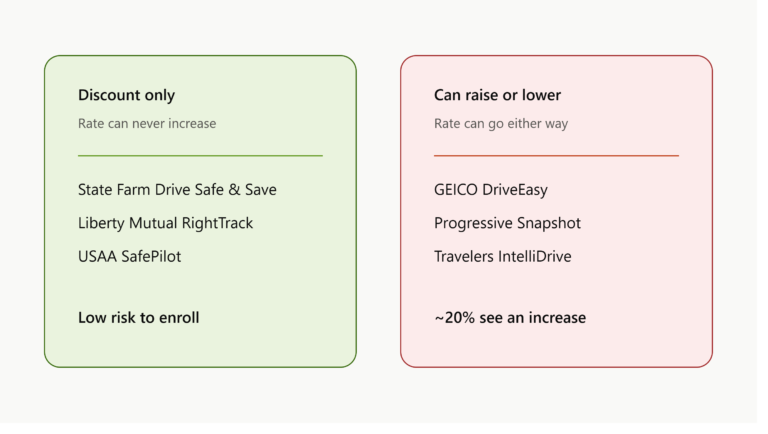
- DriveEasy, GEICO’s telematics program, offering usage-based savings.
- Strong military and federal employee discounts.
- A meaningful multi-car discount, up to 25%, as covered in our full insurer ranking, useful if you have another vehicle in the household.
Progressive’s strengths:
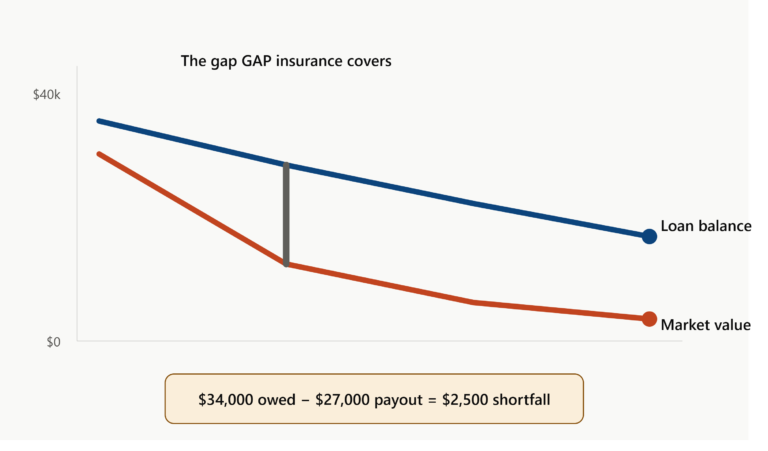
- More coverage flexibility and add-ons than GEICO offers, including gap insurance and rideshare coverage, both genuinely relevant to many EV owners. As covered in our leasing versus financing guide, gap insurance specifically matters if you financed or leased your EV with a low down payment, and Progressive offering it directly, rather than requiring a separate policy, is a real convenience.
- Custom parts and pet injury coverage, niche but valuable for specific owners.
- The Name Your Price Tool and access to a network of over 40,000 independent agents, useful if you want more hands-on help structuring your policy.
- Snapshot, Progressive’s telematics program, specifically called out elsewhere on this site as a strong fit for EV driving patterns, given the smoother acceleration and consistent regenerative braking common among EV drivers.
- SR-22 filing support, relevant if your state or a court requires you to prove minimum coverage following certain violations.
Neither offers a dedicated EV discount, and that matters
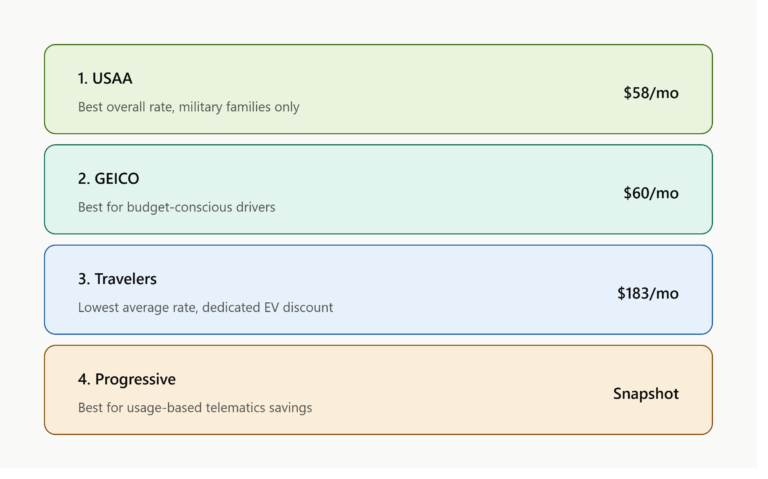
It’s worth being direct about something both companies share: unlike Travelers or USAA, neither GEICO nor Progressive currently offers a dedicated discount specifically for owning an electric or hybrid vehicle. Both instead offer discounts on vehicle safety features and new-car purchases, which apply to EVs since most qualify on both fronts, but you won’t find a line item specifically labeled «EV discount» on either company’s policy the way you might elsewhere. If a dedicated green-vehicle discount is a priority for you specifically, it’s worth cross-shopping Travelers or USAA alongside these two, as covered in our broader insurer ranking.
Which one should you actually choose?
Choose GEICO if:
- You’re a driver without a DUI on your record, which covers the large majority of shoppers, and price is your primary concern.
- You’re insuring a young driver alongside your EV, given how much wider the gap runs for that age group specifically.
- Claims-handling quality and app experience matter more to you than having every specialty coverage option available.
- You have another vehicle in the household and want to maximize the multi-car discount.
Choose Progressive if:
- You have a DUI on your record, the one profile where Progressive is clearly and consistently cheaper.
- You need gap insurance or rideshare coverage bundled directly into your auto policy rather than sourced separately.
- You want access to Snapshot’s telematics program specifically, or prefer working through an independent agent network.
- You’re financing or leasing your EV with a smaller down payment and want gap coverage without shopping a third party for it, as covered in our dedicated leasing versus financing guide.
A word on averages versus your actual quote
Every number in this article is drawn from broad driver-profile averages, not your specific situation. As covered throughout this site, EV insurance pricing depends heavily on your exact model, trim, state, age, and driving record, factors that can shift the GEICO-versus-Progressive gap in either direction for your particular case. The consistent overall pattern (GEICO cheaper for most profiles, Progressive cheaper after a DUI, Progressive offering more specialty coverage) is a reliable starting point, but it’s not a substitute for getting real quotes from both on your specific EV.
The bottom line
For most EV owners, GEICO is the cheaper of the two, often by a meaningful margin, and it also holds an edge in customer satisfaction and claims handling, a combination that makes it a strong default first quote. Progressive earns its place specifically for drivers with a DUI, where it’s clearly cheaper, and for anyone who needs gap insurance, rideshare coverage, or the flexibility of Progressive’s broader add-on menu and agent network. Neither offers a dedicated EV discount, so if that specific feature matters most to you, it’s worth widening your comparison to include Travelers or USAA alongside these two before you decide.
This article is for informational purposes only and does not constitute financial or insurance advice. Insurance rates, discounts, and coverage options vary by insurer, state, and individual driver profile, and change frequently. Always get a personalized quote before making a purchasing decision.