Does Homeowners Insurance Cover EV Charger Installation?
This question has two very different answers depending on what you actually mean by it. Does installing a charger raise your premium? Generally no. Does your policy protect the charger once it’s installed? Generally yes, but with a condition many owners don’t know about until a claim is denied: who installed it matters as much as what happened to it. This guide covers the installation process itself, not just the ongoing coverage question already covered elsewhere on this site.
Key takeaways:
- Simply owning an EV, or installing a home charger, generally doesn’t raise your homeowners, renters, or condo insurance premium on its own, since the charger and vehicle are underwritten separately from your general dwelling risk.
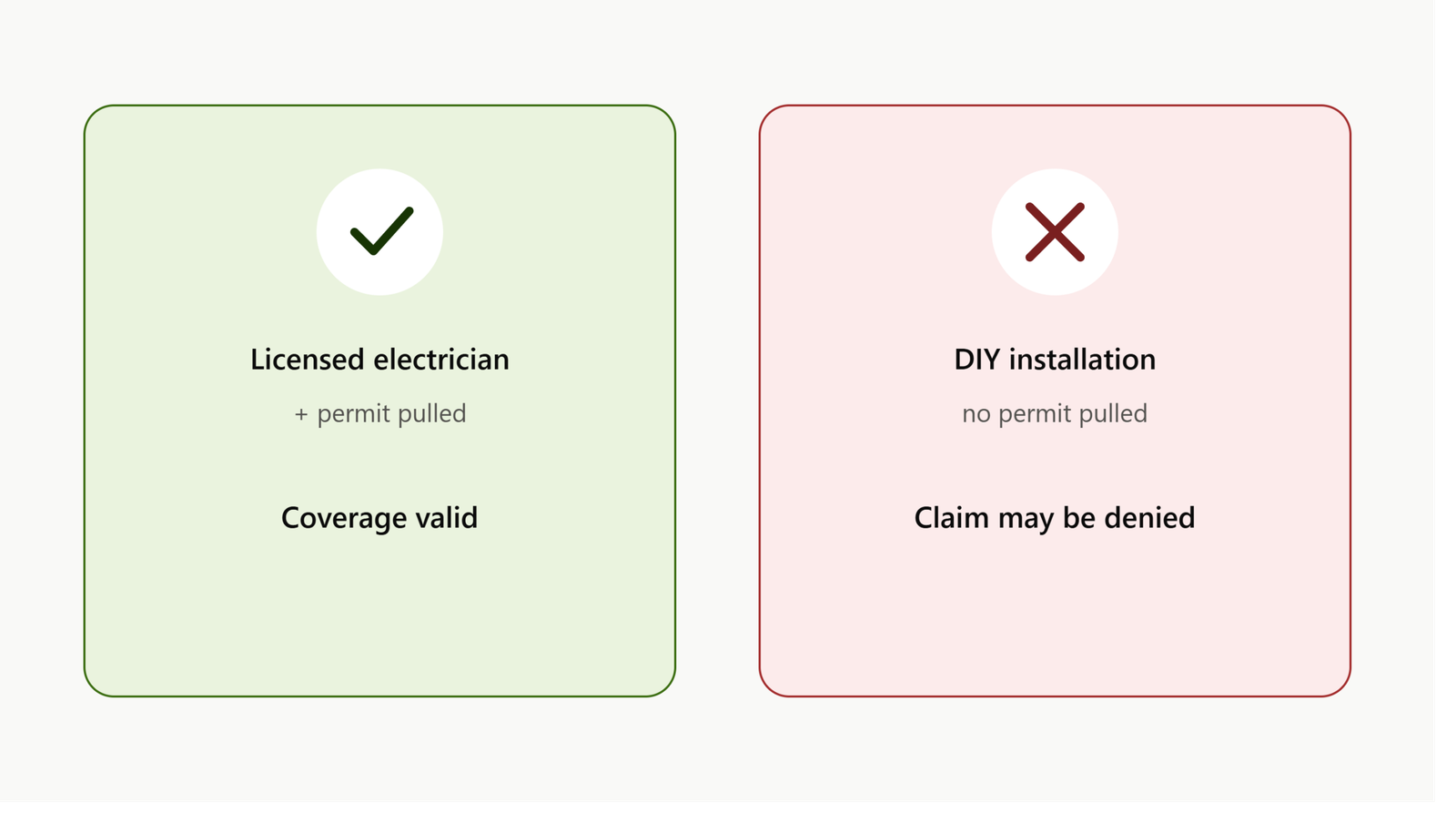
- You may not be covered by homeowners insurance if a licensed electrician did not install the charging station, a specific, documented exclusion that turns DIY installation into a real coverage risk, not just a safety one.
- Skipping a required permit can create real problems with a future insurance claim, even if the installation itself was done competently, since permits are part of how insurers verify proper installation after the fact.
- New 2026 regulations in several states now address EV chargers specifically in condo and HOA settings, including a Maine law addressing installation approval, ongoing liability, and disclosure requirements to future buyers.
Does installation itself change your premium?
Simply owning an EV by itself usually won’t change your homeowners, renters, or condo insurance premium, because the vehicle falls under your auto insurance policy entirely separate from your property coverage. The same general logic extends to the charger itself: installing one doesn’t automatically trigger a premium increase on its own. Where property and liability considerations actually show up is in how the charger is installed and documented, not in the simple fact that you now own one.
The condition most owners don’t know about: who installed it
This is the detail worth understanding before you ever plug in a charger for the first time, not after something goes wrong. You may not be covered by homeowners insurance if a licensed electrician did not install the charging station. This is a distinct, separate condition from the general «was there a covered peril» question covered in our other charger coverage guides, it’s specifically about whether the installation itself met a professional standard, independent of what eventually causes any damage.
In practice, this means a DIY installation, even one that works flawlessly for years, can leave you without coverage if something eventually does go wrong, since the insurer’s investigation into a claim may specifically examine who performed the original installation. This is a genuinely different risk than the general «wear and tear isn’t covered» rule, it’s a threshold condition on coverage existing at all for that specific piece of equipment.
Level 1 versus Level 2: why the installation type changes how your policy treats it
As covered in our broader home charging guides, the distinction between charger types matters for coverage classification specifically:
A Level 1 charger, using a standard 120-volt outlet, is essentially a cord set that often counts as personal property you can store or move, similar to any other appliance.
A Level 2 charger, using a 240-volt circuit that typically involves a dedicated breaker, hardwiring, or a wall-mounted unit, is physically attached to your home’s structure. Because of that physical attachment, your policy may view it differently than a portable cord, commonly as part of the dwelling itself rather than as movable personal property, which affects which specific coverage category and limit applies if something happens to it.
Permits: not just a legal requirement, an insurance one too
Pulling permits when required, particularly for Level 2 chargers, is emphasized specifically because skipping this step can create real problems with an insurance claim later, even if nothing was wrong with the actual electrical work. Permits create an official record that the installation was reviewed against local electrical code, and that record is exactly what an insurer may look for when evaluating whether a claim involving the charger, or anything connected to the circuit it’s on, gets approved or denied.
The practical connection here: a permitted installation performed by a licensed electrician creates a documentation trail that directly supports the «properly installed» condition covered above, while an unpermitted DIY installation leaves you unable to produce that evidence if a claim is ever disputed.
The real cost context worth knowing
Mercury Insurance’s own guidance on home EV charger installation notes that Level 2 mounted chargers, the type most likely to require professional installation and permits, typically cost between $1,750 and $2,500 before installation costs, and are rated highest for consumer satisfaction according to J.D. Power despite occasional Wi-Fi and app connectivity frustrations. Separately, it’s worth knowing that the average insurance claim for lightning and power surge damage has reached over $15,000 in recent data, a genuinely relevant figure given that power surge and lightning exposure is one of the real risks a properly installed and documented charger setup protects against, as covered in our broader home charger coverage guide.
A newer wrinkle: condo and HOA-specific regulation
This is a genuinely evolving area worth flagging, since it directly affects the installation process itself for owners in shared housing situations. Beginning January 1, 2026, Maine’s condominium and residential association law prohibits associations from broadly prohibiting or restricting EV charger installation in designated parking spaces, while still requiring unit owners to apply for board approval, provide proof of insurance, cover all installation and electricity costs, and comply with health, safety, and zoning standards. Critically, the homeowner remains responsible for ongoing maintenance, repair, and any associated damages or liabilities, and must disclose the charger’s existence to prospective buyers if the property is sold, with associations retaining the right to require removal unless a buyer specifically agrees to take ownership of it.
This mirrors the real, documented condo friction covered in our dedicated Tesla Wall Connector guide, and signals a broader regulatory trend: as more states address EV charging specifically in shared-housing contexts, expect similar disclosure, insurance-proof, and liability-assignment requirements to become standard rather than exceptional, worth checking your specific state and HOA’s current rules before installing rather than assuming Maine’s approach applies universally.
A practical pre-installation checklist
Given everything covered above, a few steps specifically protect your coverage before you ever plug in the charger, not just after:
- Hire a licensed electrician, full stop. Given the specific coverage condition covered above, this isn’t just a safety recommendation, it’s a prerequisite for the charger being covered at all under many policies.
- Pull any required permit rather than skipping it to save time or money. As covered above, this creates the documentation trail your insurer may need if a future claim is ever disputed.
- Get proof of your contractor’s liability insurance before work begins, protecting you separately from any damage the installation process itself might cause.
- Keep installation receipts, permit documentation, and photos specifically for insurer substantiation, consistent with the documentation guidance covered throughout our other charger and battery coverage guides.
- Ask your homeowners insurer directly whether charger hardware is covered by default, or whether you need a specific scheduled item or equipment breakdown endorsement, rather than assuming standard dwelling coverage automatically extends to it.
- If you’re in a condo or HOA, confirm your specific association’s current approval process, insurance-proof requirements, and any disclosure obligations before installation, given the evolving regulatory landscape covered above.
- Confirm your electrical panel has adequate capacity before installation, both for safety and because, as covered in our broader home preparation guide, panel capacity concerns are increasingly treated as a genuine liability consideration by insurers, not just a technical inconvenience.
The bottom line
Installing a home EV charger generally won’t raise your homeowners insurance premium on its own, but getting the installation itself right is what determines whether the charger is actually covered when you need it to be. The single most important, and most overlooked, condition is professional installation: a licensed electrician and, where required, a pulled permit aren’t just good practice, they’re often a genuine prerequisite for coverage to apply at all. If you’re in a condo or HOA, the regulatory landscape is actively evolving, with newer laws like Maine’s 2026 requirements addressing installation approval, ongoing liability, and disclosure to future buyers directly, worth checking your specific state and association’s current rules before you install rather than assuming a one-size-fits-all answer applies.
This article is for informational purposes only and does not constitute financial or insurance advice. Coverage conditions, permit requirements, and state and local regulations vary significantly and change frequently. Always confirm specific requirements directly with your insurer, local permitting office, and HOA before installation.