Is Tesla Insurance Worth It? Honest Review
Most «Tesla Insurance review» articles online read like they were written by Tesla’s marketing department. This one isn’t. Tesla Insurance can genuinely save safe drivers real money, that part is true and backed by real data. But there’s a second half of this story, involving regulatory action, a serious complaint volume, and real customer accounts of claims that took months to resolve, that deserves equal weight before you decide. Here’s the complete, honest picture.
Key takeaways:
- Tesla Insurance holds some of the worst customer satisfaction ratings in the insurance industry: 1.5 to 1.6 out of 5 on the Better Business Bureau and Clearsurance, with a C- BBB grade and no BBB accreditation.
- Tesla’s 2024 NAIC Complaint Index sat at 10.20, meaning the company received roughly 10 times more complaints than expected for its market share, a serious red flag by industry standards.
- California regulators issued formal accusations against Tesla Insurance entities in 2025 over systemic claims-handling failures, including egregious delays and unreasonable denial of valid claims, with potential license suspension on the table.
- The pricing advantage is real for safe drivers, but it comes with a documented risk: if you ever need to file a claim, the process has a well-documented track record of being difficult.
Start with what Tesla Insurance actually does well
To be fair to the product, the pricing mechanics genuinely work as advertised for the right driver. Tesla’s Safety Score model prices you almost entirely on your actual driving behavior rather than age, credit score, or demographic factors, and drivers who maintain high scores report meaningful, real savings, sometimes 30% to 60% below what traditional carriers would charge for the same coverage. Several optional coverage types are available depending on your state, California residents can consolidate non-Tesla household vehicles onto the same policy, and the real-time feedback loop genuinely does incentivize safer driving in a way traditional annual-renewal pricing doesn’t.
Some Reddit and forum accounts specifically praise claims coordination with Tesla-owned Collision Centers, describing efficient handling despite occasional communication friction, so it isn’t universally a bad experience. If your accident involves a Tesla Collision Center specifically and a straightforward claim, some owners report a smoother process than the worst complaints below would suggest.
Now the part most reviews leave out: the ratings
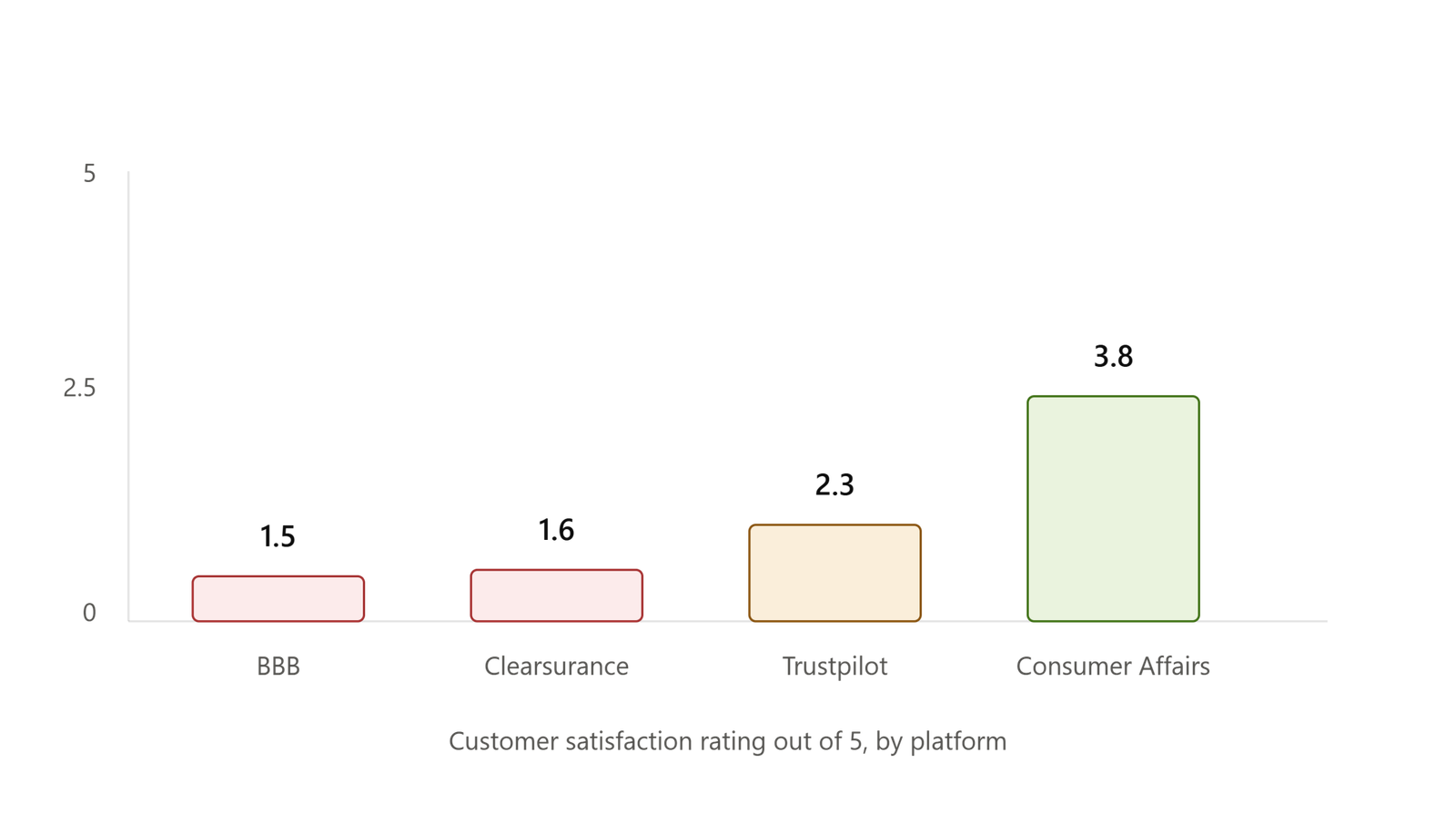
This is where the honest picture diverges sharply from the marketing pitch. Across every major review platform tracked, Tesla Insurance’s customer satisfaction scores are strikingly poor:
- Better Business Bureau: 1.5 out of 5, with a C- letter grade and no BBB accreditation
- Clearsurance: 1.6 out of 5
- Trustpilot: 2.3 out of 5
- Consumer Affairs: 3.8 out of 5, the outlier on the higher end
- Average across platforms: approximately 2.3 out of 5
For context, these are not scores typical of an established, well-regarded insurer. A rating this consistently low across multiple independent review platforms, rather than just one, suggests a genuine and widespread pattern rather than a handful of isolated complaints.
The complaint data is even more specific
Star ratings can feel abstract, so it helps to look at the actual complaint volume data insurance regulators track. Tesla Insurance’s 2024 NAIC Complaint Index sat at 10.20. To translate that: an index above 1.0 means a company is receiving more complaints than expected for its size, and 10.20 means Tesla received roughly ten times the complaint volume that would be considered normal for an insurer with its market share. That’s not a marginal red flag, it’s one of the more severe complaint-ratio figures you’ll find for any active auto insurer.
What California regulators found
The most serious piece of this story is regulatory, not just anecdotal. In 2025, the California Department of Insurance issued formal accusations against Tesla Insurance Services and related entities (including State National, the carrier tied to Tesla’s California policies in public regulatory filings), specifically alleging systemic failures in claims handling. The Department’s findings included egregious delays in responding to policyholder claims at every step of the process, causing documented financial harm and out-of-pocket expense to consumers, along with unreasonable denials and delays in fully paying valid claims.
The regulatory language used is notably strong: the Department’s accusations describe the companies’ conduct as constituting grounds for license suspension or revocation, and specifically note that despite prior warnings from the Department, complaint volume and violations continued to increase rather than improve. Companies facing these accusations had a limited window to respond, with a hearing process to follow that could determine whether they’re permitted to continue operating in California at all.
This is a materially different category of concern than a low star rating alone. Star ratings reflect customer sentiment; a state insurance regulator formally accusing a company of unlawful and unfair claims practices is a documented, evidence-based finding from the body specifically responsible for consumer protection in the insurance industry.
What real customer accounts describe
Beyond the aggregate ratings and regulatory action, individual customer accounts tracked across review platforms describe a consistent pattern: extended unresponsiveness from claims representatives, vehicles moved between facilities without clear owner notification, and a general sense that customers felt pressured to accept whatever settlement offer was presented rather than negotiate. Several accounts specifically describe switching to a traditional insurer at a meaningfully higher price after a difficult claims experience, explicitly citing the difference in responsiveness and communication as worth the added cost. Others describe filing complaints directly with their state insurance department after being unable to get a response through Tesla’s own channels, with markedly faster resolution once regulators became involved.
It’s worth noting one additional recurring theme: multiple owners describe frustration with the Safety Score itself feeling inconsistent or opaque, reporting unexpected negative marks even during periods of careful or minimal driving, which several described as difficult to dispute or get explained.
So, is it actually worth it?
There’s no single answer, but here’s a genuinely honest framework rather than a simple yes or no:
It’s likely worth considering if:
- You live in one of the 13 eligible states and are a demonstrably safe, low-mileage driver who would benefit meaningfully from Safety Score pricing.
- You’re comfortable with meaningfully more claims-handling risk than a traditional carrier in exchange for a lower premium.
- You’ve never had to file a serious claim before and are willing to accept that risk as a real tradeoff for savings, not a hypothetical one.
- You’re primarily focused on the day-to-day premium and have emergency savings that could absorb a difficult or delayed claims process if the worst-case scenario happens.
It’s probably not worth it if:
- You place a high value on responsive customer service and a well-documented claims process, given the specific regulatory findings described above.
- You want to bundle your auto policy with home or renters insurance, since Tesla Insurance doesn’t currently offer this.
- You live outside the 13 currently eligible states, in which case this entire comparison is moot for now.
- You’ve read the regulatory findings above and the complaint index and decided the savings aren’t worth the documented risk, a completely reasonable conclusion given the evidence.
A practical middle path
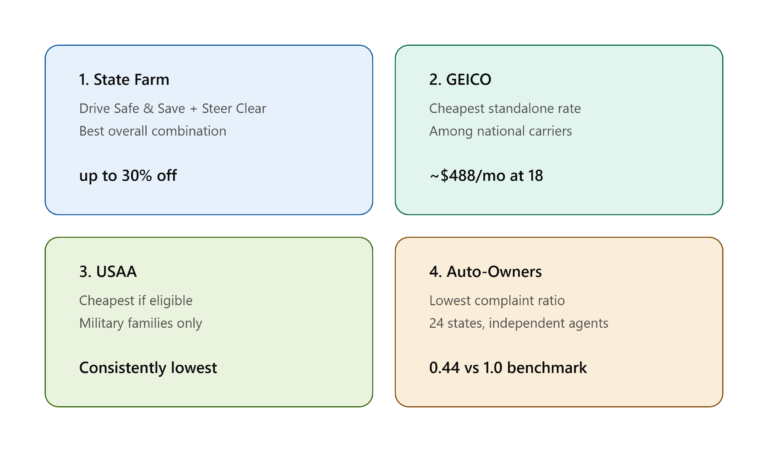
If the Safety Score concept appeals to you but the claims-handling risk gives you pause, it’s worth remembering you don’t have to choose between «Tesla Insurance» and «no telematics at all.» As covered in our full comparison guide, Progressive’s Snapshot and State Farm’s Drive Safe & Save both offer behavior-based pricing discounts of 10% to 30% while backed by insurers with substantially longer, more established claims-handling track records and standard J.D. Power customer satisfaction rankings you can actually compare against.
How to protect yourself if you do choose Tesla Insurance
If you decide the savings are worth it despite the risks described above, a few steps can help:
- Know your issuing carrier, not just the Tesla brand name on the app. In California, this has been State National Insurance Company in public regulatory filings, and financial strength ratings apply to that underlying carrier, not the Tesla name itself.
- Document everything if you ever file a claim. Given the documented pattern of delayed responses, keep dated records of every call, email, and voicemail from day one.
- Know your state’s insurance department complaint process before you need it. Multiple customer accounts describe faster resolution specifically after involving state regulators, worth knowing in advance rather than discovering mid-claim.
- Reassess annually. Insurance markets shift, and a company facing this level of regulatory pressure has real incentive to improve. Check current reviews and complaint data at renewal time rather than assuming today’s picture is permanent in either direction.
The bottom line
Tesla Insurance isn’t a scam, and the pricing advantage for safe drivers is real and well-documented. But an honest review has to weigh that advantage against an equally well-documented pattern: some of the worst customer satisfaction ratings of any active auto insurer, a complaint index roughly ten times the expected rate for its size, and formal regulatory accusations in California over systemic claims-handling failures serious enough to threaten the company’s license to operate in the state. This is not a reason to automatically avoid Tesla Insurance, plenty of safe drivers in eligible states will never file a claim and will simply enjoy the savings. But it is a reason to go in with eyes open, understanding that the tradeoff you’re making is real savings against real, regulator-documented risk, not a hypothetical one.
This article is for informational purposes only and does not constitute financial or insurance advice. Ratings, complaint data, and regulatory status change over time. Always check current reviews, your state insurance department’s records, and get a personalized quote before making a purchasing decision.