If this is your first EV, the insurance quote is often the first real surprise of ownership, arriving before you’ve even driven the car home. This guide is written specifically for first-timers: what to actually expect, why it costs what it does, and the handful of decisions that matter most when you’re new to this rather than already deep into EV ownership.
Key takeaways:
- First-time EV buyers commonly see quotes 15% to 40% higher than what they paid for a comparable gas car, with national EV averages running near or above $3,500 a year.
- Total cost of ownership for an EV often doesn’t overtake a comparable gas car’s total cost until roughly the sixth year, meaning the first several years genuinely do cost more overall, insurance included.
- Vehicle choice matters more for first-timers than almost any other decision, since it’s made before you’ve built any EV-specific insurance history.
- Specialized EV insurance add-ons, like roadside towing to a charging station, exist and are worth knowing about even if you don’t need them on day one.
What to actually expect on your first quote
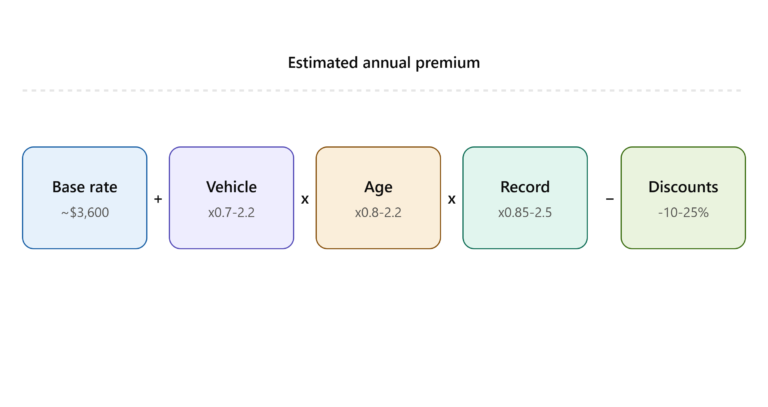
Set your expectations before you request a quote, not after. Recent national data shows EV drivers often paying 15% to 40% more for insurance than gas-car owners, with average annual EV premiums landing near or above $3,500 in many 2026 studies. If your gas car cost $1,800 a year to insure, seeing an EV quote in the $2,800 to $4,000 range isn’t a sign you’re being overcharged, it reflects the broader market reality covered in our full breakdown of average EV insurance costs.
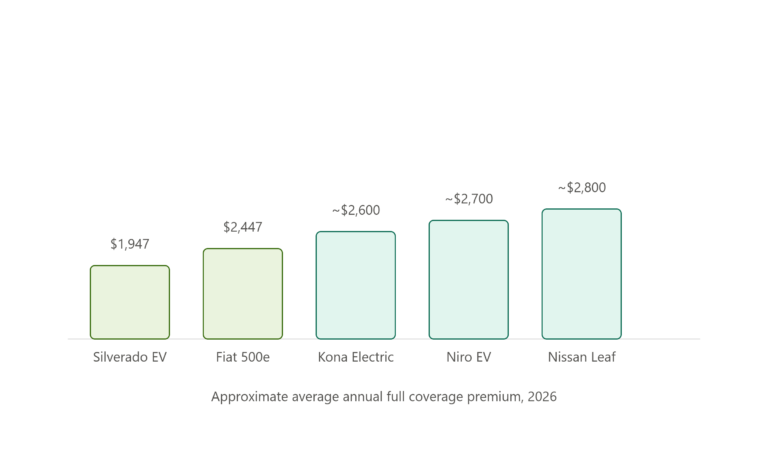
That said, the exact number varies enormously by which EV you choose, which is the single biggest lever available to a first-time buyer who hasn’t purchased yet.
The honest timeline: when does an EV actually save you money?
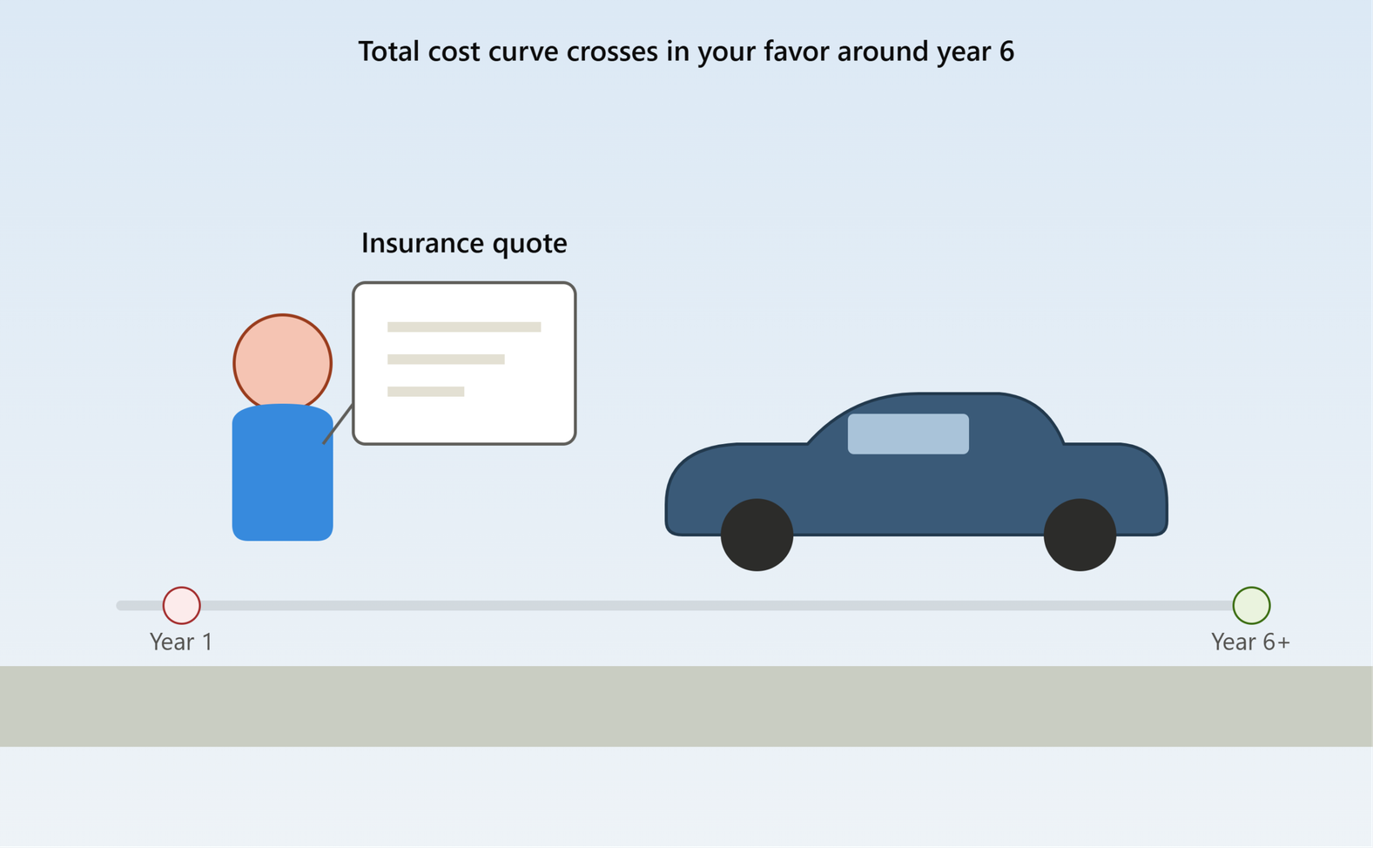
This is worth knowing upfront because it changes how you should think about the insurance premium specifically. Industry analysis suggests the total cost of ownership for an EV, factoring in purchase price, insurance, fuel, and maintenance together, often doesn’t shift in favor of the EV until around the sixth year of ownership on average. That means for most new EV owners, the first several years genuinely do cost more than a comparable gas car would have, insurance being one piece of that gap, not the sole driver of it.
This isn’t a reason to avoid buying an EV, fuel and maintenance savings are real and compound over time, but it is a reason not to panic at your first insurance bill as if something has gone wrong. It hasn’t. You’re simply in the early part of a cost curve that improves the longer you own the car.
The one decision that matters most: which EV you buy
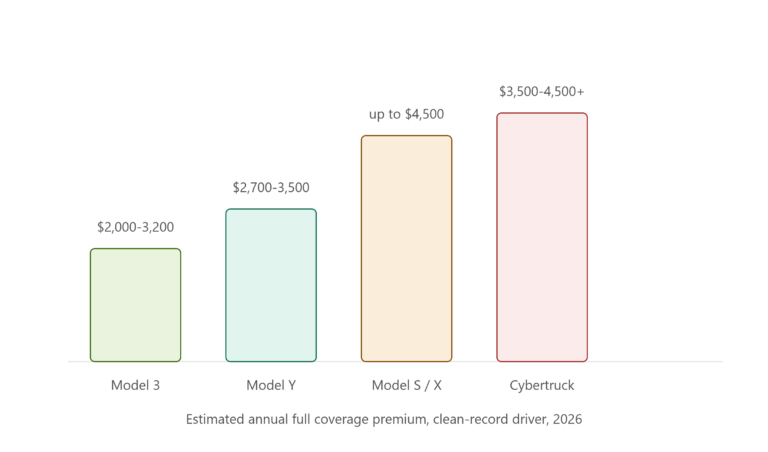
For a first-time owner, this is the highest-leverage choice you’ll make, because unlike a driving record or credit score, it’s entirely in your control before you sign anything. As covered in our rankings of the cheapest and most expensive EVs to insure, the gap between a sensible mainstream model and a flashy or luxury one can easily exceed $2,000 to $3,000 a year.
A few practical guidelines specifically for first-timers:
- Avoid high-performance or luxury trims as a starter EV, even if the base price looks similar to a more modest trim. Lower-priced, lower-performance vehicles generally cost meaningfully less to insure.
- Favor legacy automakers over EV-only brands if minimizing cost matters. Vehicles from Ford, Chevrolet, Hyundai, and similar manufacturers that also build gas cars tend to insure closer to gas-car pricing than Tesla or other EV-only brands.
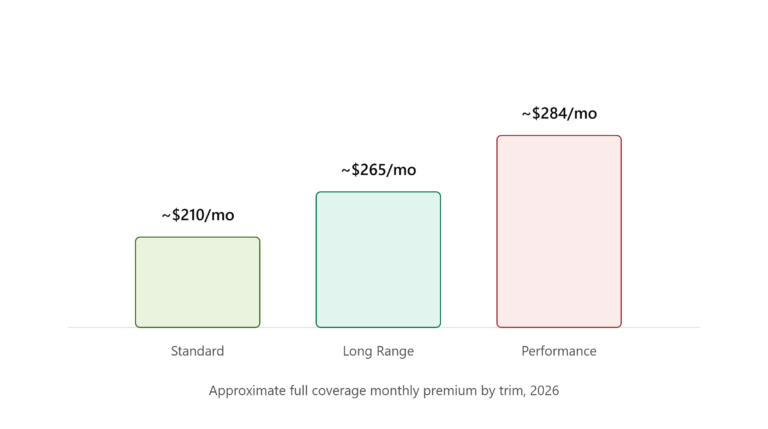
- Get insurance quotes on the specific VIN or trim before you commit, not just the general model name. Trim level, battery size, and even wheel package can shift your quote meaningfully within the same model line.
Should you consider a used EV as your first one?
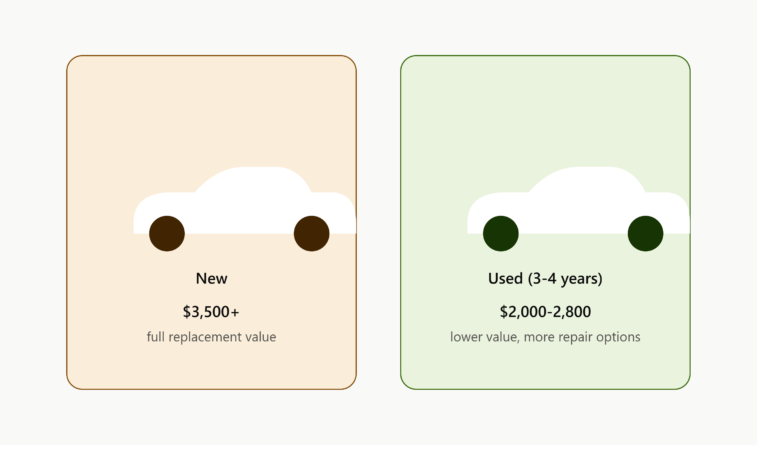
It’s worth genuinely considering, and not only for the lower purchase price. A used EV with verified battery health and mainstream repair-network compatibility often insures for noticeably less than the same model new, since a lower vehicle value directly reduces the replacement-cost risk your insurer is pricing in. If you’re a first-time EV buyer trying to keep total costs manageable while you learn what ownership is actually like, a well-vetted used model is a legitimate way to lower both your purchase price and your insurance bill at the same time.
Discounts and tools that are especially useful for first-timers
A few specific tactics tend to matter more for new EV owners than for owners who’ve been at this for years:
Telematics programs. Systems that track driving behavior through an app or connected device have become widespread by 2026, and they can be particularly valuable if you’re new to EV driving specifically, since demonstrating safe habits early can meaningfully offset the «new to this vehicle type» pricing insurers sometimes apply.
Student discounts, where applicable. If you’re a student buying your first car as an EV, many insurers still offer meaningful discounts for maintaining strong grades, and these stack with other EV-related discounts rather than replacing them.
Getting multiple quotes before you’ve built any history. This matters more for first-timers than for long-time owners, since you have no prior EV-specific claims record for insurers to price against yet, which means the variance between carriers’ initial quotes can be especially wide. Comparing three to five insurers at this stage can reveal differences of well over $500 a year on the identical vehicle.
Coverage details worth understanding before you buy, not after
A few EV-specific coverage questions are worth asking your insurer directly during the shopping process, before you’re already locked into a policy:
What happens if the battery needs replacement? If your EV’s battery fails outside of the manufacturer’s warranty, your standard policy may not automatically cover replacement. Some specialized EV insurance products do cover battery replacement costs in certain circumstances, but this varies significantly by insurer and isn’t something to assume without asking directly.
Does the policy include EV-specific roadside assistance? Running out of charge is a genuinely different scenario than running out of gas, and some insurers offer roadside assistance specifically tailored for EVs, including towing to the nearest charging station rather than just to the nearest gas station or repair shop. This is a small detail, but worth confirming if you’re new enough to EV ownership that range management still feels unfamiliar.
Is your home charger actually covered? As covered in our dedicated guide on this topic, a home charger installation typically falls under your homeowners policy rather than your auto policy, and it isn’t automatically covered just because it exists. If you’re installing a charger as a first-time EV owner, this is a call worth making to your homeowners insurer before you assume you’re protected.
A simple first-timer’s checklist
- Get quotes on the specific vehicle and trim before you buy, not just the model name.
- Compare at least three to five insurers, since first-quote variance tends to be wider when you have no EV-specific history yet.
- Ask directly about battery coverage, roadside assistance for EVs, and home charger coverage, rather than assuming your standard policy already includes them.
- Consider a telematics program early to start building a favorable driving record from day one.
- Set realistic expectations about the first several years of ownership cost, so the insurance premium doesn’t feel like a surprise problem rather than a known part of the overall cost curve.
The bottom line
Insurance sticker shock is one of the most common first experiences for new EV owners, but it’s rarely a sign that something has gone wrong or that you’re being treated unfairly. It reflects a real, well-documented market pattern: EVs cost more to insure than gas cars, particularly in the early years of ownership, before fuel and maintenance savings have had time to offset the gap. The good news is that as a first-time buyer, you have more control over your starting number than you might expect, mainly through the vehicle you choose and the insurers you compare, both of which are entirely within your power before you ever sign a policy.
This article is for informational purposes only and does not constitute financial or insurance advice. Insurance rates, coverage options, and eligibility vary by insurer, state, and individual driver profile, and change frequently. Always confirm specific terms directly with your insurer before purchasing a vehicle or policy.