Not every EV comes with a scary insurance bill. While headlines about EV insurance tend to focus on the high end, Teslas, luxury SUVs, six-figure performance models, there’s a quieter story underneath: a handful of mainstream, unglamorous EVs consistently rank among the cheapest vehicles to insure in the entire market, electric or gas. This guide ranks the actual cheapest electric cars to insure in 2026 and explains exactly why they cost so much less than their flashier counterparts.
Key takeaways:
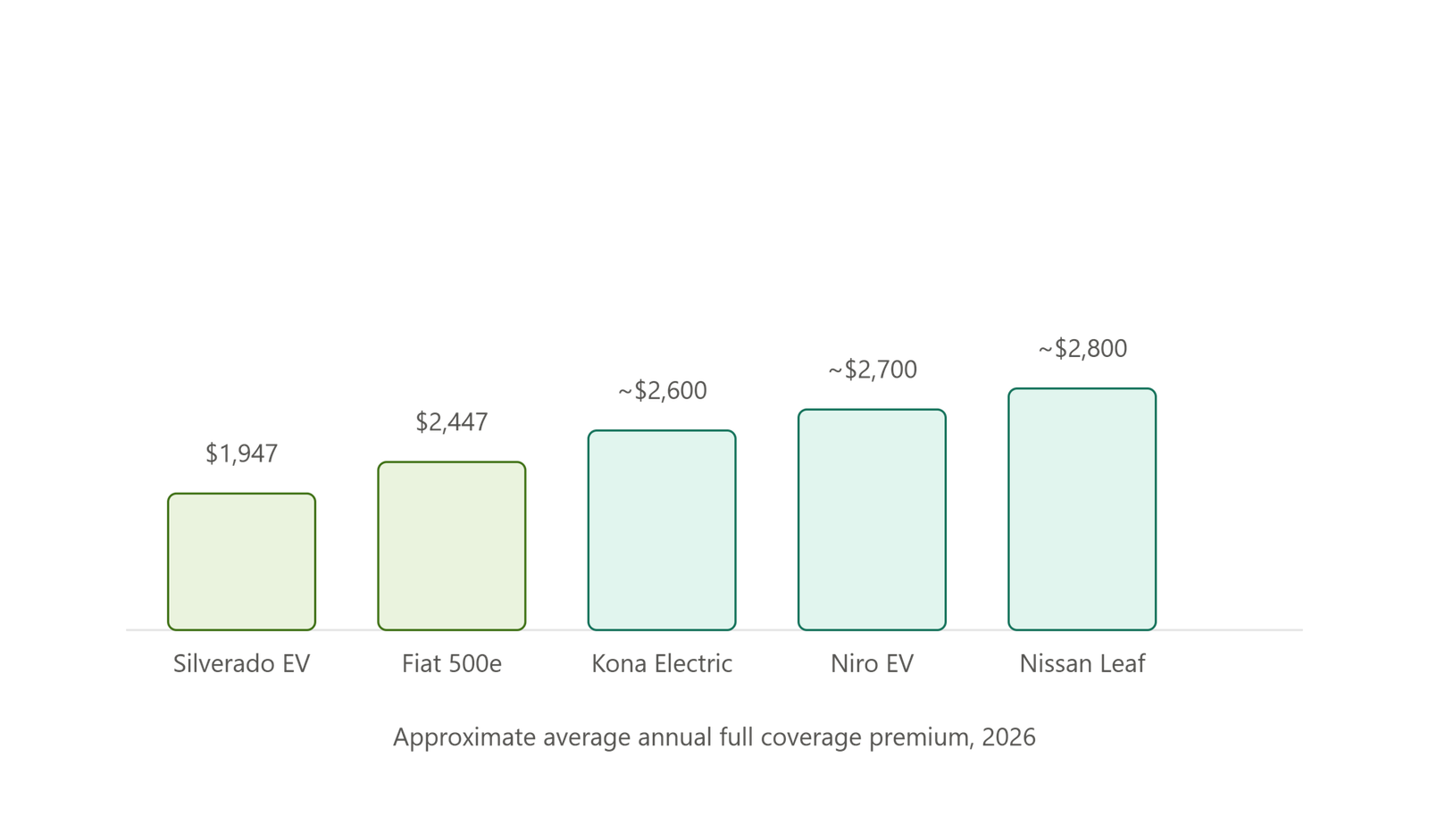
- The Fiat 500e and Chevrolet Silverado EV currently rank as the cheapest EVs to insure, with average annual premiums as low as $1,947 to $2,447 for full coverage.
- The gap between the cheapest and most expensive EVs to insure exceeds $8,000 a year, almost entirely explained by repair complexity, not the electric drivetrain itself.
- Compact, mainstream models from established automakers, think Kona Electric, Niro EV, Nissan Leaf, ID.4, dominate the affordable end of the list.
- A cheap-to-insure EV on a national list doesn’t guarantee a cheap quote for you personally; your age, location, and driving record still matter more than the model badge.
The cheapest electric cars to insure, ranked
Based on 2026 rate data from multiple independent studies, these models consistently show up at the affordable end of the EV insurance spectrum:
1. Fiat 500e Currently ranks as the single cheapest EV to insure in national studies, with an average annual full-coverage premium of roughly $2,447. Its small size, simple mechanical layout, and modest replacement value all work in its favor.
2. Chevrolet Silverado EV Somewhat surprising given it’s a full-size electric truck, but it currently posts the lowest average premium of any EV in at least one major national dataset, at around $1,947 a year for full coverage and under $1,000 for minimum coverage. Being built on a legacy automaker’s established parts and repair network helps significantly here, despite the vehicle’s size and battery cost.
3. Hyundai Kona Electric A subcompact crossover that requires relatively simple repairs. Its smaller footprint and widely available parts keep both repair costs and insurance premiums well below the EV average.
4. Kia Niro EV Consistently rated favorably by insurers relative to larger, heavier EV SUVs, thanks to its relatively simple design and reasonable repair expenses when something does go wrong.
5. Nissan Leaf One of the longest-running EV nameplates in the U.S. market, which works in its favor for insurance purposes: a long production history means widespread parts availability and a well-understood, relatively simple electric drivetrain that insurers have years of claims data on.
6. Volkswagen ID.4 A mainstream design built on components shared with VW’s broader lineup, keeping repair costs moderate and fixes generally less complex, and less expensive, than higher-end electric models.
7. Chevrolet Equinox EV As claims data has matured, mainstream crossover EVs like the Equinox have started getting rated closer to their gas-powered crossover counterparts rather than treated as a separate, pricier category.
8. Mini Cooper Electric Compact size, simple design, and affordable parts keep this one on the cheap end. Repairs are notably less expensive than what you’d see on a luxury EV loaded with advanced electronic systems.
What these models have in common
Look across this list and a clear pattern emerges, and it has almost nothing to do with the fact that these vehicles run on batteries instead of gasoline.
They come from automakers with established repair networks. Hyundai, Kia, Nissan, Chevrolet, and Volkswagen all sell gas vehicles alongside their EVs, which means their existing body shop relationships, parts distribution, and trained technician base can extend to their electric models. That’s the single biggest factor separating the cheap end of this list from the expensive end, dominated by EV-only brands.
They’re mainstream in size and price. None of these are luxury vehicles or high-performance trims. Lower purchase price means lower total-loss exposure for the insurer, and simpler engineering generally means simpler, cheaper repairs.
Several have long production histories. The Nissan Leaf in particular benefits from years of accumulated claims data, which lets insurers price risk more precisely and competitively than they can for newer, less-understood models.
They avoid unusual materials and construction. Vehicles built with large, expensive-to-replace body panels, unconventional materials (like stainless steel), or complex ADAS sensor arrays requiring frequent recalibration tend to cost more to repair, and none of the models on this list lean heavily into those design choices.
How wide is the gap, really?
Wide enough that model choice matters more than almost any other decision you’ll make as an EV shopper concerned about insurance cost. Insurance costs for EVs in 2026 span from roughly $2,447 at the cheap end up to $6,413 or more annually for the priciest models in the same dataset, and other analyses show even wider spreads once you include ultra-luxury EVs, with the gap between the cheapest and most expensive EVs to insure exceeding $8,000 a year in some comparisons.
Put another way: choosing a Kona Electric over a comparably sized luxury EV, or a Niro EV over a performance-oriented SUV, can save you more per year in insurance than most of the widely advertised EV tax credits and rebates combined, and unlike those incentives, the insurance savings repeat every single year you own the car.
A national ranking isn’t a personal quote
It’s worth being direct about a limitation of every «cheapest EVs to insure» list, including this one: these are national averages built from standardized driver profiles, not a guarantee of what you personally will pay. A car appearing near the top of a cheap-to-insure ranking doesn’t mean every driver gets that same low quote.
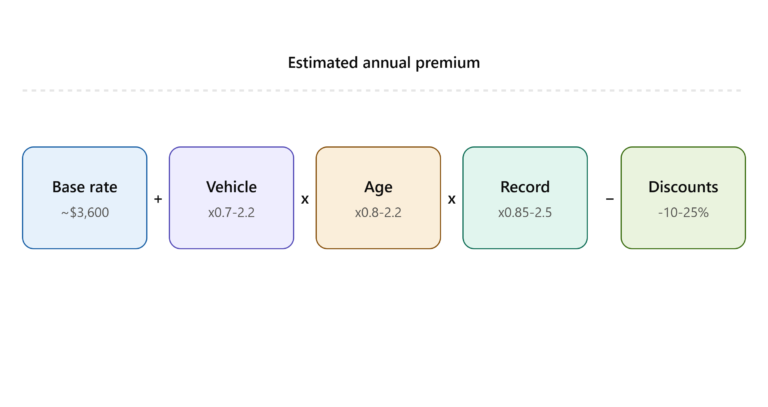
A few factors that can move your actual number well away from the national average for any of these models:
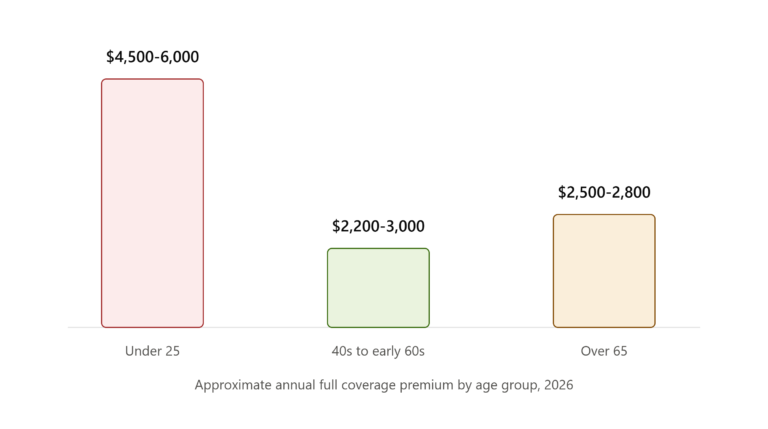
- Your age. As covered in our guide to EV insurance cost by age, a driver under 25 can pay two to three times what an older driver pays for the identical vehicle, even one on this cheap-to-insure list.
- Your location. State and even ZIP-code-level factors can swing your quote by thousands of dollars a year regardless of which model you choose.
- Your driving record and credit-based insurance score, where applicable in your state.
- How the car is used. Insurers also weigh who tends to drive a particular model and how it’s typically used, which factors into pricing beyond the vehicle’s raw repair-cost profile.
The practical takeaway: use this list to narrow your shopping toward models that are structurally cheaper to insure, then get an actual quote for your specific profile before assuming any number here applies directly to you.
What if you want a cheap EV but don’t want to sacrifice size or features?
If a Fiat 500e or Mini Cooper Electric feels too small for your needs, the good news is that the «cheap to insure» pattern isn’t limited to tiny cars. The Chevrolet Silverado EV proves that even a full-size truck can land at the affordable end of the EV insurance spectrum when it comes from an automaker with an established repair network and reasonable claims history. The Equinox EV and ID.4 offer a similar story in the compact-to-midsize crossover segment, giving you real interior space and cargo capacity without the insurance premium of a luxury or EV-only alternative.
The general rule holds across body styles: favor mainstream automakers with a track record of building both gas and electric vehicles, avoid unusual materials or construction methods, and stick closer to the middle of the price range rather than the luxury end, and your insurance premium will very likely follow that same pattern regardless of which body style you need.
The bottom line
The cheapest EVs to insure in 2026 share a clear profile: mainstream size, established automaker repair networks, and unglamorous, well-understood engineering. Models like the Fiat 500e, Chevrolet Silverado EV, Hyundai Kona Electric, and Nissan Leaf consistently land at the affordable end of the market, often thousands of dollars a year cheaper than luxury or EV-only alternatives. If insurance cost is a real factor in your EV shopping, and for most buyers it should be, choosing wisely from this list matters more than almost any other single decision, but always confirm with an actual quote for your specific age, location, and driving record before you commit.
This article is for informational purposes only and does not constitute financial or insurance advice. Insurance rates vary by insurer, individual driving history, location, and vehicle trim, and change frequently. Always get a personalized quote before making a purchasing decision.