If you’re cross-shopping a hybrid against a fully electric vehicle, insurance cost is a real and often underestimated part of the decision. The short version: hybrids typically cost less to insure than full EVs, but more than gas-only cars, sitting in a genuine middle ground. Plug-in hybrids complicate that story further, sometimes costing more than either. This guide breaks down the real numbers and explains exactly why the gap exists.
Key takeaways:
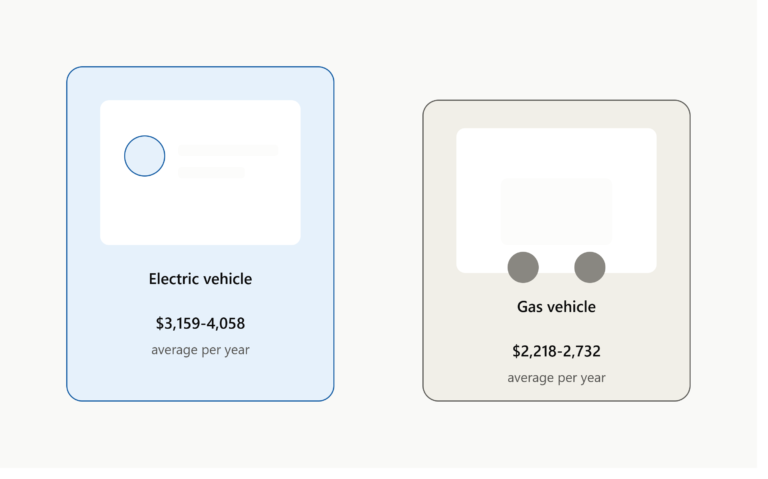
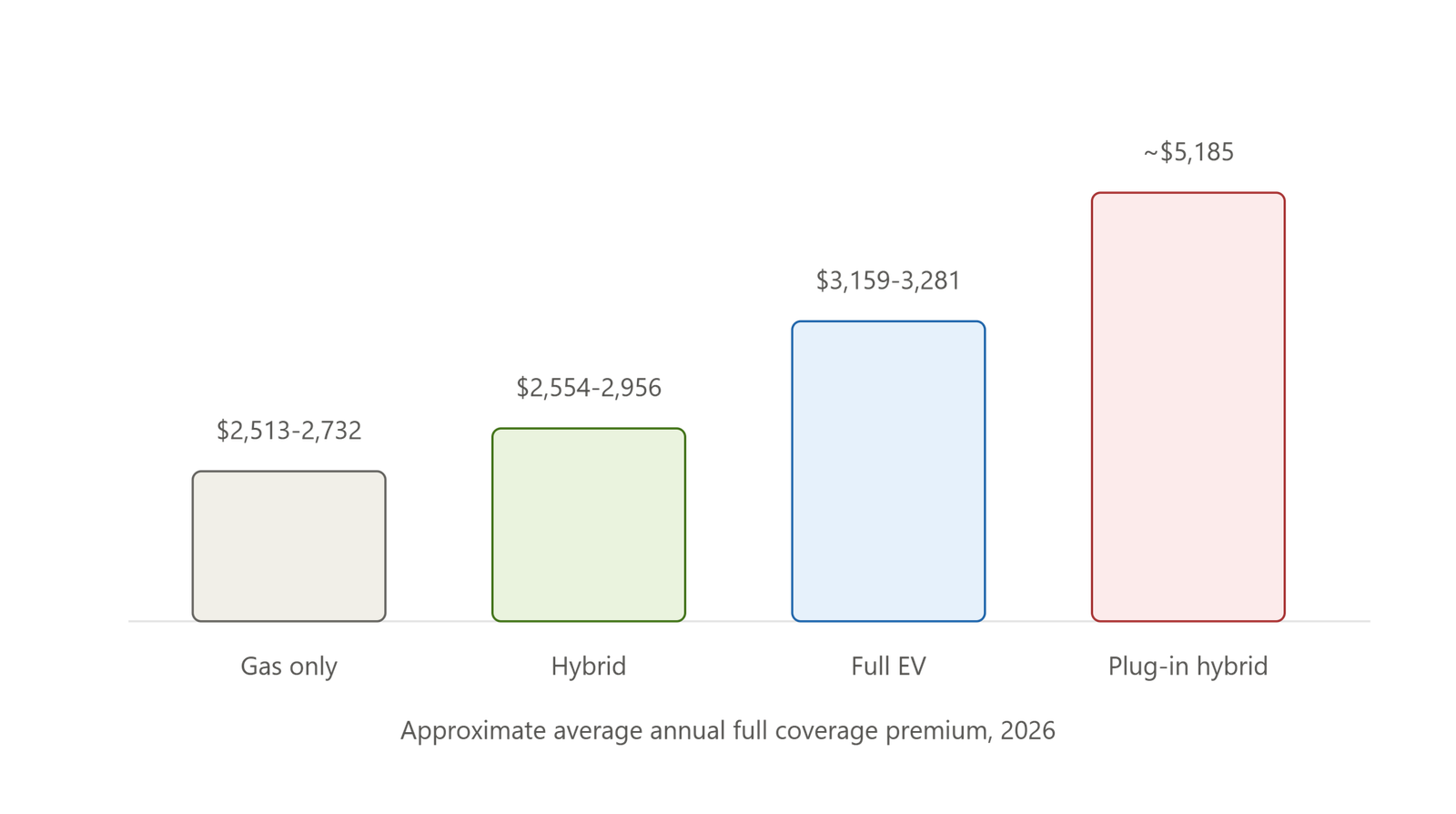
- Standard hybrids average roughly $2,554 to $2,956 a year for full coverage in 2026, meaningfully cheaper than the EV average of $3,159 to $3,281.
- Plug-in hybrids (PHEVs) often cost more than either standard hybrids or full EVs, averaging around $5,185 a year, largely because the category is dominated by luxury models in the available data.
- The cost gap between hybrid and EV insurance comes down to the same core driver as the EV-to-gas gap: repair complexity and replacement value, just at a smaller scale for hybrids.
- Over a full ownership period, the hybrid-to-EV insurance difference is often smaller in dollar terms than people expect, sometimes only a few hundred dollars a year on comparable models.
The real numbers, side by side
Pulling together multiple 2026 rate studies gives a consistent picture:
- Standard hybrids: average around $2,554 a year ($213 a month) in one major study, with another placing the figure slightly higher at $2,956 a year for full coverage.
- Full electric vehicles: average $3,159 to $3,281 a year for full coverage across the same set of studies, consistently landing above the hybrid figure.
- Plug-in hybrids (PHEVs): average notably higher at around $5,185 a year, a number pulled upward significantly by luxury PHEV models in the underlying data.
- Gas-only vehicles: for comparison, averaging around $2,513 to $2,732 a year, meaning hybrids sit only modestly above gas cars, while full EVs sit well above both.
Converting to monthly terms, one broad comparison found hybrids and EVs averaging roughly $230 and $315 a month respectively, a gap of about $85 a month, or just over $1,000 a year, between the two categories on average.
Why hybrids cost less to insure than full EVs
The underlying logic tracks closely with everything covered elsewhere on this site about why EVs cost more than gas cars, just applied at a smaller scale:
Smaller, less exposed battery systems. A hybrid’s battery pack is meaningfully smaller and less central to the vehicle’s core function than a full EV’s battery, since a hybrid can still operate on its gas engine alone if needed. That reduces the tail-risk exposure insurers price in for potential battery damage or replacement, compared to a full EV where the battery is the entire propulsion system.
Lower purchase price than most full EVs. Hybrids typically carry a purchase price between gas-only vehicles and full EVs, which directly reduces the replacement-cost risk an insurer is pricing into a total-loss scenario, landing hybrid insurance costs in a similar middle position.
Broader repair network familiarity. Because hybrids combine a conventional gas engine with electric components, many hybrid repairs can still be handled by a wider range of shops than a repair requiring full EV-specific battery and drivetrain expertise, which keeps labor costs somewhat more contained.
That said, hybrids aren’t cost-free from an insurance perspective either. They do use a mix of electric and gas components, which is genuinely more complex than a standard gas-only vehicle, and fewer mechanics are specifically trained to work on that hybrid combination compared to a conventional engine, which is part of why hybrids still cost somewhat more than gas-only cars to insure, just not nearly as much more as full EVs do.
Why plug-in hybrids can cost even more than full EVs
This is the counterintuitive part of the comparison, and it’s worth understanding clearly: PHEVs averaging around $5,185 a year, higher than the full-EV average, isn’t because plug-in hybrid technology is inherently riskier to insure. It’s a data composition issue. The PHEV category in most rate studies is heavily weighted toward luxury models, high-end SUVs and performance vehicles that happen to offer a plug-in hybrid variant, which pulls the category average upward the same way luxury EVs like the Audi e-tron GT pull the full-EV average upward in our rankings of the most expensive EVs to insure.
In practice, this means the «PHEVs cost more than EVs» headline is somewhat misleading if you’re comparing a mainstream PHEV crossover to a mainstream full EV. The real driver is luxury vehicle concentration within the PHEV category, not something structurally more expensive about plug-in hybrid technology itself.
A real-world example: same model, gas vs hybrid vs EV
One useful data point comes from a Kelley Blue Book cost-of-ownership study comparing the Kia Niro across its gas, hybrid, and EV variants. Over a five-year ownership period, the EV version of the Niro was projected to cost about $292 more to insure than the hybrid version, working out to roughly $58 a year in additional insurance cost. That’s a genuinely small gap in absolute dollar terms, smaller than the broader category averages above might suggest, and it illustrates an important point: when you’re comparing insurance costs within the same model lineup rather than across the entire market, the hybrid-to-EV gap is often far more modest than headline statistics imply.
Does this change the math on which one to buy?
Not dramatically, in most cases, but it’s a real factor worth including in your total comparison. A few practical considerations:
If insurance cost is your primary concern, a mainstream hybrid will very likely insure more cheaply than the equivalent full EV, and the gap, while real, is often smaller than the headline averages suggest once you’re comparing similar trims within the same model line.
If you’re looking at a PHEV specifically, don’t assume it automatically costs less than a full EV just because it burns some gasoline. Check the specific trim and model, since a luxury PHEV can easily cost more to insure than a mainstream full EV.
Fuel savings still favor the full EV over the long run in most cases. A hybrid still burns gasoline for a meaningful portion of its driving, meaning its fuel-cost advantage over a gas car is smaller than a full EV’s advantage. If insurance is only a few hundred dollars a year apart within the same model, as the Niro example shows, the full EV’s larger fuel savings can still make it the better total-cost choice depending on your specific driving patterns and local electricity and gas prices.
How to get an accurate comparison for your specific situation
Category averages are useful for a general sense of the landscape, but the real answer depends on the specific vehicles you’re comparing:
- Get quotes on the exact trim and model you’re considering, not just «hybrid» versus «EV» as broad categories, since the gap varies enormously depending on whether you’re comparing mainstream or luxury trims.
- Compare within the same model line where possible, as with the Niro example above, since this controls for brand, size, and market positioning in a way that broad category averages can’t.
- Factor in the full ownership picture, not just insurance. As covered in our broader EV ownership cost breakdown, insurance is one piece of a larger equation that includes fuel, maintenance, and purchase price, and a modest insurance cost difference shouldn’t be the sole deciding factor between a hybrid and a full EV.
- Ask specifically about green vehicle discounts. Some insurers offer discounts for hybrid and electric vehicles alike, which can narrow the gap further and are worth asking about regardless of which category you choose.
The bottom line
Hybrids generally cost less to insure than full EVs, typically by a few hundred to just over a thousand dollars a year at the category-average level, reflecting their smaller battery systems, lower purchase prices, and broader repair-network compatibility. Plug-in hybrids complicate the picture, sometimes averaging higher than full EVs, but that’s largely a reflection of luxury models skewing the category rather than a structural cost driver. When comparing specific models rather than broad categories, the real gap is often smaller than headline statistics suggest, meaning insurance cost alone shouldn’t be the deciding factor between a hybrid and a full EV without also weighing the larger fuel and maintenance savings a full EV typically provides.
This article is for informational purposes only and does not constitute financial or insurance advice. Insurance rates vary by insurer, individual driving history, location, and specific vehicle trim, and change frequently. Always get a personalized quote before making a purchasing decision.