If you’re shopping for an EV, or you already own one, you’ve probably noticed something your dealer didn’t mention: insurance costs more. Not a little more, in many cases meaningfully more. This guide breaks down exactly how much, why it happens, and what actually moves the needle on your premium.
Key takeaways:
- Electric vehicles cost roughly 15% to 49% more to insure than comparable gas cars, depending on which dataset and vehicle mix you look at.
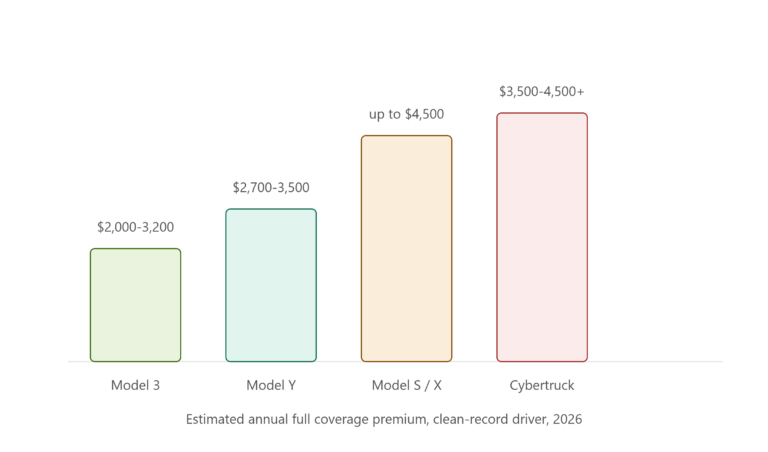
- Full coverage on an EV runs somewhere between $3,000 and $4,000 a year on average in 2026, though your actual rate depends heavily on the specific model.
- The gap is narrowing for mainstream EVs but remains wide for luxury and EV-only brands like Tesla.
- Battery replacement risk, not the electric motor itself, is the single biggest driver of the extra cost.
[AD BREAK — insert in-content ad unit here]
The average cost, and why the number depends on who you ask
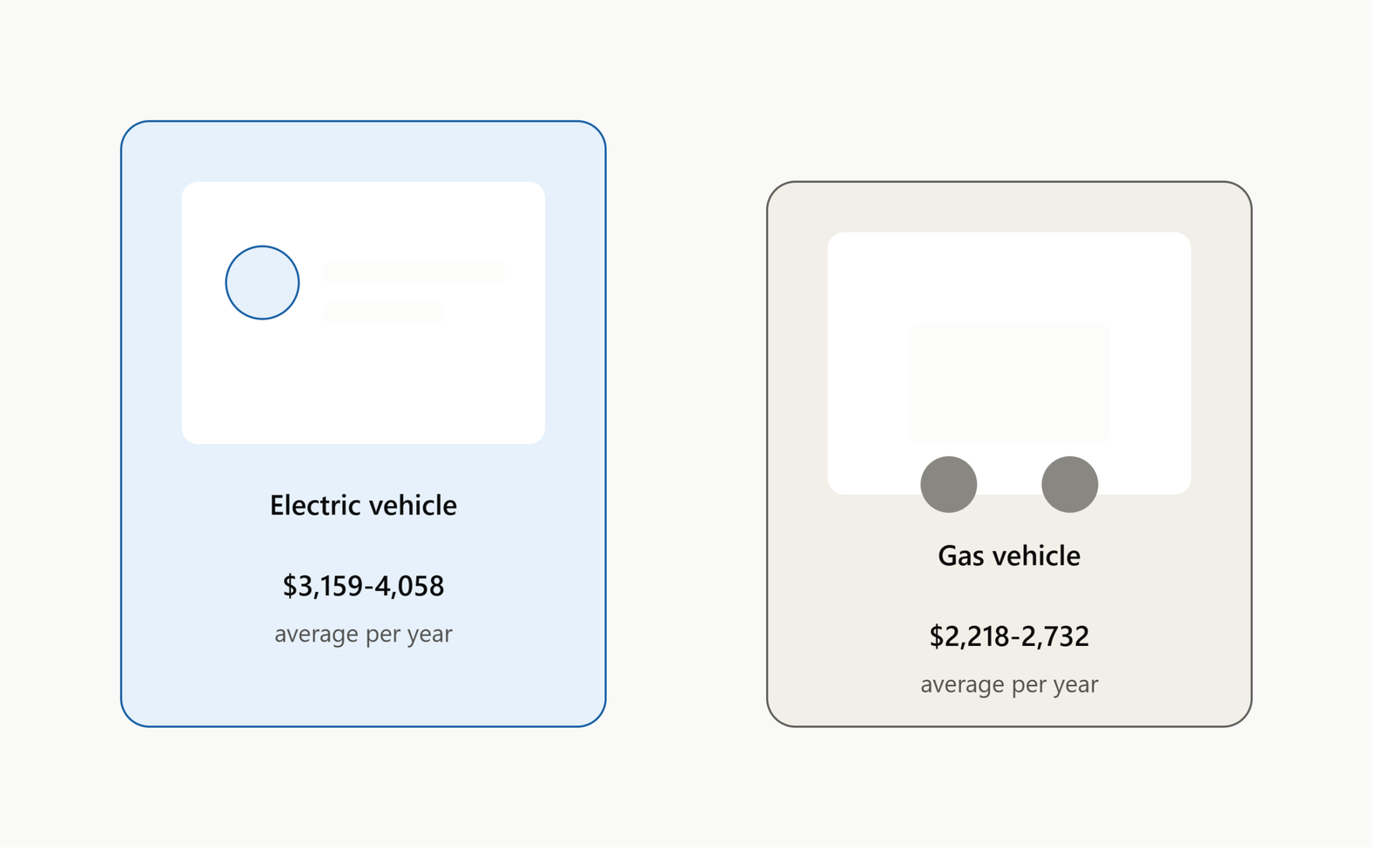
Ask five different sources how much EV insurance costs and you’ll get five different numbers. That’s not because anyone is wrong. It’s because each analysis pulls from a different pool of quotes, a different mix of vehicle models, and a different point in time. Insurance data from 2026 puts the average full-coverage EV premium in a fairly wide range, generally landing somewhere between roughly $3,150 and $4,050 per year, or about $260 to $340 a month. Gas-powered vehicles, by comparison, typically average somewhere around $2,200 to $2,700 a year in the same datasets.
What that means in practice: EV owners tend to pay somewhere between 15% and just under 50% more than gas car owners for a similar level of coverage. The wide range exists because luxury EVs (particularly Tesla and other premium brands) pull the average upward, while mainstream, mass-market EVs from brands that also sell gas vehicles tend to land much closer to gas-car pricing.
Why does it cost more to insure an EV?
The short answer: repairs. Not the battery pack alone, though that’s part of it, but the entire repair ecosystem around an electric vehicle.
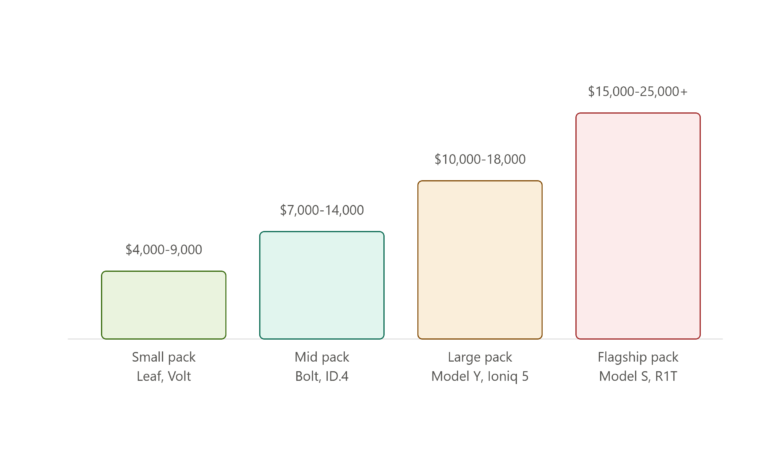
Battery replacement risk. A damaged high-voltage battery pack is expensive to replace, sometimes running into the tens of thousands of dollars depending on the model. Insurers price that risk into your premium even if you never end up needing a replacement.
Specialized labor and limited repair networks. Not every body shop is certified to work on high-voltage EV systems. That shortage of qualified shops means EV repairs often take longer and cost more per hour than a comparable gas car repair, and insurers factor that into the rate they charge.
Higher vehicle value. EVs generally carry a higher purchase price than comparable gas cars, which raises the replacement cost the insurer is on the hook for if your car is totaled.
Faster total-loss decisions. Because EV repairs are more expensive and complex, insurers are more likely to declare an EV a total loss after damage that might have been repairable on a gas car. That changes the math on both your claim experience and, over time, your rates.
[AD BREAK — insert in-content ad unit here]
Cost by vehicle: not all EVs are priced the same
This is where the averages stop being useful and the specific model starts to matter a lot. The spread between the cheapest and most expensive EVs to insure is enormous, easily exceeding $8,000 a year between the low end and the high end.
Cheaper to insure: Mainstream EVs from brands that also build gas vehicles tend to be the most affordable to cover. Vehicles like the Chevrolet Silverado EV, Volkswagen ID.4, and similar mass-market models from Hyundai, Kia, and Toyota generally sit at or below the overall EV average.
More expensive to insure: Tesla models consistently rank among the priciest EVs to insure, with every current Tesla model landing above the EV average for full coverage. Luxury and performance EVs, including certain Audi e-tron models, can push well past $10,000 a year for full coverage in the most extreme cases.
The pattern holds across the industry: brands with an established, broad service network and mainstream repair costs insure more cheaply than EV-only manufacturers or luxury brands, even when the vehicles themselves are otherwise comparable.
Is the gap closing?
Yes, gradually. Early comparisons between EV and gas insurance, from a few years back, showed EVs costing 40% to 60% more than equivalent gas cars. More recent analysis for 2025 and 2026 generally shows that gap narrowing to somewhere in the 15% to 30% range for mainstream vehicles, with some non-luxury EV models now landing at or near parity with their gas equivalents.
The main driver of that narrowing gap is repair infrastructure. As more body shops get certified for EV work and as parts supply chains mature, the «EV repair penalty» that insurers price in has started to shrink, at least for the most common models. Luxury and EV-only brands haven’t seen the same improvement, which is part of why the overall average still looks high even as typical mainstream EVs get more affordable to cover.
[AD BREAK — insert in-content ad unit here]
How to lower your EV insurance premium
You can’t change the fact that EVs generally cost more to repair, but you do have real levers to pull on your own rate:
- Shop around annually. Rates for EVs vary more between insurers than they do for gas cars, since not every carrier prices EV risk the same way. A quote that looked expensive two years ago might not be competitive today.
- Ask about EV-specific discounts. Some insurers offer discounts tied to advanced driver-assistance features, low annual mileage, or home charger installation, since these can reduce claim frequency or severity.
- Raise your deductible if you can absorb it. This lowers your premium in exchange for paying more out of pocket if you do file a claim.
- Consider usage-based or pay-per-mile insurance. If you don’t drive much, a telematics-based policy can meaningfully lower your annual cost compared to a flat-rate policy built around average mileage.
- Bundle with other policies. Combining auto insurance with homeowners or renters insurance still tends to unlock a meaningful discount with most major carriers.
- Compare the insurance cost before you buy, not after. If you’re choosing between two EV models, the insurance difference between a mainstream option and a luxury or EV-only brand can be substantial enough to change the total cost of ownership math.
The bottom line
Electric vehicles do cost more to insure than gas cars in 2026, typically somewhere between 15% and roughly 50% more depending on the specific model and which data source you’re comparing. The gap is real, but it isn’t the same for every EV. A mainstream model from an established automaker can land close to gas-car pricing, while a luxury or EV-only brand can cost thousands more per year. Before you buy, it’s worth getting an actual insurance quote for the specific model you’re considering rather than relying on a general EV average, since the difference between models is often bigger than the difference between EVs and gas cars overall.
This article is for informational purposes only and does not constitute financial or insurance advice. Rates vary by insurer, location, driving history, and individual vehicle, and change frequently. Always get a personalized quote before making a purchasing decision.