If you’re shopping for a Tesla, or you just bought one and opened your first insurance bill, you’ve probably had the same reaction most owners do: this is a lot more than I expected. You’re not imagining it, and you’re not being singled out. Tesla consistently ranks among the most expensive vehicles to insure in the entire EV category, not just compared to gas cars but compared to other electric vehicles too. Here’s exactly why, broken into the seven factors that actually drive the number on your bill.
Key takeaways:
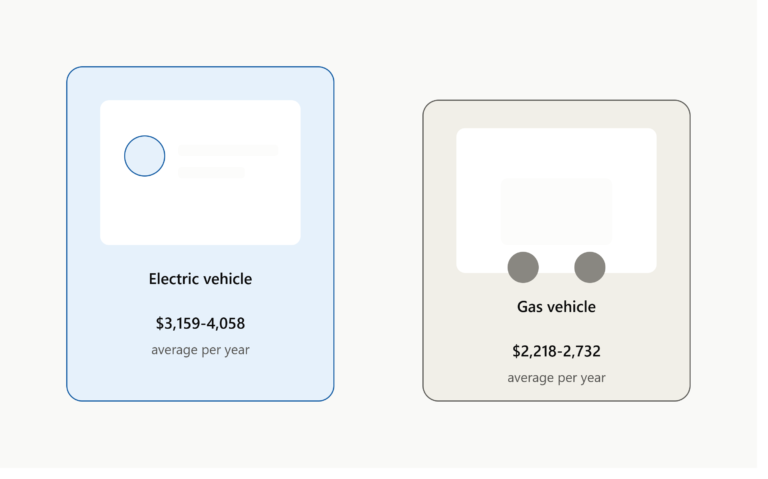
- Full coverage on a Tesla runs roughly $2,500 to $4,500 a year depending on the model, with liability-only averaging around $156 a month, well above the all-vehicle average of $114.
- Tesla repair estimates run more than double what a comparable gas car costs to fix, driven by proprietary parts, specialized labor, and sensor recalibration.
- Model choice matters enormously within the Tesla lineup itself: a Model 3 can cost thousands less per year than a Model X or Cybertruck.
- Legacy automaker EVs (Ford, Chevy, Hyundai) are often around 25% cheaper to insure than EV-only brands like Tesla, largely because of parts availability.
1. Tesla uses a proprietary parts network that limits competition
This is the single biggest factor, and it’s worth understanding in detail because it explains almost everything else on this list. When a gas car needs a body panel, a headlight assembly, or a sensor replaced, an independent body shop typically has several sourcing options: the manufacturer, aftermarket suppliers, or salvage parts. That competition keeps prices in check.
Tesla doesn’t work that way. Parts are largely proprietary, and independent shops often can’t source them or perform certified repairs at all. That funnels repair work toward a smaller number of Tesla-certified body shops, which limits competition on both parts pricing and labor rates. When there are fewer places that can legally and safely fix your car, the ones that can charge accordingly, and insurers price that scarcity into every policy, not just the ones that end up filing a claim.
2. Tesla’s unibody construction means small damage becomes big repair bills
Tesla has been moving toward unibody construction using large aluminum panels, which improves structural stability and safety, but has an unfortunate side effect for repair costs. Instead of a small, localized dent or scrape being fixable in isolation, damage to one section of a large panel can require replacing the entire piece.
That means a fender bender that would be a $600 repair on a car with modular body panels can turn into a multi-thousand-dollar job on a Tesla, simply because of how the body is engineered. Insurers know this, and it shows up directly in the premium.
3. Sensor and camera recalibration adds cost to even minor accidents
Teslas are loaded with cameras and sensors that support Autopilot and Full Self-Driving features, along with more conventional advanced driver-assistance functions like automatic emergency braking and lane-keeping. All of that technology is genuinely useful for avoiding accidents in the first place, but when a collision does happen, even a minor one, those sensors often need professional recalibration to function correctly again.
That recalibration step is an added line item that a comparable gas car with fewer sensors simply doesn’t have. A routine fender bender on a Tesla frequently involves not just body work but a separate calibration process, and insurers bake that extra cost into what they expect to pay out.
4. The battery itself is enormous financial exposure
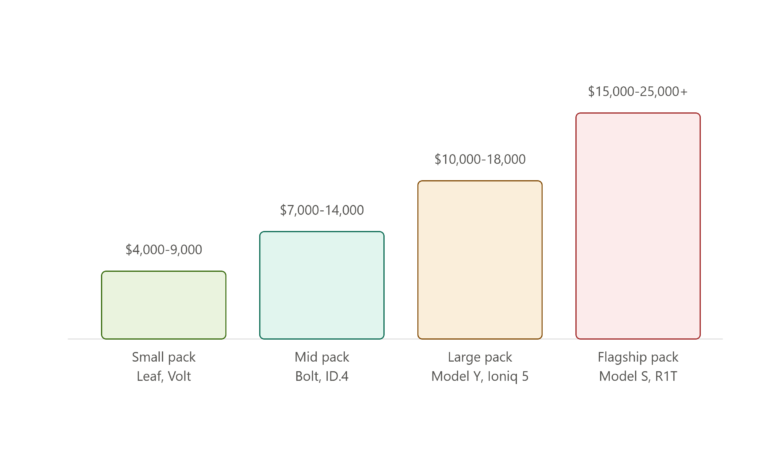
Tesla’s battery pack isn’t a small, easily replaceable component. It’s one of the most expensive single parts on the entire vehicle, and depending on the model, a full or even partial battery replacement can run anywhere from roughly $10,000 to well over $16,000.
Insurers don’t just price the average claim, they price the tail risk, meaning the expensive-but-less-common scenario where the battery is damaged badly enough to need replacement. Because that scenario is so costly when it happens, it pulls the overall premium calculation upward even for drivers who will never actually experience it.
5. High vehicle value means expensive total losses
Teslas generally carry a higher purchase price than comparable gas vehicles, and that higher sticker price translates directly into a higher payout obligation if the car is totaled. Combine that with the fact that Tesla repairs are already expensive and prone to escalating quickly, and insurers frequently reach the total-loss threshold faster on a Tesla than they would on a similarly damaged gas car. A total loss on a $50,000-plus vehicle is simply a bigger financial event than a total loss on a $28,000 sedan, and that risk gets distributed across every policyholder’s premium.
6. Theft, vandalism, and reputational headwinds
Tesla has faced a specific and somewhat unusual insurance headwind in recent years: a wave of vandalism and targeted attacks tied to public controversy around the brand and its leadership, including incidents of vehicles being shot at, set on fire, or otherwise deliberately damaged. That’s on top of more conventional theft and wheel-and-tire theft claims, which in some cities have climbed faster for Teslas than for other vehicle types.
This is a somewhat unusual risk factor compared to the others on this list, since it has less to do with the vehicle’s engineering and more to do with its public profile, but insurers do price in elevated claim activity regardless of the underlying cause. When comprehensive coverage claims rise for a specific vehicle type in a given market, premiums for that vehicle type in that market tend to follow.
7. Model choice within the Tesla lineup makes a huge difference
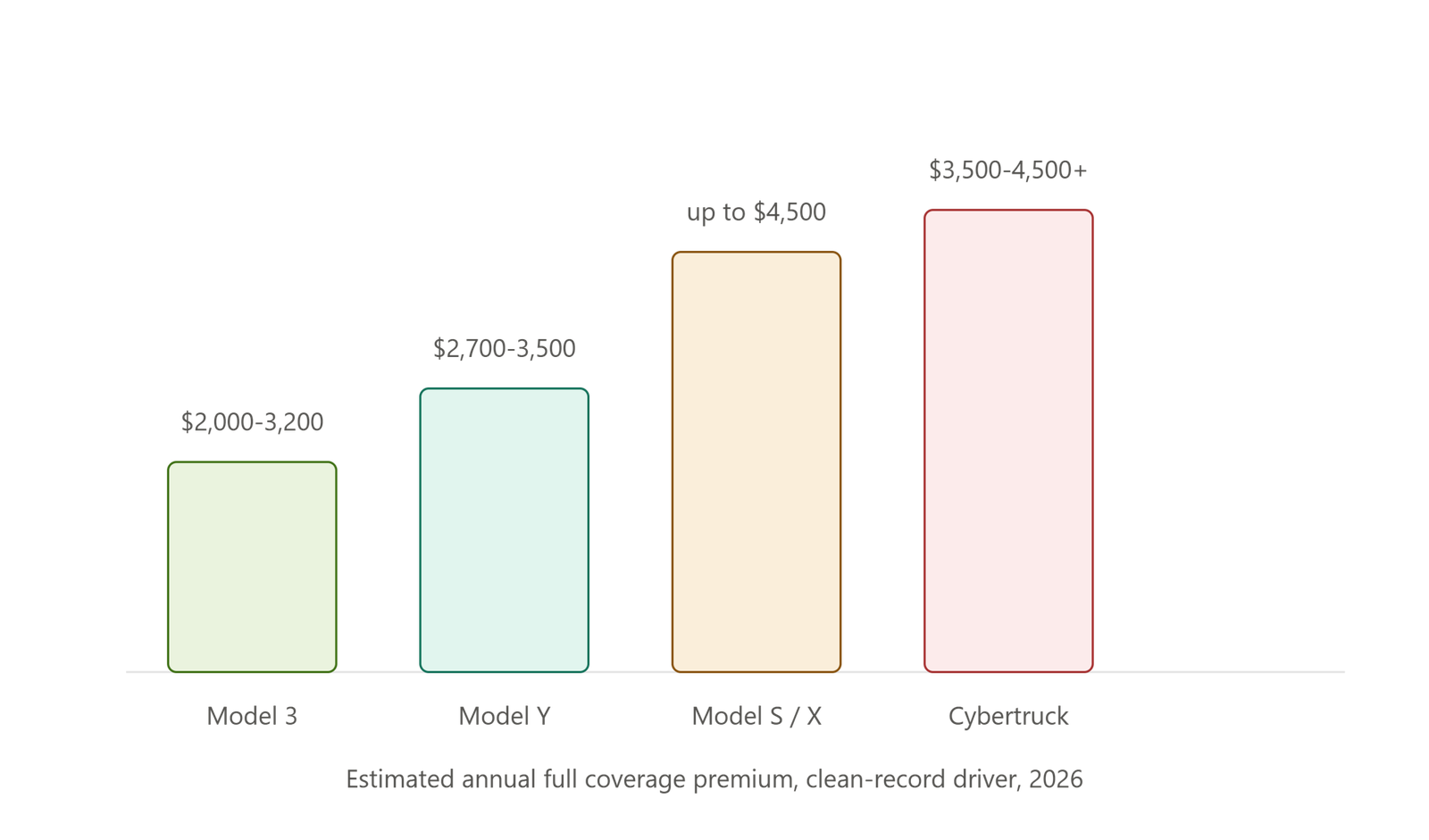
Not every Tesla costs the same to insure, and the spread within the lineup itself is significant. As a general pattern:
- Model 3: Typically the cheapest Tesla to insure, often running somewhere in the $2,000 to $3,200 range annually for a clean-record driver, thanks to its lower purchase price, wider parts availability relative to other Tesla models, and strong crash-test ratings.
- Model Y: The best-selling EV in the country, but still expensive to insure relative to non-Tesla vehicles, generally landing somewhere around $2,700 to $3,500 a year, driven by updated sensor and camera technology that costs more to recalibrate after a collision.
- Model S and Model X: These sit toward the higher end, with the Model X in particular running close to $4,500 a year in some analyses, reflecting their higher purchase price and larger, more complex body panels (including the Model X’s distinctive falcon-wing doors, which are notably expensive to repair).
- Cybertruck: Still new enough that insurers are largely learning as they go, but early quotes commonly land in the $3,500 to $4,500-plus range, driven by its unconventional stainless-steel exoskeleton, unusual glass, and classification that puts it in a high-risk, high-cost bucket even before real-world claims data has fully caught up.
If minimizing insurance cost matters to you, the Model 3 is consistently the most insurance-friendly choice in Tesla’s current lineup, and it isn’t particularly close.
How Tesla stacks up against other EVs
It’s worth being clear that this isn’t purely an EV problem, it’s specifically more pronounced with Tesla and other EV-only brands. Legacy automakers that build both gas and electric vehicles, think Ford, Chevrolet, and Hyundai, tend to insure their EVs noticeably more cheaply than Tesla does, often by a margin of roughly 25%. The reasoning connects directly back to the parts and repair network problem: an automaker with decades of established body shop relationships and parts distribution for its gas vehicles can extend much of that same infrastructure to its EVs, while Tesla, as an EV-only manufacturer, had to build its repair ecosystem from scratch and still hasn’t scaled it as broadly as legacy manufacturers have for their traditional vehicle lines.
Does Tesla’s own insurance product help?
Tesla offers its own insurance product, Tesla Insurance, in a limited number of states (roughly 13 as of 2026), which uses real-time driving data through what Tesla calls a Safety Score to price premiums. For genuinely safe, low-risk drivers, this can undercut traditional insurers meaningfully, since it rewards smooth, cautious driving with lower rates in a way conventional insurers typically don’t measure as directly.
That said, it isn’t available everywhere, works differently in certain states like California due to regulatory requirements, and isn’t automatically the cheapest option for every driver. It’s worth comparing against traditional quotes rather than assuming it’s the default best choice simply because it comes from the manufacturer.
How to actually lower your Tesla insurance bill
None of the seven factors above are things you can change about the car itself, but there are real, practical levers you do control:
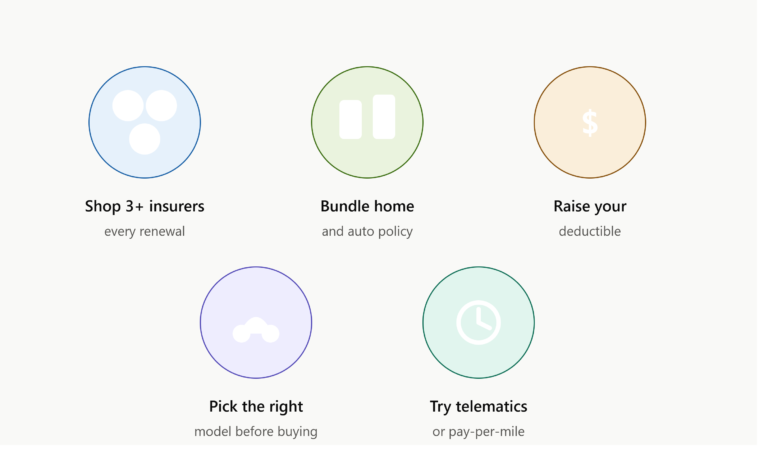
- Shop around aggressively. Rates for identical Tesla owners can vary by two to three times depending on the insurer. This is not a small effect, it’s often the single biggest lever available to you.
- Get at least three quotes at every renewal, not just when you first buy the car. Insurers reprice risk regularly, and the cheapest carrier for you last year may not be this year.
- Consider Tesla Insurance if you’re a genuinely safe driver in one of the eligible states, since the Safety Score model can reward good driving more directly than a traditional policy.
- Raise your deductible if you can comfortably absorb it. Given how expensive Tesla repairs are on average, even a modest deductible increase can meaningfully lower your premium.
- Bundle with your homeowners or renters policy. This remains one of the most reliable ways to shave 15% to 20% off your total insurance cost.
- Keep your mileage and driving record clean. This matters for any car, but given how high the baseline cost already is for a Tesla, the percentage savings from a clean record translate into larger dollar savings than they would on a cheaper vehicle.
- Choose your model with insurance in mind if you’re still deciding. A Model 3 versus a Model X or Cybertruck can mean a difference of well over $1,000 a year in premium, a factor worth weighing alongside the sticker price when you’re cross-shopping within the lineup.
The bottom line
Tesla insurance is expensive for reasons that trace back to a consistent theme: repair complexity and cost. Proprietary parts, unibody construction, sensor recalibration, expensive battery replacement risk, high vehicle value, and elevated theft and vandalism activity all point in the same direction, insurers pricing in the reality that when a Tesla needs fixing, it costs substantially more than fixing almost anything else on the road. Add model-specific factors on top of that, and the gap between a well-chosen Model 3 and a Cybertruck or Model X can be enormous. None of this means Tesla ownership isn’t worth it, most owners still come out ahead on fuel and routine maintenance savings, but it does mean the insurance line item deserves real attention before you buy, not after your first bill arrives.
This article is for informational purposes only and does not constitute financial or insurance advice. Insurance rates vary by insurer, individual driving history, location, and specific vehicle trim, and change frequently. Always get a personalized quote before making a purchasing decision.