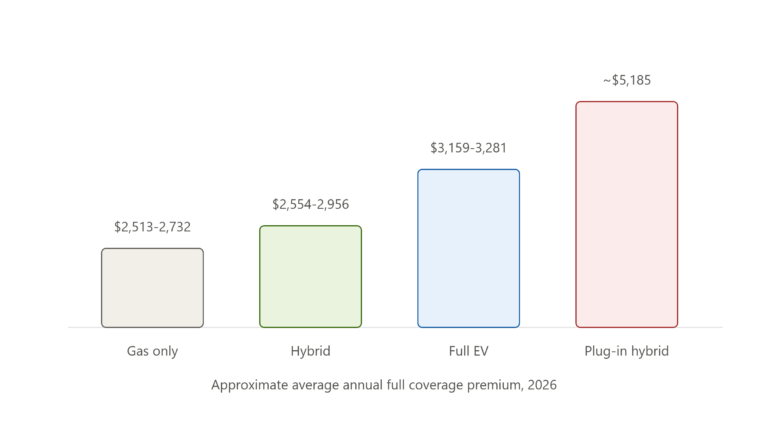
EV insurance costs more than gas car insurance, that part isn’t changing anytime soon. But «more expensive on average» doesn’t mean your premium is fixed. Most EV owners are leaving real savings on the table simply because they haven’t asked the right questions or made a few deliberate choices. Here are 12 tactics that actually move the number on your bill, ranked roughly from biggest impact to smallest.
Key takeaways:
- Shopping multiple insurers is the single biggest lever most people skip; rate variance between carriers on the same EV is often larger than any individual discount.
- Bundling home or renters insurance with your auto policy typically saves 10% to 25%, one of the largest discounts available to any driver.
- Most insurers don’t advertise a single «EV discount,» they offer a bundle of discounts EV owners are well-positioned to qualify for, but only if you ask.
- Vehicle choice, before you even buy, remains the most powerful lever of all.
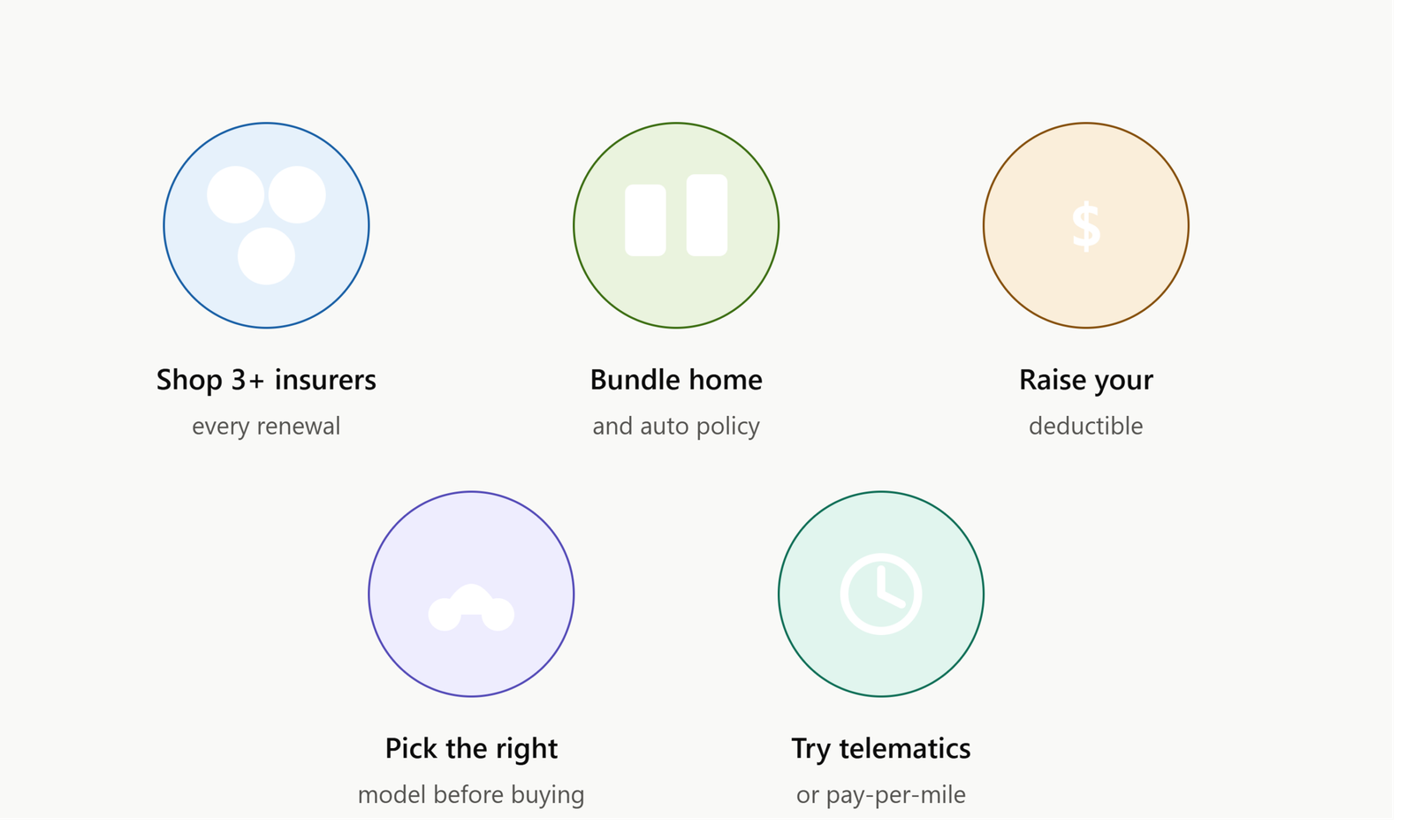
1. Get quotes from at least three insurers, every single year
This is the tactic with the largest, most consistently proven impact, and it’s also the one people skip most often out of sheer inertia. Rate variance between insurers for the identical EV and driver profile can be substantial, sometimes two to three times between the cheapest and most expensive quote. Insurers price EV risk differently from one another because EV claims data is still relatively new compared to gas cars, which means their models haven’t converged the way gas car pricing has.
Set a reminder to re-shop roughly 30 days before your policy renews each year. Rates shift constantly as insurers adjust their EV risk models, and the cheapest carrier for you last year isn’t guaranteed to be the cheapest this year.
2. Bundle your auto policy with home or renters insurance
Multi-line discounts remain one of the most reliable ways to cut your total insurance cost, typically saving somewhere between 10% and 25% depending on the insurer. If you rent, this is worth doing even if you think renters insurance isn’t worth it on its own: the discount on your auto policy frequently ends up covering most or all of the cost of the renters policy itself, making the bundle close to free.
3. Ask specifically about EV-related discounts, they aren’t always advertised
Most insurers don’t list a single line item called «EV discount.» Instead, they offer a collection of smaller discounts that EV owners happen to be well-positioned to qualify for, green vehicle discounts, safety technology discounts, low-mileage discounts, but many of these aren’t prominently advertised. Some major carriers, including Travelers, specifically offer green car discounts for hybrid and electric vehicles. Ask your agent directly what applies to your specific vehicle rather than assuming the quote you received already includes everything you qualify for.
4. Raise your deductible if you can comfortably absorb it
Moving from a $500 deductible to $1,000 or $2,000 can meaningfully lower your premium, and EV owners are often in a good position to make this trade. Since EVs typically have lower routine maintenance costs than gas cars (no oil changes, less frequent brake work thanks to regenerative braking), some owners redirect a portion of those ongoing savings toward a higher deductible cushion rather than a lower one.
5. Consider usage-based or telematics insurance if you’re a low-mileage, smooth driver
Programs that track driving behavior directly, hard braking, rapid acceleration, late-night driving, can unlock discounts ranging from 10% to 30% for genuinely careful drivers. This tends to be a particularly good fit for EV owners: many charge at home and have shorter average commutes than the broader driving population, which naturally produces lower mileage and often smoother driving data. One caution worth knowing: some insurers have updated their usage-based algorithms to penalize risky driving patterns as well as reward good ones, so this option works best if you’re confident in your habits, not just your mileage.
6. Look into pay-per-mile insurance if you genuinely don’t drive much
If you work from home or have a short commute, pay-per-mile programs charge a low base rate plus a small per-mile fee, which can produce significant savings compared to a flat-rate policy built around average annual mileage. This overlaps with tactic 5 but is worth evaluating separately, since not every insurer offering usage-based discounts also offers a true pay-per-mile structure, and the math works out differently depending on exactly how little you drive.
7. Document your home charger installation correctly
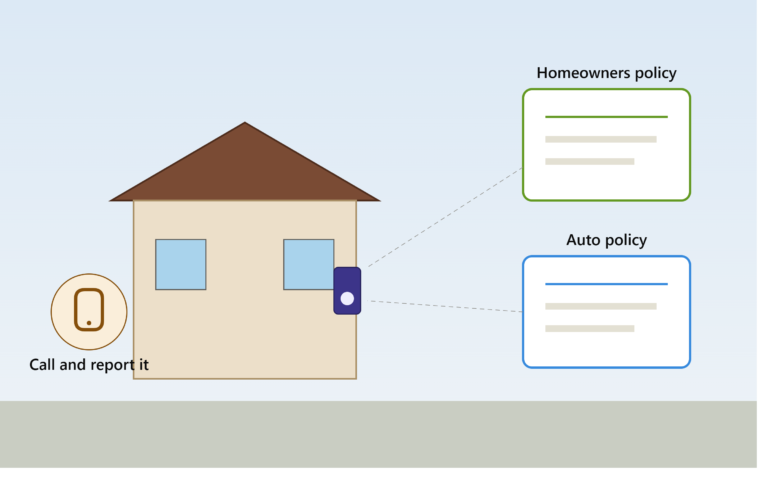
If you have a professionally installed Level 2 home charger, make sure your insurer has that on record. Some carriers factor a properly installed, permitted home charger into their risk assessment favorably, since it reduces the likelihood of improvised charging setups that could pose electrical or fire risk. This is a small, often-overlooked step that costs nothing but a phone call to your agent.
8. Choose a more accessible parking situation if you have the option
If street parking is your default, moving to secure off-street or garage parking, even if only sometimes, can be worth mentioning to your insurer. Reduced theft and vandalism exposure is a real pricing factor, particularly relevant for EVs given the elevated theft and vandalism concerns some models have faced in recent years.
9. Take a defensive driving course
Many states legally require insurers to offer a discount, typically in the 5% to 10% range for three years, to drivers who voluntarily complete an approved defensive driving course. This is a fixed, guaranteed discount in states that mandate it, making it one of the more reliably available tactics on this list regardless of which insurer you use.
10. Choose the EV trim and model with insurance in mind, before you buy
This is the highest-leverage tactic of all if you’re still shopping, but it only works proactively, not after you’ve already purchased. As covered in our breakdowns of the cheapest and most expensive EVs to insure, model choice alone can mean a difference of several thousand dollars a year. A few sub-tactics within this one:
- Favor mainstream trims over performance trims. Ultra-quick EVs are genuinely fun, but a 0-60 time under four seconds reads as risk to an underwriter. Higher-performance trims typically carry a higher purchase price, larger wheels and performance tires that cost more to replace, and a statistically higher likelihood of severe claims.
- Look for EVs with strong built-in safety tech. Automatic emergency braking, lane-keeping assistance, and blind-spot monitoring can qualify you for safety-related discounts and, more importantly, help you avoid claims in the first place.
- Favor legacy automaker EVs over EV-only brands when insurance cost is a priority. As covered in our Tesla-specific cost breakdown, EVs from brands that also build gas vehicles are often around 25% cheaper to insure than EV-only brands, largely due to established repair networks and parts availability.
11. Consider a used EV with verified battery health instead of new
Comparing quotes for a new EV against a comparable used model with documented battery health often shows the used option winning on both the monthly payment and the insurance premium simultaneously, since a lower purchase price directly reduces the replacement-cost risk an insurer is pricing into your policy.
12. Maintain a clean driving record and good credit where it’s used
This is the least EV-specific tactic on the list, but it remains one of the most powerful for any driver. A clean driving record and, in states where it’s permitted as a rating factor, a strong credit-based insurance score both meaningfully affect your baseline premium before any EV-specific factors are even applied. Given how high EV premiums already run compared to gas cars, the dollar value of maintaining a clean record is proportionally larger for EV owners than it is for gas car owners paying a lower starting premium.
Putting it together: a simple annual routine
Rather than treating these as one-time actions, the owners who consistently pay less tend to follow a simple yearly habit:
- Pull your current policy about a month before renewal and note your deductibles, liability limits, and every discount currently listed.
- Fix any obvious errors, outdated mileage estimates, missing safety features, an undocumented home charger.
- Get fresh quotes from at least two or three other insurers using the same coverage limits.
- Ask each one directly about EV-specific, bundling, telematics, and defensive-driving discounts rather than waiting for them to be offered.
- Let the total, including any new discounts, be the deciding factor on whether to switch or renew.
The bottom line
None of these 12 tactics require you to accept less coverage or take on meaningful additional risk, they’re a mix of shopping smarter, documenting what you already have correctly, and making informed choices about vehicle, deductible, and driving habits. Applied together, they can meaningfully close the gap between the national EV insurance average and what you actually end up paying, and unlike a one-time rebate or tax credit, most of these savings repeat every single year you own the car.
This article is for informational purposes only and does not constitute financial or insurance advice. Insurance rates, discounts, and eligibility vary by insurer, state, and individual driver profile, and change frequently. Always confirm specific discounts and terms directly with your insurer.