Comprehensive vs Collision Coverage for EVs Explained
These two coverage types get bundled together so often as «full coverage» that many EV owners couldn’t tell you which one actually handles a specific claim. That distinction matters more for EVs than for gas cars, since the two coverage types apply differently to some of the most expensive things that can go wrong with your specific vehicle: the battery, a home charging incident, and the complex sensor arrays covered throughout this site. This guide breaks down exactly which one applies to which scenario.
Key takeaways:
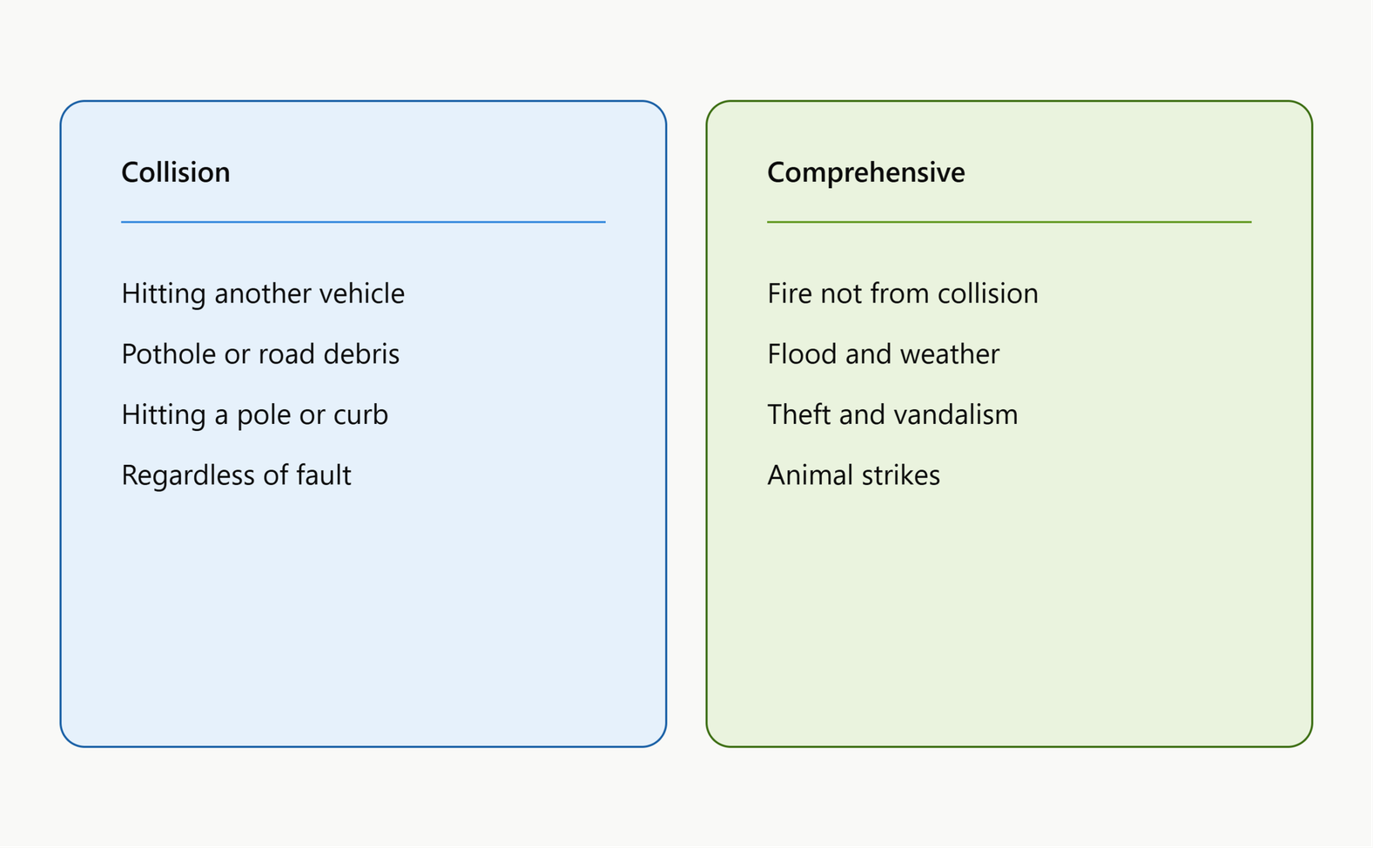
- Collision covers damage from hitting another vehicle or object, regardless of fault; comprehensive covers everything else, theft, fire, vandalism, weather, and animal strikes.
- Neither coverage type pays for gradual battery degradation, manufacturing defects, or damage to someone else’s property, those fall to warranties or your liability coverage respectively.
- The national average cost is $421 a year for comprehensive versus $473 a year for collision, but EV-specific rates run meaningfully higher for both given the repair-cost factors covered throughout this site.
- Lenders financing or leasing your EV typically require both coverages simultaneously and often cap your deductible, worth confirming directly since this affects your actual out-of-pocket exposure.
The core distinction, in one sentence each
Collision coverage pays for damage to your own EV when you hit another vehicle, an object like a tree or guardrail, or a road hazard, regardless of who’s at fault. If you rear-end someone, hit a pothole hard enough to damage your battery pack, or clip a curb and damage a wheel, collision is the coverage responding.
Comprehensive coverage pays for damage to your own EV from essentially everything that isn’t a collision: theft, vandalism, fire, falling objects, weather events (hail, flooding, wind), and animal strikes. Notably, hitting a deer is classified as comprehensive, not collision, a common point of confusion worth remembering.
Neither coverage type pays for damage to someone else’s vehicle or property, that’s what your liability coverage handles, and neither covers medical expenses under any circumstances.
How this specifically applies to EV battery scenarios
As covered extensively in our complete guide to EV battery damage coverage, which coverage type applies depends entirely on the cause of the damage:
Collision applies if: you’re in an accident and the impact damages the battery pack, you hit a pothole or road debris hard enough to puncture or crack the housing, or a single-vehicle impact (hitting a wall, a pole, a curb) damages the battery.
Comprehensive applies if: your battery is damaged by fire not caused by a collision, flooding, a falling tree branch or other object, vandalism, or theft-related damage.
Neither applies if: the damage is gradual capacity loss, a manufacturing defect, or an internal malfunction unrelated to any external event, those scenarios fall exclusively to your manufacturer’s warranty or an optional Mechanical Breakdown Insurance product, as covered in our dedicated battery coverage guide.
This distinction genuinely matters in practice, not just as a technicality. As covered in our detailed article on battery damage coverage, a real documented case involved an insurer denying a claim for battery damage caused by a power surge during home charging, specifically because the standard policy’s comprehensive coverage excluded electrical system failure caused by an external power supply issue rather than direct storm damage to the vehicle itself. Understanding exactly which scenarios comprehensive actually covers, and which ones sit in a gray area, is worth confirming with your specific insurer before you need it.
Why this distinction matters more for EVs than gas cars
Sensor and camera recalibration blurs the line in minor incidents. As covered in our detailed Tesla insurance breakdown, even a minor collision can require recalibrating cameras and sensors supporting advanced driver-assistance features. This recalibration cost gets bundled into your collision claim (since the triggering event was a collision), but it adds meaningfully to what a «minor» collision claim actually costs compared to the equivalent scenario on a simpler gas car.
Comprehensive-triggered events more easily lead to a total loss on an EV. Flood damage is a useful example: comprehensive covers flood damage on any vehicle, but water intrusion into a high-voltage battery pack is a fundamentally more expensive and often unrepairable scenario than flood damage to a gas engine, making a total-loss declaration under comprehensive coverage more likely for an EV than for a comparable gas car facing the identical flood event.
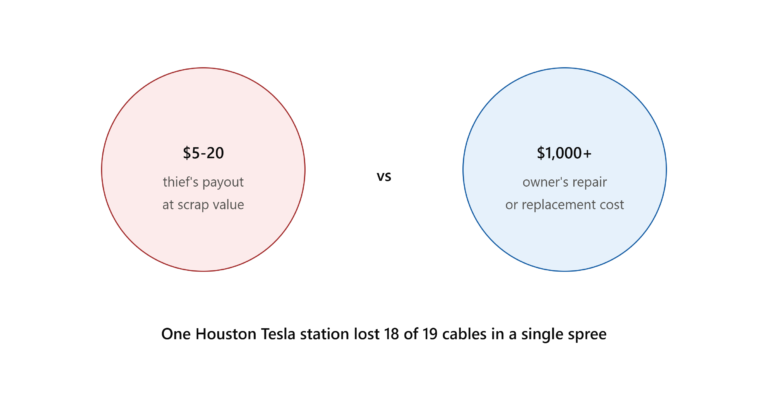
Theft patterns differ for EVs specifically. As covered in our Tesla insurance research, certain EV models have faced elevated vandalism and theft activity in recent years, meaning comprehensive coverage carries genuinely different real-world claim frequency for some EVs than it would for an equivalent gas vehicle.
The real cost numbers
Nationally, the average cost of comprehensive insurance runs about $421 a year, while collision averages about $473 a year, roughly $35 and $39 a month respectively. These are all-vehicle averages, though, and as covered throughout this site, EV-specific rates for both coverage types run meaningfully higher, given the elevated repair costs, higher vehicle values, and battery-related total-loss risk that apply specifically to this vehicle category. Treat the national averages above as a general reference point rather than an EV-specific estimate.
Do you actually need both?
For most EV owners, yes, and often it isn’t fully optional. If you’re financing or leasing your EV, as covered in our dedicated leasing versus financing guide, your lender typically requires both comprehensive and collision coverage for the life of the loan or lease, and may also cap your deductible (commonly at $1,000 or less), worth confirming directly with your specific lender rather than assuming.
If you own your EV outright, the comprehensive-and-collision decision becomes a genuine choice rather than a requirement. A few considerations specific to EVs:
Given how expensive EV repairs run, as covered throughout our battery cost and Tesla-specific guides, dropping collision or comprehensive on a relatively new, high-value EV exposes you to potentially tens of thousands of dollars in uncovered risk from a single incident, a bigger gamble than the equivalent decision on an older, lower-value gas car.
As your EV ages and its value depreciates, as covered in our GAP insurance guide, there’s a point where the coverage’s annual cost starts to approach a meaningful percentage of the car’s actual value, at which point dropping comprehensive and collision (while keeping liability, which remains legally required almost everywhere) becomes a more reasonable consideration, the same calculation that applies to any aging vehicle.
Choosing your deductible for each coverage type
You can generally set separate deductibles for comprehensive and collision, and they don’t have to match. A practical framework given EV-specific repair costs:
For collision, given how a «minor» EV collision can involve expensive sensor recalibration on top of any body damage, as covered above, a moderate deductible ($500 to $1,000) balances reasonable premium savings against not being caught off guard by how quickly EV collision costs escalate even in seemingly minor incidents.
For comprehensive, since many comprehensive claims (glass damage, minor vandalism) tend to be smaller-dollar than collision claims, some EV owners choose a lower comprehensive deductible, particularly since some insurers offer $0 glass-specific options separate from the general comprehensive deductible.
Cash-comfort rule: whichever deductible you choose for either coverage, pick the highest one you could genuinely pay out of pocket today without financial stress, then adjust based on your actual claims behavior, if you’d file a claim for small dings and dents, keep the deductible lower; if you’d pay small repairs yourself rather than file a claim, a higher deductible saves you money on premium without changing your real-world behavior.
What neither coverage includes, worth knowing explicitly
«Full coverage» (liability plus collision plus comprehensive) is a nickname, not a formal policy type, and it doesn’t automatically include several things EV owners specifically care about: rental reimbursement, roadside assistance (covered in our dedicated EV roadside assistance guide), GAP coverage for loans or leases (covered in our dedicated GAP guide), rideshare coverage (covered in our dedicated rideshare guide), or custom parts coverage. Each of these is a separate add-on worth evaluating individually against the guides linked throughout this site, rather than assuming «full coverage» already includes them.
The bottom line
Collision and comprehensive together form the backbone of meaningful EV protection, but they respond to genuinely different scenarios: collision for impacts, comprehensive for essentially everything else. For EV owners specifically, understanding exactly which one applies to a given battery-damage or charging-related scenario, and confirming the genuine gray areas like home-charging power surges directly with your insurer, matters more than it would for a gas car owner, given how much more expensive and complex EV-specific claims tend to run. If you’re financing or leasing, both are very likely required regardless of preference; if you own your EV outright, weigh the decision against the vehicle’s current value and your own risk tolerance, the same calculation that applies to any car, just with higher stakes given EV repair economics.
This article is for informational purposes only and does not constitute financial or insurance advice. Coverage details, costs, and requirements vary by insurer, lender, and state, and change frequently. Always confirm specific coverage terms directly with your insurer.