Does Insurance Cover Home EV Charger Damage?
Yes, generally, but which policy pays, homeowners or auto, and how much, varies more than most owners expect. A permanently installed charger, a portable unit, and the charging cable itself can all be treated differently depending on your specific insurer. This guide breaks down exactly which policy covers what, the real dollar limits different insurers apply, and a genuine gap involving copper theft that’s worth knowing about.
Key takeaways:
- A permanently installed home charger is typically covered under homeowners insurance as part of the dwelling or as personal property; a portable, plug-in unit is usually treated as personal property you can move.
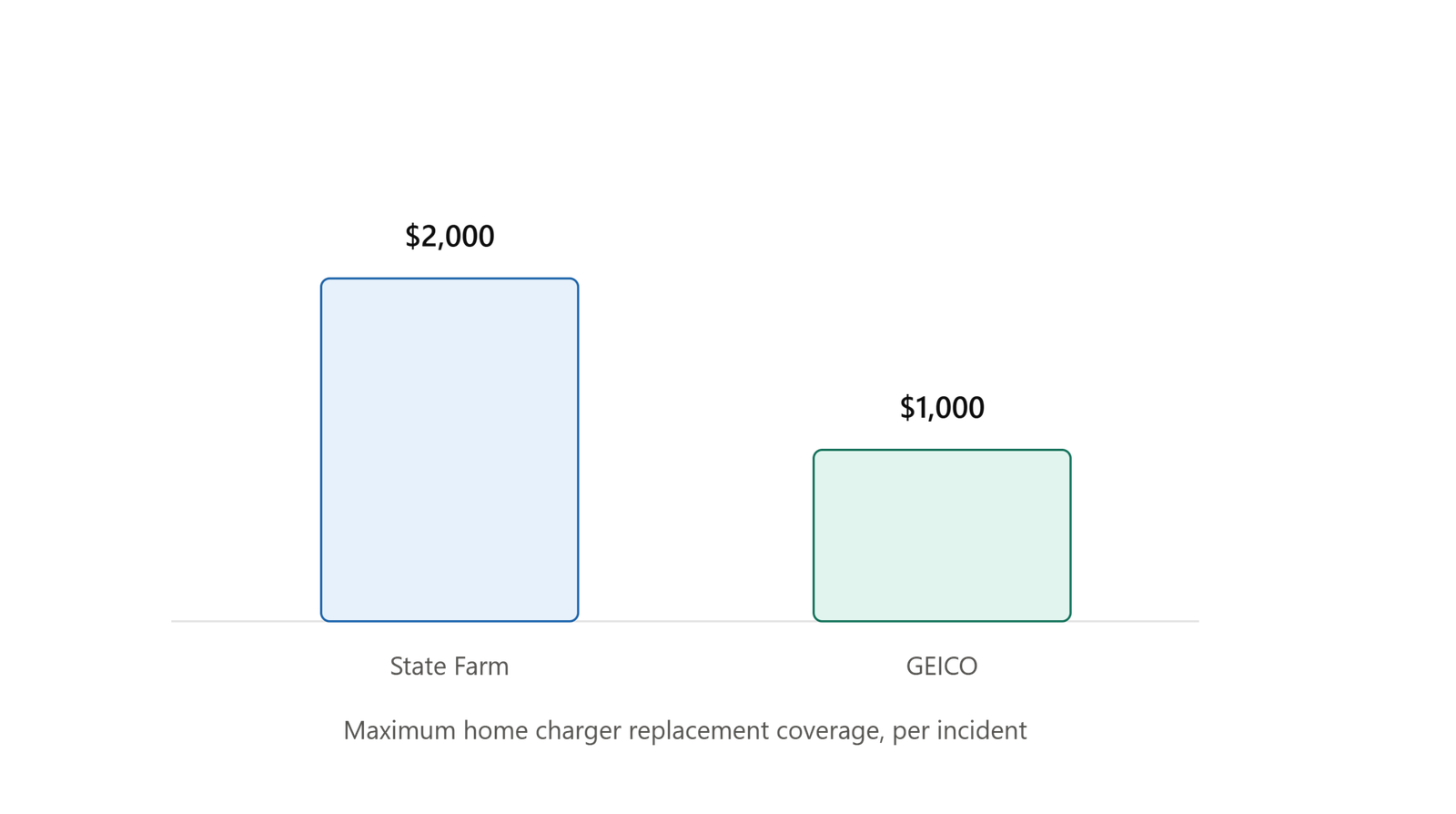
- Coverage limits vary significantly by insurer: State Farm covers up to $2,000 for charger replacement while GEICO covers up to $1,000, according to one detailed comparison, an important detail worth confirming with your specific carrier.
- Charging cable theft is a genuine, ongoing issue, thieves target the valuable copper inside for resale, and while comprehensive coverage typically pays for cord replacement, filing too many claims can trigger a rate increase or policy non-renewal.
- California and Oregon are the only states that currently require homeowners or condo owners to carry liability coverage specifically for EV charging stations; everywhere else, it’s optional but strongly recommended.
Which policy actually covers your charger
This is the first thing to get right, since the answer isn’t «your car insurance» the way you might assume:
A permanently installed (hardwired) Level 2 or DC fast charger is typically covered under your homeowners insurance, as either dwelling coverage (if it’s considered part of the structure) or personal property coverage, subject to your policy’s specific limits and deductible.
A portable, plug-in charger is generally treated as personal property you can move, similar to any other appliance, again under your homeowners or renters policy rather than your auto policy.
The charging cable and cord itself is where things get slightly more interesting: some auto insurers, Lemonade among them, specifically offer wall charger coverage as a clause added directly to your auto insurance policy, reimbursing certain kinds of damage as long as you own the charger, use it for your covered vehicle, and it’s installed at the garaging address listed on your policy. This is a genuine exception to the general homeowners-covers-the-charger rule, worth checking directly with your auto insurer since it isn’t universal.
The real coverage limits, by scenario
Fire, theft, weather damage, and power surges are generally covered under a standard homeowners policy, but not wear and tear, installation defects, or manufacturer defects, the same wear-versus-sudden-damage distinction that applies to battery coverage covered throughout this site.
Specific dollar limits vary meaningfully by insurer. One detailed comparison found State Farm’s policy covering up to $2,000 for charger replacement, while GEICO’s policy covers only up to $1,000 for the identical scenario, a genuinely significant difference given that a Level 2 charger itself commonly costs $500 to $2,000 installed, and a DC fast charger can run upwards of $10,000. If your specific charger is on the higher end of that range, confirming your insurer’s actual dollar limit before you need it matters more than assuming «covered» means «covered in full.»
If wiring damage causes a broader home electrical issue, homeowners insurance generally responds to that scenario as well, provided the underlying cause (fire, storm, a covered electrical fault) is itself a covered peril rather than gradual wear or an installation defect.
The copper theft problem
This is a real, specific, and somewhat under-discussed issue worth flagging directly: vandalism and theft targeting EV charging cables has been a persistent issue since chargers hit the mainstream market, driven by thieves cutting cables specifically to extract and resell the valuable copper wiring inside. Comprehensive coverage typically pays for cord replacement when this happens, but there’s a real downstream consequence worth understanding: filing too many claims for the same issue can trigger a rate increase or, in a worst case, non-renewal of your policy.
Practical implications if you live in an area where this has been reported:
- Consider a charger model or cable lock designed specifically to deter cable theft, since prevention is meaningfully cheaper than repeated claims.
- Keep documentation (photos, receipts) of your charger and cable specifically to streamline any claim you do need to file, as recommended directly by State Farm’s own EV charging guidance.
- Understand that repeat claims carry a real cost beyond the deductible, even when each individual claim is technically covered.
Does homeowners liability coverage matter here too?
Yes, and it’s a piece of the picture that’s easy to overlook. Your property policy’s personal liability coverage may respond if a guest is injured on your property because of your charging equipment, for instance, someone tripping over your charging cable while crossing your walkway or driveway. This is separate from the property-damage coverage discussed above, it protects you from a liability claim, not just repair costs to the charger itself.
Where this is mandatory, not optional
California and Oregon are currently the only states that legally require homeowners or condo owners to carry liability insurance coverage specifically for EV charging stations in their homes. Everywhere else, this coverage is optional, but the reasoning behind those two states’ requirement, real fire, electrical, and liability risk tied to home charging equipment, applies just as much in every other state, even without a legal mandate. Given that 80% of EV drivers charge at home according to J.D. Power’s Electric Vehicle Experience study, this isn’t a niche concern limited to two states, it’s relevant to the large majority of EV owners regardless of where they live.
A specific, real coordination-of-benefits scenario worth understanding
Here’s a scenario that illustrates why knowing which policy covers what actually matters in practice: if your EV itself causes damage to your at-home charger, and the resulting fire damages your home, you’re now looking at a situation involving both your auto policy and your homeowners policy simultaneously. Insurer coordination and primary/secondary coverage rules determine which policy pays first in a scenario like this, and it’s exactly the kind of multi-policy situation where having already confirmed your specific coverage in advance, rather than discovering the rules for the first time during a claim, saves real time and stress.
The specific questions worth asking both insurers
Given how much variation exists between carriers, State Farm’s own guidance for EV owners recommends asking your property and auto insurers these questions directly, before you need to file a claim:
- Are EV chargers covered by home insurance if the unit is permanently attached to my garage wall? If so, is it considered part of the dwelling, or a separate structure with its own coverage limit?
- If my Level 2 unit is mounted on a post by the driveway rather than the garage wall, which coverage bucket applies, and what are the specific limits?
- Does my policy cover power surge damage to the charger or related wiring?
- Does my car insurance cover electrical fires if an incident starts at the vehicle while it’s charging at home?
- Would an endorsement help clarify coverage for the charger, its installation, or theft, beyond what’s implied in standard policy language?
- If my charger is stolen or vandalized, what deductible and limits would apply?
- For renters or condo owners specifically, how is the charger handled compared to the building itself, since your situation differs structurally from a homeowner’s.
Practical steps to protect yourself
- Never assume coverage exists without confirming it. As covered throughout this guide, the specific dollar limits and even which policy applies can vary significantly by insurer, confirming in advance is a ten-minute call that prevents a much longer dispute later.
- Use surge protection as recommended by your electrician, both to reduce actual risk and because some insurers may look more favorably on a claim where reasonable precautions were already in place.
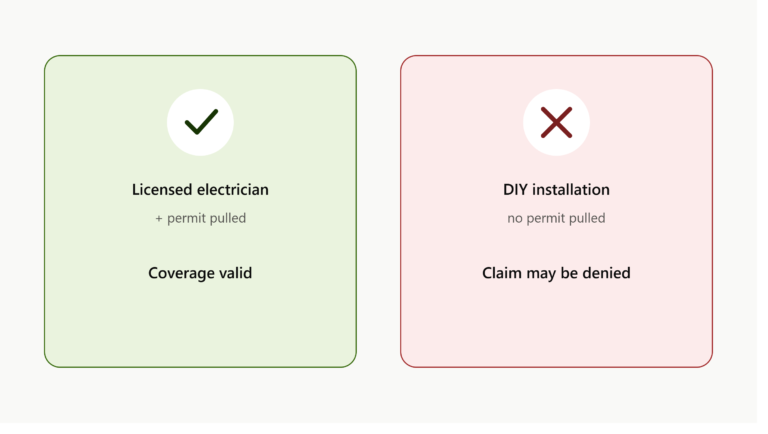
- Keep receipts, permits, and panel-upgrade documentation. This directly supports any future claim and, as covered in our home charger installation guide, professional and permitted installation matters for coverage validity as well as safety.
- If you move, ask specifically whether portable charging gear is covered in transit and at your next home, since a portable unit’s coverage status can be less automatic than a permanently installed one tied to a specific address.
- Ask about a specific EVSE (electric vehicle supply equipment) endorsement if your insurer offers one, since this can explicitly clarify coverage that might otherwise be ambiguous under generic homeowners or auto policy language.
The bottom line
Home EV charger damage is generally covered, but the details matter more than the headline yes. A permanently installed charger typically falls under homeowners insurance, a portable one is usually treated as personal property, and specific dollar limits vary meaningfully between insurers, State Farm’s $2,000 versus GEICO’s $1,000 in one direct comparison illustrates just how much this can differ. Add in the very real issue of cable theft for copper resale, the coordination-of-benefits complexity if a charger-related incident touches both your auto and home policies, and the fact that only California and Oregon currently mandate this coverage, and the clear takeaway is the same one that runs throughout this site: confirm your specific coverage directly with both your homeowners and auto insurers before you need it, not after.
This article is for informational purposes only and does not constitute financial or insurance advice. Coverage details, dollar limits, and requirements vary significantly by insurer, policy, and state, and change frequently. Always confirm specific coverage terms directly with your homeowners and auto insurers.