Insurance for EV Conversions and Custom Electric Builds
Converting a classic car to electric power, or building a custom EV from a kit, puts you in a genuinely different insurance category than buying a factory EV off a dealer lot. Standard auto insurers are built around mass-produced vehicles with known specifications, VINs, and manufacturer data behind them. A one-off conversion has none of that, and getting it properly covered requires a different approach entirely. This guide covers how insurance actually works for these builds.
Key takeaways:
- Standard auto insurers are often poorly equipped to underwrite a custom EV conversion, since their pricing models depend on standardized vehicle data that a one-off build simply doesn’t have.
- Specialty classic and collector car insurers, Hagerty being the best-known example, are generally the better fit, offering Agreed Value policies that lock in your build’s worth upfront rather than leaving it to a post-loss dispute.
- Professional installation and thorough documentation matter even more for a conversion than for a factory charger installation, since there’s no manufacturer warranty or standard spec sheet to fall back on if something goes wrong.
- Conversion costs commonly run well into five figures once vehicle modifications, battery packaging, and charging infrastructure are included, and insurance needs to be sized to that real total investment, not just the base donor vehicle’s value.
Why standard auto insurance doesn’t fit well
Mainstream insurers price policies using standardized data tied to a vehicle’s make, model, and trim, the same underlying system that lets an insurer instantly quote a Tesla Model 3 or a Honda Civic based on decades of accumulated claims data for that exact vehicle. A converted classic car, or a custom-built EV from a kit, has no equivalent dataset. The insurer has no baseline for how a 1967 donor car with a swapped-in 400-volt battery pack, a custom motor controller, and a hand-fabricated battery box actually performs in a crash, what it costs to repair, or what it’s genuinely worth. This mismatch is exactly why standard insurers often either decline to cover conversions at all, undervalue them significantly, or apply blanket «modified vehicle» pricing that doesn’t reflect the build’s actual quality or investment.
Why a specialty insurer is generally the better fit
This is where collector and classic vehicle insurers, Hagerty being the largest and best-known example in this space, become the more sensible option. These insurers specialize specifically in vehicles that don’t fit standard underwriting models: classics, custom builds, and increasingly, EV conversions of exactly the kind covered in this guide. The key structural advantage they offer is an Agreed Value policy.
Agreed Value versus the alternatives: why it matters so much for a conversion
Total loss claims are generally settled using one of three methods, and understanding the difference is critical for a custom build specifically:
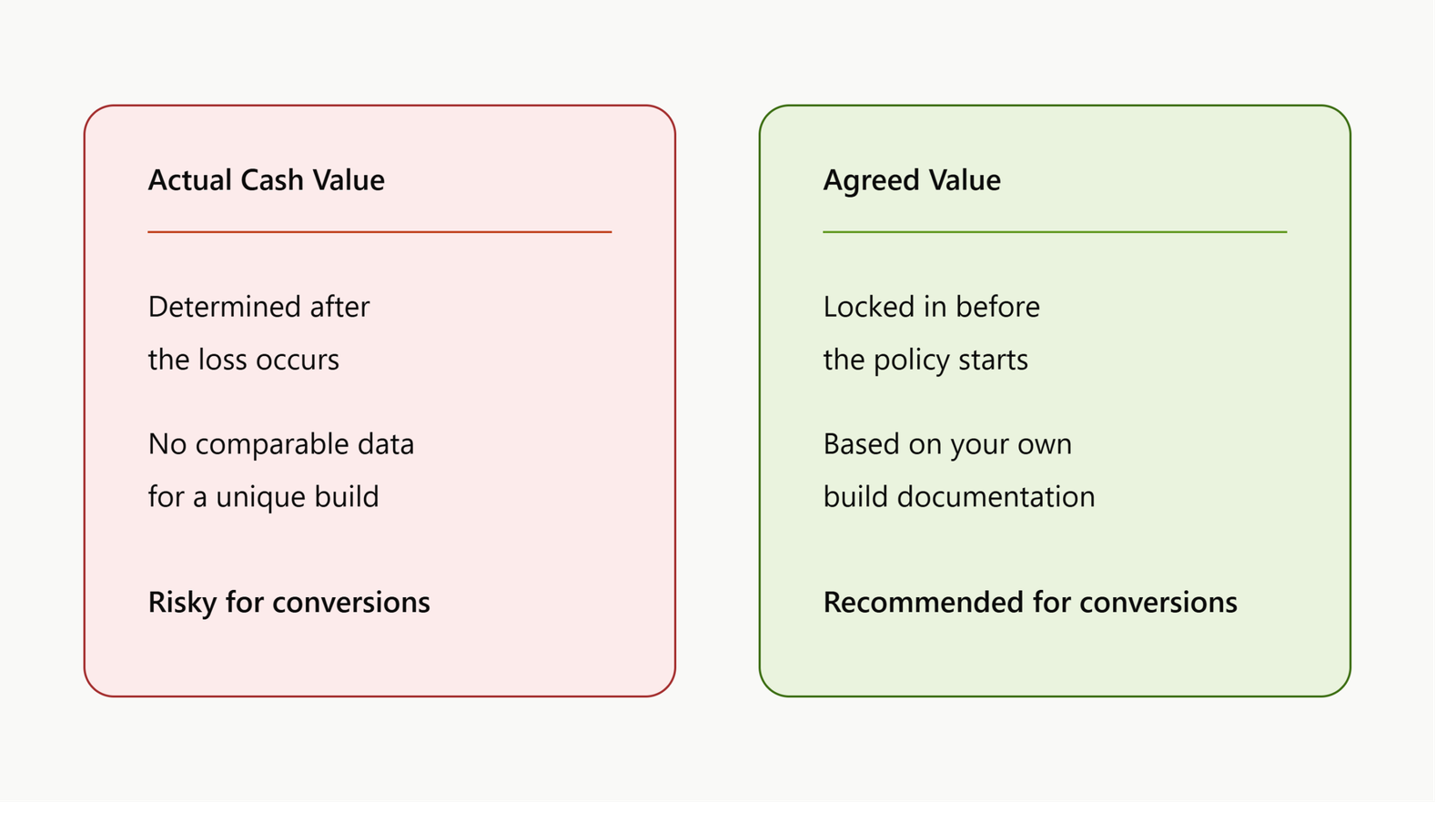
Actual Cash Value (ACV): the insurer’s adjuster determines your vehicle’s value after a total loss occurs, essentially arguing for the lowest defensible number after the fact. For a one-of-a-kind conversion with no comparable sales data, this is a genuinely dangerous method, since there’s no clear market to point to, leaving the valuation largely up to the adjuster’s discretion.
Stated Value: a hybrid method where the insurer pays either the value listed on your policy or the ACV, whichever is lower. This still leaves you exposed to an undervaluation if the adjuster’s post-loss ACV assessment comes in below what you stated.
Agreed Value: the vehicle’s value is determined and locked in before the policy period begins, based on documentation you provide. If the vehicle is a total loss, you receive that agreed amount, full stop, no post-loss negotiation over what a one-of-a-kind conversion was «really» worth.
For a custom EV conversion, where the total investment, donor vehicle, battery pack, motor and controller, custom fabrication, and charging infrastructure, can easily exceed the value any standard database would assign the base vehicle, an Agreed Value policy is close to essential, not just a nice-to-have.
What actually goes into a conversion’s real value
Understanding your total investment matters directly for setting an accurate Agreed Value, and it’s easy to underestimate. A realistic accounting includes vehicle modifications like mounting brackets and battery boxes (commonly $1,000 to $5,000), the battery pack itself (frequently the single most expensive component of the entire build), the motor, controller, and associated electronics, charging infrastructure at home (commonly $500 to $3,000 for a Level 2 setup), and labor, whether paid to a professional shop or valued at your own time if DIY. Break-even on fuel and maintenance savings for a conversion typically runs 8 to 15 years depending on usage, meaning most owners are motivated by preservation, driving experience, or environmental values rather than a purely financial payback, which makes getting the insurance valuation right even more important, since you’re protecting a passion investment, not a straightforward appliance purchase.
Professional installation and documentation matter even more here
As covered in our broader home charger and installation guides, professional work and proper documentation affect coverage validity for standard EV equipment. For a conversion, this principle applies with even higher stakes, since there’s no manufacturer warranty or standardized spec sheet backing up the build at all:
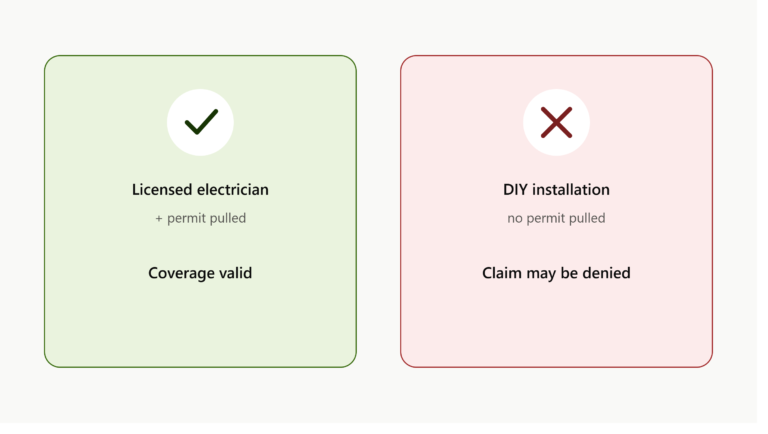
High-voltage work specifically should be performed or verified by someone qualified. Professional installation ensures proper integration and safety compliance, with certified technicians trained specifically in high-voltage systems and safety protocols, along with specialized testing equipment most DIY builders don’t have access to. Beyond the direct safety argument, this also supports your insurance position, since a conversion built and verified to a professional safety standard is a meaningfully stronger claim position than a purely DIY build if you ever need to file one.
Keep exhaustive build documentation. Component receipts, battery specifications and certifications, wiring diagrams, professional inspection or certification records, and photos throughout the build process all support both your Agreed Value valuation and any future claim. Treat this the same way you’d document a restoration, because from an insurance perspective, that’s essentially what it is.
Confirm state re-titling and inspection requirements before you’re on the road. Regulators in most jurisdictions have worked to establish safety protocols ensuring conversions undergo the same inspection processes as any other electric vehicle, and your state’s specific requirements for re-titling a converted vehicle need to be satisfied before insurance, and legal road use, are even possible. This varies significantly by state, worth confirming with your state’s DMV early in the build process rather than after completion.
DIY versus professional installation: the insurance angle
As covered in broader conversion cost guidance, DIY installation can save significant labor costs but requires genuine mechanical aptitude, high-voltage electrical knowledge, specialized tools, and a substantial time investment, commonly 100 to 300 hours depending on kit complexity. Professional installation costs more but provides certified technician oversight, proper specialized equipment, and installation warranty protection through the shop’s own insurance.
From a coverage standpoint specifically, a professionally installed and certified conversion is simply an easier vehicle to insure well: it’s more straightforward to document, easier for a specialty insurer to assess for an accurate Agreed Value, and provides a stronger position if you ever need to file a claim. This doesn’t mean DIY conversions can’t be insured, but it does mean the documentation and safety-verification burden falls more heavily on you if you go that route.
Kit-based versus donor-component builds: does it affect insurance?
Conversions generally follow one of two paths: a purpose-built kit from an established conversion company, which often includes mounting adapters engineered specifically for your vehicle platform, or a build using salvaged components from a wrecked modern EV (a Nissan Leaf or Chevrolet Bolt are common donor sources), which can be more cost-effective but requires more custom integration work. From an insurance perspective, a kit-based build from an established company generally provides more standardized documentation, engineering specifications, and sometimes even manufacturer backing, all of which support a stronger, easier-to-defend Agreed Value valuation than a fully custom, salvaged-component build, which places more documentation burden on you directly.
Ongoing coverage considerations beyond the initial policy
Revisit your Agreed Value periodically, particularly if you add components, upgrade the battery pack, or invest in further refinement after the initial build and policy are established, since your coverage should track your actual current investment, not just the value at the moment you first insured it.
Ask specifically about usage restrictions. Many specialty collector vehicle policies include mileage limitations or usage restrictions (pleasure use, show use) in exchange for their more favorable Agreed Value terms, worth understanding clearly if you intend to drive your conversion as a genuine daily driver rather than an occasional showpiece.
Confirm coverage for the charging infrastructure separately, following the same logic covered in our broader home charger insurance guides, since a custom or high-capacity charging setup for a conversion may exceed what a standard homeowners policy anticipates covering.
The bottom line
Insuring an EV conversion or custom electric build requires a different approach than insuring a factory EV, standard insurers are often poorly equipped to value or underwrite a genuinely one-of-a-kind vehicle, while specialty collector and classic car insurers like Hagerty offer Agreed Value policies specifically built for exactly this situation. Given how much total investment goes into a serious conversion, vehicle modifications, battery and motor components, and charging infrastructure often totaling well into five figures, getting an accurate, documented Agreed Value locked in before you need it matters more here than for almost any other vehicle category covered throughout this site. Professional installation, thorough documentation, and confirming your state’s re-titling requirements early in the process all directly strengthen your position, both for getting properly insured in the first place and for a smooth claim if you ever need one.
This article is for informational purposes only and does not constitute financial or insurance advice. Insurance availability, valuation methods, and requirements for EV conversions vary significantly by insurer, state, and individual build. Always confirm specific coverage terms directly with a specialty insurer experienced in custom and collector vehicles before beginning a conversion project.