Best EV Insurance With Roadside Assistance for Dead Batteries
Running out of charge, or having a genuine mechanical or battery failure, is a fundamentally different roadside scenario than running out of gas, and not every roadside assistance plan actually handles it correctly. This guide covers what EV-specific roadside assistance actually needs to include, the real towing risk most drivers don’t know about, and which providers genuinely handle it well.
Key takeaways:
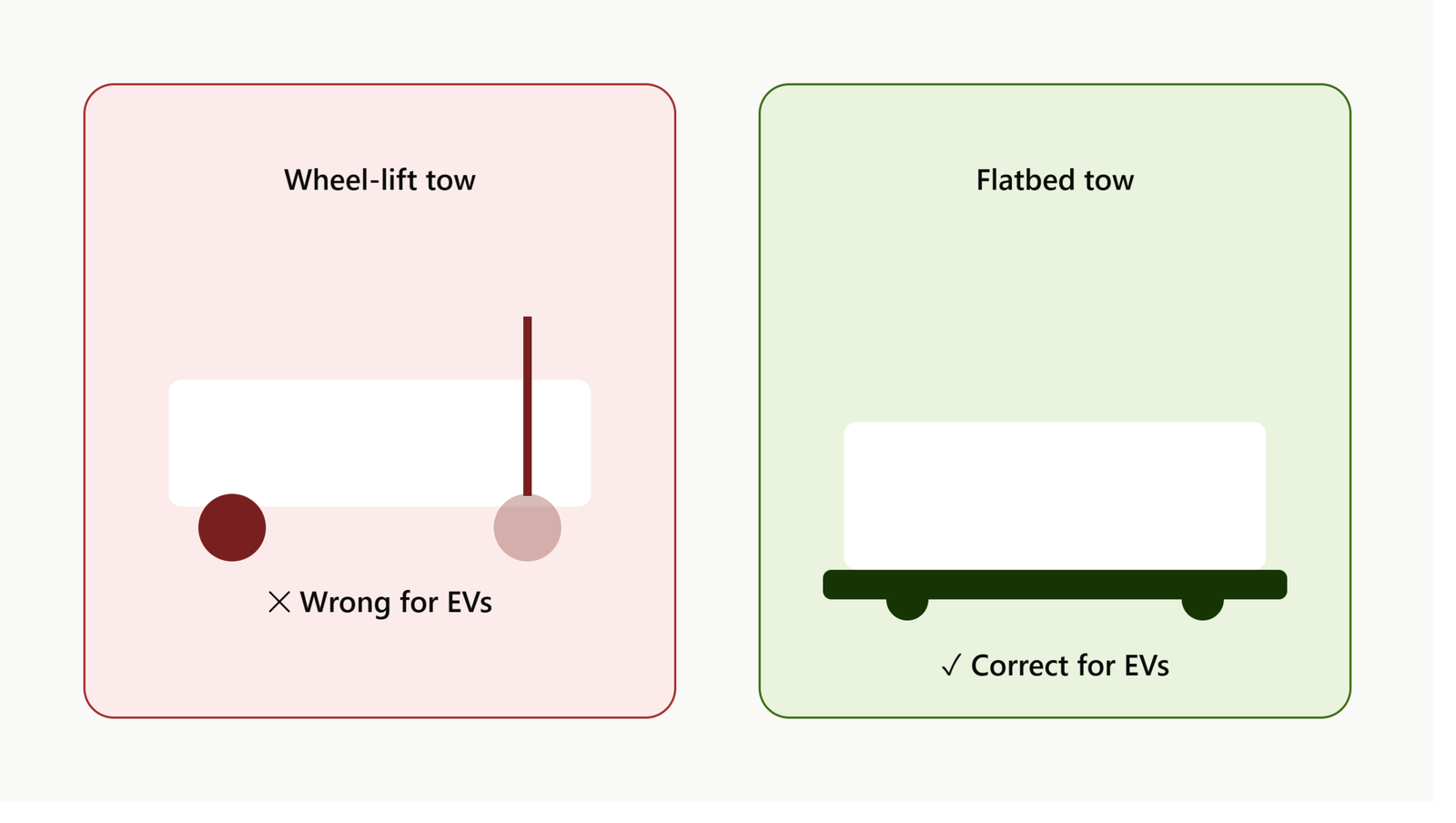
- Many flatbed tow operators refuse to transport EVs on standard wheel-lift equipment due to the risk of drivetrain damage, meaning a «we’ll tow you» promise isn’t enough, it needs to specifically guarantee a flatbed.
- Most new EVs include 3 to 5 years of automaker roadside assistance covering towing to a charger or certified dealer, typically within a 50-mile radius, worth checking first before buying anything additional.
- Better World Club’s dedicated Hybrid Add-On plan specifically guarantees flatbed-only towing for EVs, one of the more explicit EV-focused options available.
- Motor club coverage (like AAA) follows you as a driver across any vehicle, while insurance-based roadside assistance only covers your specific insured vehicle, an important structural difference for multi-car households.
Why EV roadside assistance is genuinely different
This isn’t a minor technical detail, it’s a real, documented gap in the towing industry. Many flatbed tow operators refuse to transport EVs on wheel-lift equipment (the standard tow truck setup that lifts a vehicle’s drive wheels off the ground) because doing so risks damaging the drivetrain. Electric vehicles generally need to be transported fully off the ground on a flatbed, not partially towed, and this has created a real coverage gap as EV adoption, particularly of electric trucks like the F-150 Lightning, Rivian R1T, and Silverado EV, has grown faster than the towing industry’s equipment and training have kept pace.
Beyond the equipment issue, EVs also require flatbed tows and high-voltage safety protocols specifically when a collision or serious mechanical issue is involved, not just a routine dead battery. A generic «we provide towing» plan doesn’t tell you whether the driver dispatched to you actually knows how to handle a high-voltage vehicle safely, or whether they’ll show up with the wrong equipment and need to call for a second truck, extending your wait significantly.
Start here: check your automaker’s included coverage first
Before buying anything additional, check what’s already included with your EV. Many new EVs bundle 3 to 5 years of roadside assistance from the automaker, covering towing to a charger, your home, or a certified dealer, commonly within about a 50-mile radius, if your traction battery runs flat or you experience a covered failure during the warranty period. Automaker roadside programs know your specific car best and will generally route you directly to a certified shop, making this the logical first line of defense while it’s still active. Once that window ends, typically 3 to 5 years after purchase, you’re on your own and need to rely on an insurer add-on, a motor club membership, or a specialized EV roadside provider.
Best options once you’re past automaker coverage
Better World Club — most explicit EV-specific guarantee Better World Club’s Hybrid Add-On plan (around $99 a year) specifically guarantees flatbed-only towing for electric and hybrid vehicles, directly addressing the wheel-lift damage risk covered above. This is one of the more explicit, EV-focused commitments found in this research, worth prioritizing if you want written assurance rather than hoping the dispatched truck has the right equipment.
AAA — best if coverage needs to follow you across multiple vehicles AAA’s member-follows-vehicle structure, rather than vehicle-specific coverage, means you’re covered whether you’re driving your own EV, a spouse’s car, a friend’s vehicle, or even a rental. This is a meaningful structural advantage for multi-car households or anyone who doesn’t drive exclusively one vehicle. The tradeoff: AAA’s Basic tier has a restrictive 5-mile towing limit, often insufficient to reach a properly certified EV repair shop, so the Plus or Premier tiers are worth the added cost specifically for EV owners.
Insurance-based roadside add-ons through your existing auto policy Adding roadside assistance directly through your auto insurer, offered by GEICO, Allstate, Progressive, Travelers, USAA, Nationwide, and most other major carriers covered throughout this site, is typically the most cost-effective option if you already carry full coverage, since it attaches to your existing policy for a modest annual fee. As covered in our broader insurer research, the key question to ask before buying is specifically whether the plan guarantees flatbed towing and EV-trained dispatch partners, not just generic towing coverage.
Allstate’s basic roadside program Allstate offers a basic roadside plan available to customers with or without an Allstate car insurance policy, providing $150 worth of roadside services a year, extendable to a second household member at no extra cost, and free for drivers aged 16 to 18. It also includes trip interruption coverage (valued at $1,500) if you’re stranded more than 100 miles from home. The tradeoff: Allstate’s plan runs pricier than several competitors at $79, and limits service calls to just three a year, worth weighing against your actual expected usage.
The specific questions to ask before buying any plan
Given how much EV-specific nuance exists in this category, a generic roadside assistance comparison isn’t enough. Ask any provider you’re considering these questions directly:
- «Do you guarantee flatbed towing for EVs, not wheel-lift?» This is the single most important question, given the drivetrain damage risk covered above. A vague «yes, we tow EVs» answer isn’t sufficient; get specific confirmation about equipment.
- «Are your dispatched drivers trained on high-voltage safety protocols?» A generic tow truck driver unfamiliar with EV-specific hazards can create real safety risk at the scene of a breakdown or accident.
- «What’s your towing mileage limit, and is it enough to reach an EV-certified shop?» As covered with AAA’s Basic tier above, a short mileage cap may get you to the nearest generic shop but not one actually equipped to work on your EV.
- «Do you offer mobile charging, not just towing, for a simple dead battery?» A growing category of specialist EV roadside providers and updated mainstream programs now offer mobile charging trucks that can add enough range on the spot to get you moving again, avoiding a tow altogether for a simple charge-depletion scenario.
- «Does coverage follow me as a driver, or only my specific insured vehicle?» As covered in the AAA versus insurance-add-on comparison above, this structural difference matters significantly for multi-car households.
A newer category worth knowing about: dedicated EV roadside specialists
Beyond traditional motor clubs and insurance add-ons, a newer category has emerged: companies whose entire business is built around 24/7 EV-specific roadside support and mobile charging. Rather than dispatching a generic tow truck, these specialists are built from the ground up around EV-specific scenarios, arriving with either a flatbed or a mobile charging unit depending on what your situation actually requires. If you live in an area where this type of specialist service is available, it’s worth comparing directly against the mainstream options above, particularly if avoiding a tow altogether via mobile charging matters to you.
The bottom line
EV roadside assistance isn’t the same product as traditional roadside assistance with a different label, the flatbed-towing requirement and high-voltage safety considerations are real, documented gaps that a generic plan may not address. Start with your automaker’s included coverage while it’s still active, then compare Better World Club’s explicit EV guarantee, AAA’s vehicle-following structure, or an insurance-based add-on through whichever carrier you’ve chosen from our broader insurer rankings. Whichever you pick, ask the specific flatbed and high-voltage-training questions above directly rather than assuming «roadside assistance» automatically means your EV will be handled correctly.
This article is for informational purposes only and does not constitute financial or insurance advice. Roadside assistance coverage, pricing, and provider availability vary by company, state, and specific plan, and change frequently. Always confirm specific coverage terms directly with any provider before purchasing a plan.