If new EV insurance quotes have you reconsidering the whole idea, there’s a piece of good news buried in the used EV market: insuring a used electric vehicle is often meaningfully cheaper than insuring the same model brand new, and the gap can be larger than people expect. This guide explains exactly why, by how much, and where the savings actually come from.
Key takeaways:
- Insurance is based heavily on what a car is worth, and a used EV’s lower replacement value directly lowers comprehensive and collision costs, often the largest pieces of a full-coverage premium.
- By the third or fourth model year, independent shops and aftermarket parts increasingly enter the picture, giving insurers more repair options than a brand-new model locked into dealer-only service.
- Early-generation, commuter-focused EVs also tend to have lower claim severity than newer, more powerful models, which helps used-vehicle pricing further.
- The savings aren’t universal. A used luxury or EV-only brand model can still cost more to insure than a new mainstream EV.
Why age and value matter so much for insurance pricing
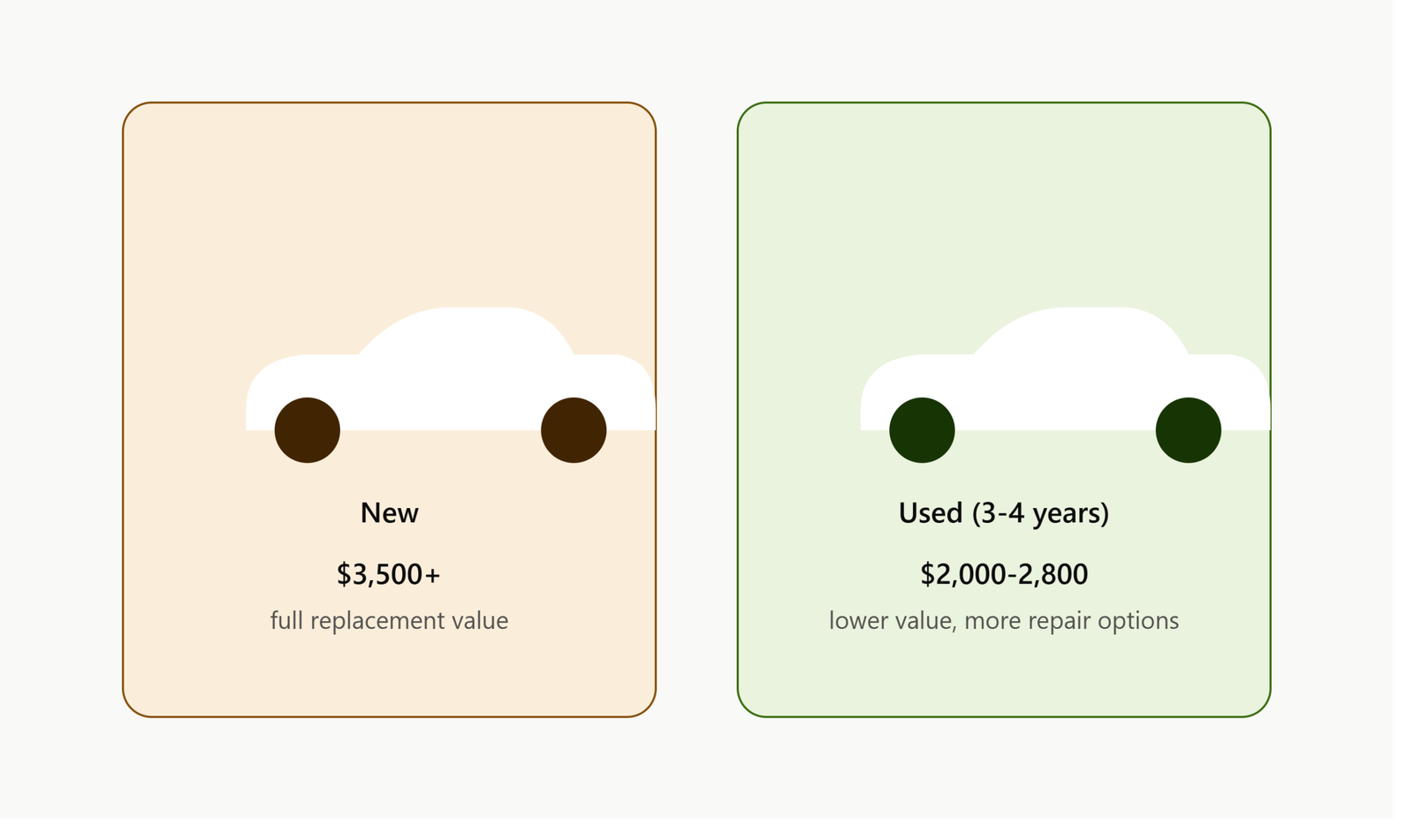
Insurance fundamentally prices two things: how likely a claim is (frequency) and how expensive that claim will be when it happens (severity). A used EV improves the picture on the severity side in a very direct way. Insurance pays out based on what the car is actually worth, not what it originally cost. A 2021 Nissan Leaf or Chevrolet Bolt is simply cheaper to replace than a brand-new luxury crossover, which means the comprehensive and collision portions of the premium, often the largest chunk of a full-coverage policy, can be dramatically lower for the used vehicle even when comparing the exact same model across model years.
This isn’t unique to EVs, the same principle applies to gas cars, but it matters more for EVs specifically because the gap between a new EV’s sticker price and a comparable three- or four-year-old used EV’s value has widened as used EV prices have cooled and depreciation curves have played out.
The repair-network advantage of buying used
This is a less obvious factor, but it’s a real one, and it connects directly to the repair-cost story that drives most EV insurance pricing in general. By the third or fourth model year of a given EV, independent body shops and aftermarket parts suppliers have typically had time to enter the picture for that specific model. That gives insurers meaningfully more repair options than «tow it to the dealer and hope for the best,» which is often the reality for a brand-new model that hasn’t been on the road long enough for a broader repair ecosystem to develop around it.
In practice, this means a three-year-old Model 3 or Ioniq 5 may actually have a more favorable repair-cost profile from an insurer’s perspective than the same model did when it was brand new, simply because competition has entered the parts and labor market for that vehicle in the intervening years.
Older EVs were often built differently, and that helps too
Many early-generation mainstream EVs, think the original Nissan Leaf, early Chevrolet Bolt, or first-generation Kona Electric, were designed as straightforward commuter vehicles rather than performance-oriented flagships. Insurers see meaningfully lower claim severity on these models when accidents do happen, simply because they weren’t engineered with the same power, weight, and complexity as more recent high-performance EVs. That lower severity translates into lower premiums, a pattern that holds even when comparing a used early-generation EV against a new entry-level EV from a more performance-oriented lineup.
By how much does used actually save you?
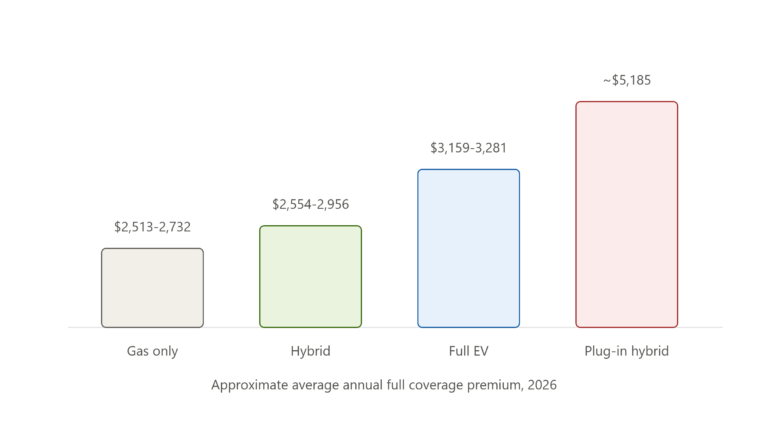
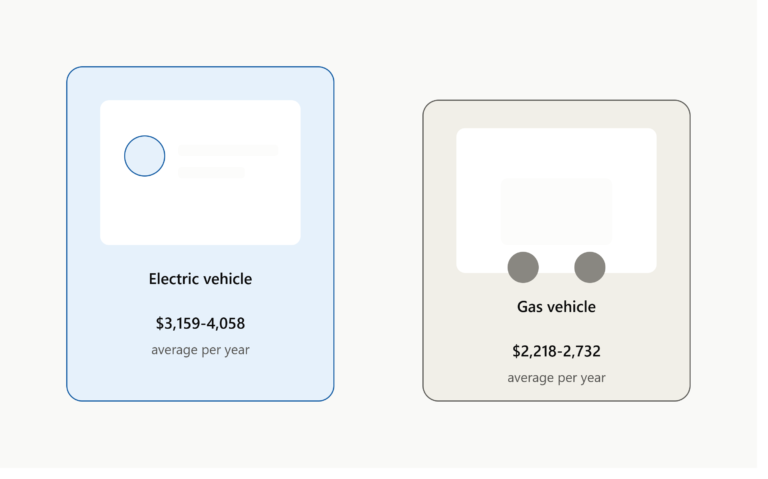
There’s no single universal percentage, since it depends heavily on the specific model and how many years old the vehicle is, but the underlying math is straightforward: full-coverage EV premiums in 2026 broadly range from about $2,400 to $4,000 a year for mainstream models when new, and the used-vehicle discount on the same model can meaningfully undercut the lower end of that range, particularly once a vehicle is three or more years old and has depreciated substantially from its original sticker price.
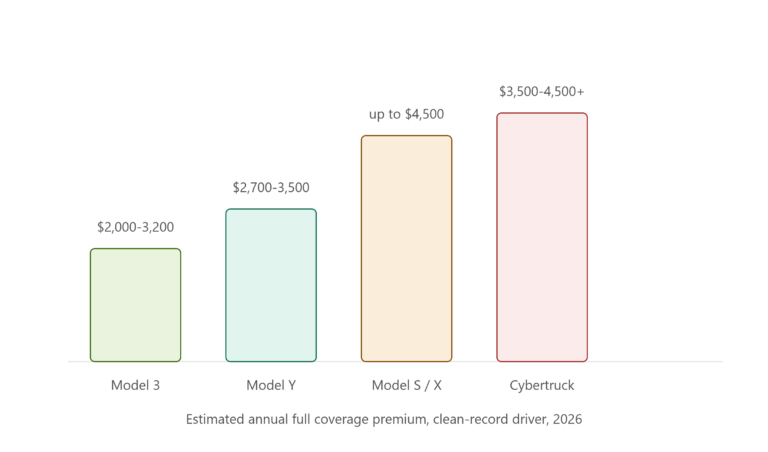
The comparison is most dramatic on models that started expensive. A used Tesla Model 3 or Model Y several years into its depreciation curve can insure for noticeably less than a brand-new one, even though it’s still technically «an expensive EV to insure» relative to a Nissan Leaf, simply because its current value is a fraction of what it cost new.
Where the used-EV insurance advantage breaks down
It’s worth being direct about the limits here, since «used» isn’t automatically cheaper in every scenario:
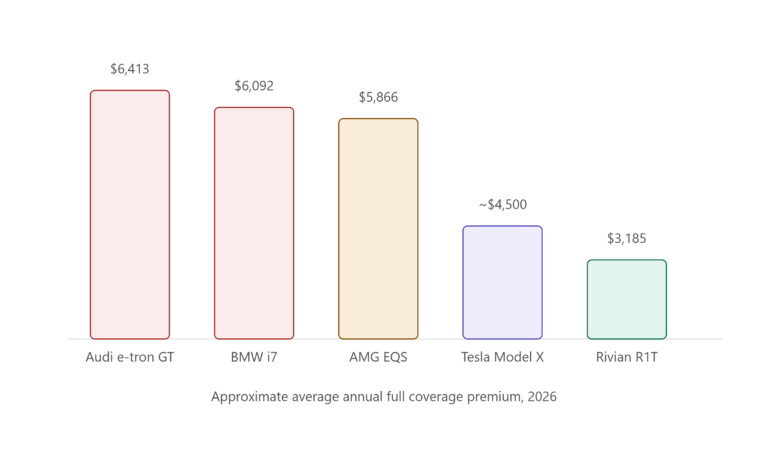
A used luxury or EV-only brand model can still cost more than a new mainstream EV. A five-year-old Tesla Model X or Audi e-tron, even significantly depreciated, may still cost more to insure than a brand-new Hyundai Kona Electric, since the underlying repair-cost drivers (proprietary parts, complex electronics, limited certified shops) don’t fully disappear just because the vehicle is older and worth less.
Very old EVs can introduce different cost factors. As an EV approaches the far end of its usable life, or if battery health becomes uncertain without proper verification, some of the value proposition weakens, and buyers should factor in verified battery health as part of the total cost picture, not just the sticker price and insurance premium in isolation.
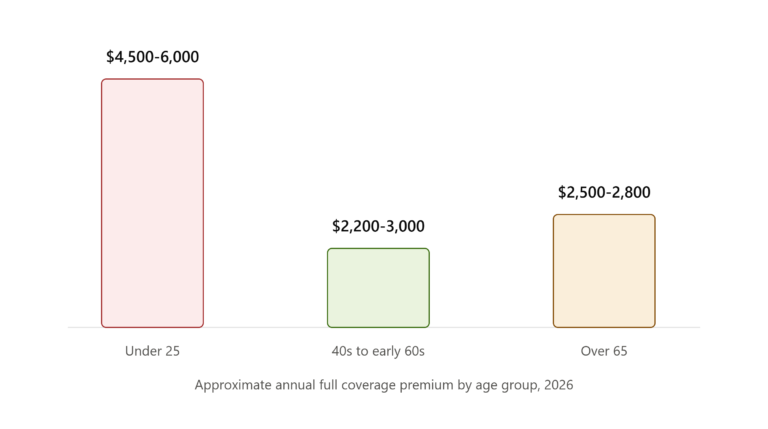
State and insurer variation still applies on top of all of this. Every factor covered elsewhere on this site, your state, your age, your driving record, still stacks on top of whatever baseline advantage a used EV provides. A used EV in a high-cost state with a young driver can still land at a higher premium than a new EV in a low-cost state with an experienced driver.
How to actually capture this advantage when shopping
A few practical steps if you’re specifically shopping for a used EV with insurance cost in mind:
- Get insurance quotes on the specific used vehicle before you buy, not an estimate based on the model name alone. The exact model year, trim, and condition all factor into the quote, and the difference between a two-year-old and a five-year-old version of the same model can be substantial.
- Verify battery health before you commit. A used EV with documented, verified battery health gives insurers, and you, more confidence in the vehicle’s real condition and value, which can matter for both the purchase price negotiation and the insurance conversation.
- Favor mainstream models with an established used-market presence. The repair-network advantage described above depends on independent shops and aftermarket parts actually having entered the picture for that model, which happens faster for high-volume mainstream EVs than for low-volume luxury or performance models.
- Compare the used EV against both a new EV and a comparable used gas car. This gives you the full picture: how much you’re saving by buying used within the EV category, and how the used EV compares to a non-electric alternative once insurance is factored in alongside fuel and maintenance savings.
- Don’t assume «used equals cheap» for every EV. As covered above, this advantage is strongest for mainstream models and weakens considerably for luxury and EV-only brands, so treat it as a real but conditional advantage rather than a universal rule.
The bottom line
Buying a used EV genuinely can lower your insurance premium compared to buying the same model new, driven by lower replacement value, a more mature repair and parts ecosystem, and often a simpler underlying vehicle design in the case of early-generation commuter EVs. The advantage is real and worth factoring into your shopping decision, but it isn’t universal: a used luxury EV can still cost more to insure than a new mainstream one, and every other factor covered throughout this site, your state, age, driving record, and coverage choices, still applies on top of whatever baseline advantage the used vehicle provides. As always, the only way to know your real number is to get an actual quote on the specific vehicle you’re considering.
This article is for informational purposes only and does not constitute financial or insurance advice. Insurance rates vary by insurer, individual driving history, location, vehicle condition, and model year, and change frequently. Always get a personalized quote before making a purchasing decision.